Mobile Car Valeting
How to Choose a Wet-and-Dry Vacuum for a Mobile Car Valeting Business
Compare vacuum performance, attachments, power and ownership costs, with a closer look at the Kärcher WD 2 Plus and commercial-use checks.
Ad — affiliate disclosure: As an Amazon Associate I earn from qualifying purchases. Buying through our Amazon links may earn us a commission at no extra cost to you. This is a buying guide, not a hands-on product test.
A good vacuum earns its place in a mobile valeting kit every time you remove crumbs, grit and loose dirt from a customer's car. But choosing your first machine can be confusing. Does a bigger motor mean better cleaning? Do you need a huge tank? And will a wet-and-dry vacuum shampoo the seats?
The best starting point is the service you intend to offer. Choose equipment that suits your workload, fits your transport and lets you finish a job properly. This guide explains what to compare, where the Kärcher WD 2 Plus fits into the conversation, and which upgrades can wait.
Explore our Mobile Car Valeting Blueprint for help turning a starter service into a practical plan, or view the complete package on Payhip.
1. Understand what a wet-and-dry vacuum does
A wet-and-dry vacuum collects suitable dry debris and, when correctly configured, permitted liquids. For car interiors, its everyday role is usually vacuuming carpets, mats, the boot and accessible gaps around seats. Wet pickup is an additional capability, not a reason to soak an interior.
It is different from a spray-extraction cleaner. An extractor applies cleaning solution and recovers it through a dedicated cleaning system. A standard wet-and-dry vacuum does not become a seat-shampooing machine simply because it can collect water. Kärcher's vehicle-cleaning guidance distinguishes vacuuming from spray extraction for deeper upholstery cleaning.
If your first offer is a maintenance valet, focus on dependable dry vacuuming and careful surface cleaning. Add deep upholstery cleaning only when you have appropriate equipment, training and drying arrangements. Our beginner's valeting equipment checklist helps you separate those service levels.
2. Match the machine to your working day
Picture an ordinary booking: unloading, reaching the car, vacuuming, packing away and travelling onwards. A machine that looks impressive in a specification table may be awkward in a small boot or tiring to carry from distant parking.
Write down your expected jobs per day, typical vehicle sizes, available storage and access to electricity. Be honest about how long the vacuum will run. Occasional practice on your own car and repeated paid work place different demands on equipment.
Check the manufacturer's intended use and warranty before buying for a business. A familiar brand and a sturdy-looking container do not automatically make a domestic model suitable for commercial workloads. Ask the manufacturer about your planned use if the documentation is unclear.
3. Compare cleaning performance beyond wattage
Motor wattage describes electrical input, not a complete measure of how well a vacuum cleans a footwell. Airflow, suction, hose design, the nozzle and filter condition all affect the result. Compare published performance figures only when they use equivalent measures.
Think about the dirt you actually encounter. Loose crumbs are different from sand worked into carpet or stubborn pet hair. A suitable brush can loosen debris before vacuuming; repeated aggressive scraping with a hard nozzle can damage trim.
Useful buying questions include: can you obtain replacement filters, does the nozzle reach tight areas, and is the hose easy to handle? Look for detailed feedback about these tasks rather than relying only on a star rating or a large wattage number.
4. Prioritise hose reach and useful attachments
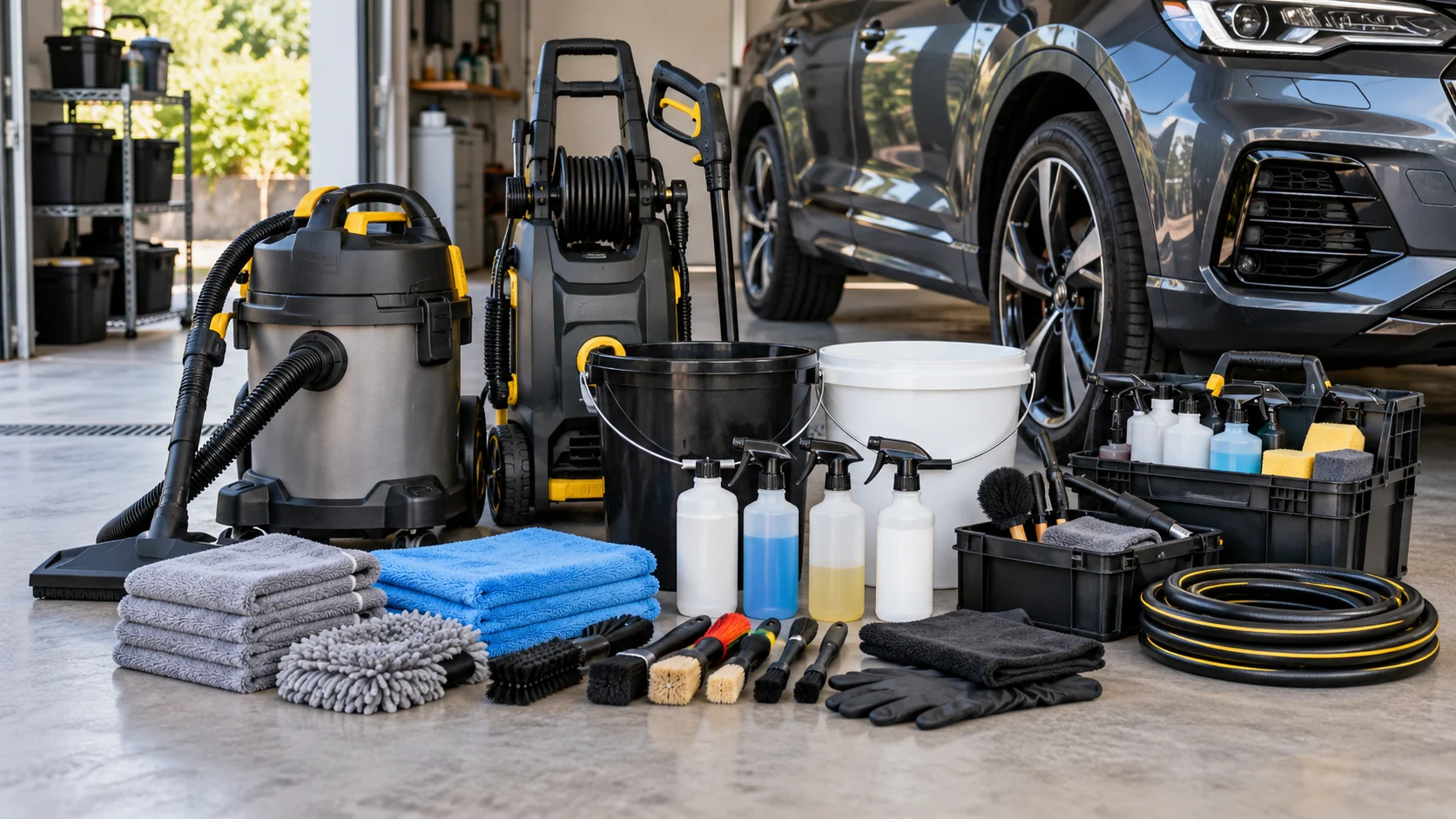
A crevice tool helps around seat edges and narrow gaps. An appropriate upholstery nozzle is useful for fabric surfaces, while a compatible soft brush can help on delicate areas. Check the included accessories rather than assuming every pictured attachment comes in the box.
Hose length matters, but longer is not automatically better. You want enough reach without dragging the machine against paintwork or stretching the hose around a door. Check connector compatibility before buying extensions or third-party tools.
During practice, move around a parked car and check whether you can reach the boot and both footwells comfortably. Keep the machine stable on the ground and reposition it deliberately. Avoid pulling it along by a stretched hose.
5. Choose a manageable tank and filter system
A larger container can reduce emptying stops, but it also occupies more space. For ordinary interior vacuuming, carrying and storing the machine may matter more than maximum tank volume. The quoted container capacity is not necessarily its usable liquid capacity.
Read the exact model's instructions for filters and bags. Different versions can use different filter systems. Follow the specified setup for dry debris and liquids, including removing any bag that is unsuitable for wet pickup. Never assume that another model's instructions apply.
Allow time for emptying and maintenance after jobs. Damp dirt left inside a closed machine can create an unpleasant next-day task. Clean the container and filter as directed, and let washable components dry fully before returning to dry operation where required.
6. Kärcher WD 2 Plus: a compact option to compare
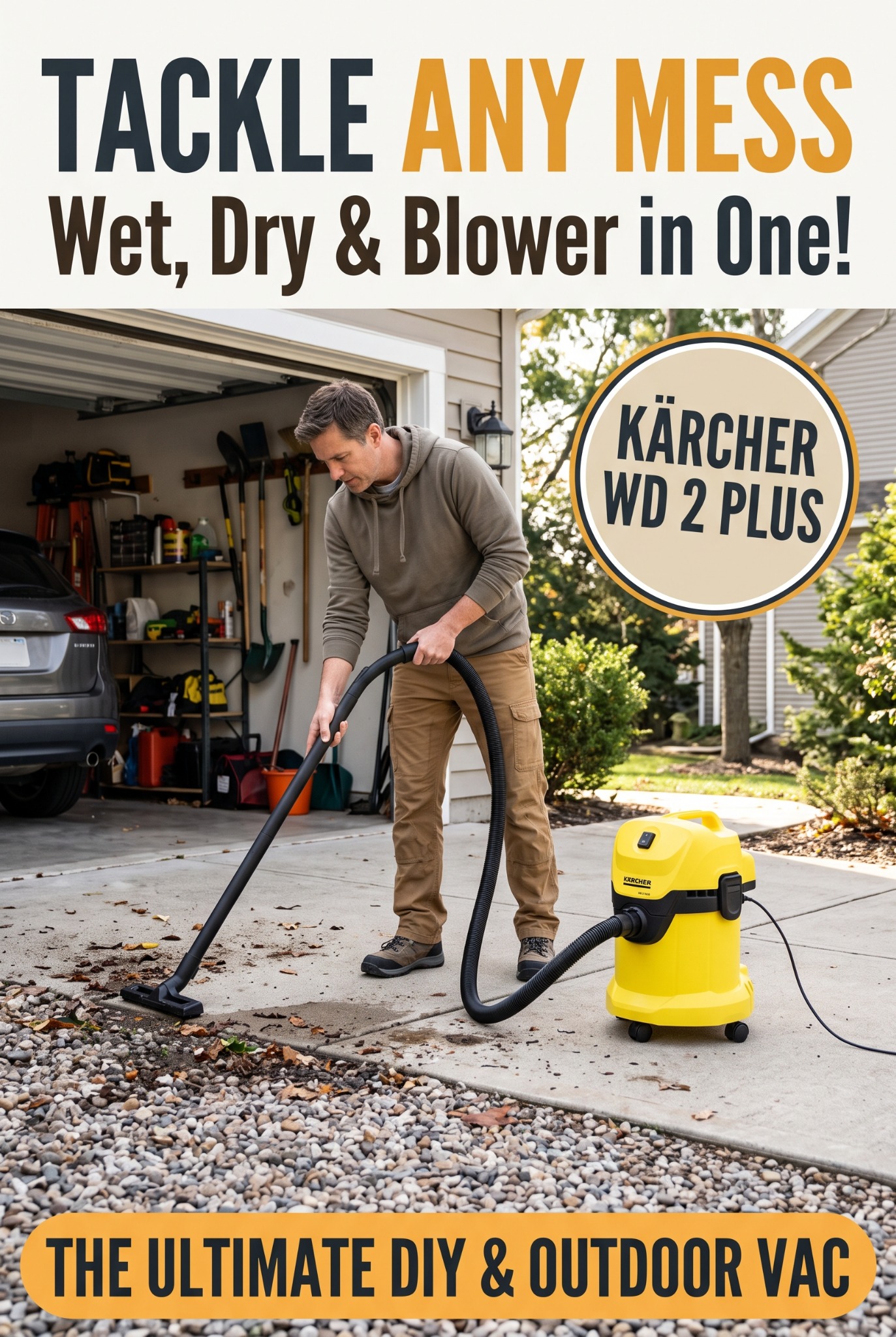
The Kärcher WD 2 Plus deserves a place on a budget-conscious shortlist for learning car cleaning and comparing compact wet-and-dry machines. Its appeal is straightforward: wet and dry pickup, a compact format and a blower function within Kärcher's Home & Garden range.
Kärcher lists the WD 2 Plus V-12/4/18 with a 12-litre plastic container, 1,000W rated input, a four-metre cable and a 1.8-metre suction hose. Those specifications describe that particular version. Check the selected Amazon model because filters, cable lengths and accessory packages vary.
For someone starting out, sensible value means paying for capabilities you will use while keeping money available for cloths, brushes and other essentials. Compare the current price with the complete cost of suitable accessories and replacement filters. We have not verified a live price, sales ranking or the exact bundle behind the supplied Amazon short link, so we are not claiming it is the cheapest or a bestseller.
Business-use check: this is a Home & Garden model, not a recommendation for all-day professional work. Confirm the exact model's permitted use and warranty with Kärcher before buying it for paid valeting. If commercial use is excluded, choose an appropriately rated professional vacuum instead.
You can also read our Kärcher WD 2 Plus product guide in Recommended Products.
7. Plan your power supply before accepting bookings
A corded vacuum needs a suitable electricity supply. Ask customers about access and permission before the appointment, including whether the cable can reach the working area safely. “There is a socket somewhere” is not a complete plan.
Inspect the lead and plug, keep connections dry and use electrical equipment and protection suitable for the location. Follow the machine and extension-lead instructions, including loading limits and any requirement to unwind a reel. Avoid creating a trip hazard across a walkway.
Do not assume a small portable power station can run a mains vacuum. Check continuous output, starting demand and usable energy against the actual machine. For a lean launch, planned customer power may be simpler. Our guide to starting without a van explores a compact setup.
8. Work out the real cost of ownership
Make a short list of the machine, required attachments, replacement bags, filters and suitable power arrangements. Include storage and the time spent cleaning the equipment. The cheapest purchase can become inconvenient if essential consumables are difficult to obtain.
Use a simple comparison table before ordering:
| Check | What you need to establish |
|---|---|
| Intended use | Your workload is permitted by the manufacturer. |
| Access | Hose, cable and tools reach the areas you clean. |
| Transport | The machine fits securely with your other kit. |
| Running costs | Bags, filters and spares are available and affordable. |
| Support | Warranty terms cover the way you intend to use it. |
Set an upgrade trigger based on experience. Repeated delays, unsuitable duty limits or growing bookings may justify professional equipment. Buying capacity for an imaginary full diary can tie up money you need elsewhere.

9. Practise a repeatable interior routine
Before your first paid booking, practise on a suitable vehicle with permission. Remove rubbish and loose mats, inspect for damage and valuables, and work systematically through the cabin. Use the correct nozzle and avoid forcing tools near wiring or seat mechanisms.
Time the whole routine, including setup and pack-down. Check carpets and seat edges in good light, clean your equipment afterwards and note what slowed you down. This tells you more about your next purchase than collecting gadgets.
Keep specialist or hazardous contamination outside a basic service. Ordinary wet-and-dry capability does not authorise collecting fuels, solvents, hot material or hazardous dust. Follow the manual's exclusions and stop when a job needs specialist handling.
Choose the vacuum around your first service
Start with permitted use, useful reach, manageable size and obtainable spares. The Kärcher WD 2 Plus is worth comparing for compact home-and-car cleaning, with commercial suitability checked before it becomes business equipment. A careful buying decision should leave you with both a useful machine and enough budget to deliver the rest of your service.
Bring your equipment, pricing and launch tasks together with the Mobile Car Valeting Blueprint. You can see the bundle on Payhip before deciding.
Frequently asked questions
Will a wet-and-dry vacuum wash car seats?
Not by itself. Wet pickup and spray extraction are different functions. Use appropriate extraction equipment and methods when offering deep fabric cleaning.
Is a bigger motor always better?
No. Input wattage alone does not establish cleaning performance. Compare suitable performance data, attachments, filtration and practical handling.
Can I use the Kärcher WD 2 Plus commercially?
Check the exact model's manual and warranty with Kärcher first. It belongs to the Home & Garden range; do not assume paid or continuous use is permitted.
Do I need a van for a vacuum and starter kit?
Not necessarily. A suitable car may accommodate a compact setup, provided everything fits securely and your transport arrangements suit the work.
What should I buy alongside the vacuum?
Start with compatible tools and consumables you actually need, suitable power arrangements, soft brushes and clean cloths. Add specialist equipment when your service requires it.
Get the Mobile Car Valeting Blueprint on Payhip
Explore the blueprint collection for guides, planners and practical worksheets.