
Mindset
How to Find Cleaning Motivation When You Don’t Know Where to Start
Find a manageable first step with small cleaning tasks, realistic routines and practical encouragement for the days when you do not know where to begin.

You walk into the kitchen, notice the washing-up, remember the laundry and then spot the pile of things on the table. Every job seems connected to another job. Before you have picked up a cloth, cleaning already feels exhausting.
When you do not know where to start, make the first task smaller and more specific. “Clean the house” asks you to make dozens of decisions. “Clear this corner of the kitchen counter” gives you one place to begin and a finish you can recognise.
This is a practical guide to finding cleaning motivation without guilt, expensive supplies or an all-day cleaning marathon. It is also part of our Mindset section, where we explore manageable ways to start, build routines and make progress at home or in a new business.
1. Stop asking yourself to clean everything
A whole home is not one task. It is a collection of separate jobs, some urgent, some useful and some that can wait. Treating them as a single responsibility can make even a short session feel impossible to finish.
Choose a smaller boundary: one surface, one chair, one section of floor or one sink. You are deciding what you will do now, not ignoring the rest forever.
Try saying, “For the next few minutes, I am only dealing with the table.” If you notice something else, write it down or leave it for later. Avoid turning a simple wipe-down into sorting every cupboard in the room.
A useful first goal is to make one part of your home easier to use. You do not need to make it ready for photographs or visitors.
2. Pick a starting point that helps your next activity
If you cannot choose a room, ask: “What would make the next part of my day easier?” That gives you a practical reason to clean beyond feeling that you ought to.
| What you need next | A small place to start | A clear finish |
|---|---|---|
| Prepare a meal | One kitchen work surface | Space cleared and surface cleaned |
| Sit down comfortably | One chair or sofa seat | Items returned and seat usable |
| Get dressed tomorrow | The clothes you need | One outfit ready in a known place |
| Use the bathroom | The basin | Items moved and basin cleaned appropriately |
| Walk through the room | A short route across the floor | Loose items moved out of the walkway |
Deal with immediate practical problems, such as a spill or blocked walkway, before decorative tidying. Otherwise, choose the task with the most useful result for you. There is no rule that the kitchen must always come first.
3. Set a short limit—and let yourself stop
Try a five-minute session if that feels manageable. Set a timer, choose one task and work at a comfortable pace. The timer is a boundary, not a test of speed.
When it rings, finish any immediate step that needs completing safely, then pause. You can continue if you want to, but stopping is allowed. A short session is not a trick that obliges you to clean for an hour once you have started.
If five minutes feels too much, try putting away three items or washing one mug. If timers make you feel rushed, use the task itself as your stopping point: “I will finish this surface, then sit down.”
You may feel more motivated after seeing a result, or you may simply have completed a useful task without enjoying it. Both outcomes count.
4. Separate tidying, cleaning and organising
These jobs overlap, but they ask different things of you. Tidying puts items back where they belong. Cleaning removes dirt. Organising changes how you store or arrange things.
For a quick reset, tidy only enough to reach the surface you want to clean. You do not need to redesign the entire storage system before wiping a table.
Use a small temporary basket for items that belong elsewhere, then return them after your chosen task. Keep it limited: a basket that grows for weeks becomes another unfinished job. Avoid putting important papers or someone else's belongings in the bin just to make the surface look clear.
5. Remove one obstacle before you begin
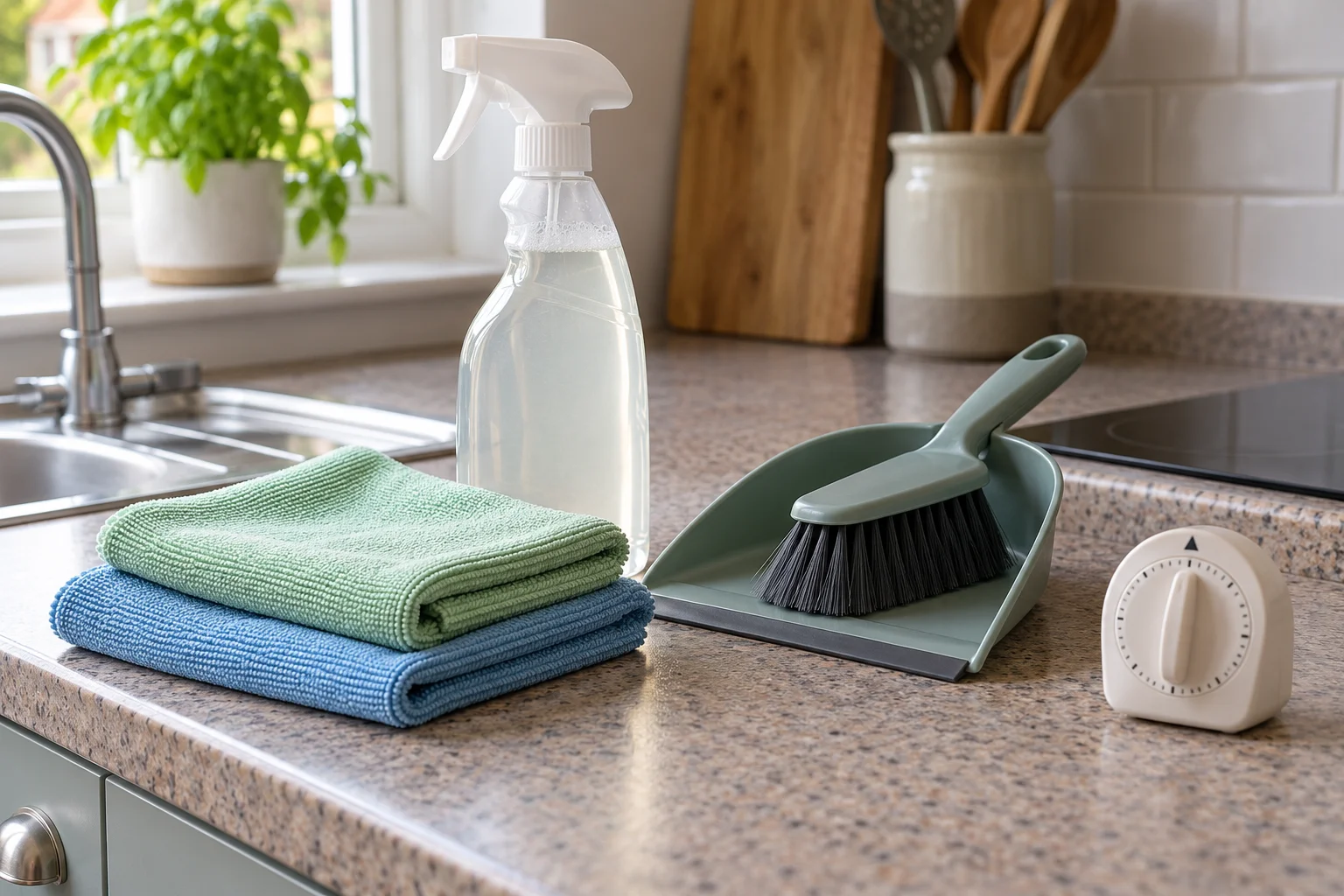
Sometimes the problem is practical. The vacuum is buried behind boxes, the cloths are all dirty or the bin has no liner. Before trying to motivate yourself harder, fix the obstacle that keeps interrupting you.
Gather only what your chosen task needs. A suitable cloth and cleaner may be enough for a surface; you do not need every bottle in the cupboard. Follow product and surface-care instructions, and keep supplies safely stored when finished.
If equipment is awkward to handle, consider whether a simpler tool or different task would suit you better. Buying something new is not a requirement for getting started. First check whether the supplies you already own can do the job.
6. Define “finished” before the task expands
Without a stopping point, cleaning can turn into a moving target. You clear the table, notice the windows, then decide the curtains also need attention. The original success disappears beneath a longer list.
Choose a modest standard in advance: “The table is finished when it is clear enough to eat at and the surface is clean.” That does not require polishing the chairs or reorganising every drawer.
A usable home and a flawless home are different goals. Decide what matters for the room's everyday purpose. If you share the space, agree a reasonable standard together rather than assuming everyone means the same thing by “tidy”.
7. Make the session a little more pleasant
You could put on a favourite song, open the curtains or listen to something you enjoy while doing a familiar task. Choose an accompaniment that helps you stay with the job rather than drawing you into scrolling.
Keep distractions out of tasks that need your full attention. And if silence suits you better, use silence. There is no ideal cleaning soundtrack or routine that everyone has to follow.
You can also arrange a short cleaning session alongside someone else at home. Give each person a specific task so you are sharing the work, not simply adding another person for you to direct.
8. Notice what you have completed
A long list of unfinished jobs can hide the progress you have made. After your session, write down one result: “Cleared the chair”, “Washed the breakfast dishes” or “Put the laundry away”.
If it helps, take a private before-and-after photo of the small area. You do not need to post it online or compare it with somebody else's home. The purpose is to notice the change you made.
Avoid dismissing the result because another room is still messy. Completing one task does not become meaningless when other tasks remain. That applies to household work and to learning almost any new skill.

9. Plan for low-energy days
Some days offer less time and energy than others. Create a smaller version of your routine so the choice is not between a complete clean and doing nothing.
Your minimum might be putting food away, clearing a usable space and dealing with the dishes you need next. The exact tasks depend on your household. Leave non-essential work for another day without treating that decision as failure.
After a long working day or a night shift, rest may be the more useful next step. Cleaning motivation should not become pressure to ignore your limits. Ask for practical help where possible, and divide shared household responsibilities clearly.
10. Give tomorrow a simple starting point
Before finishing, choose one small task for next time. Write it where you will see it: “After breakfast, clear the sink” is easier to act on than “Get the house sorted”. Pick a cue that already fits your day.
Try the routine for a few days and adjust it. If mornings are always rushed, choose another moment. If the task keeps getting skipped, reduce its size or remove an obstacle.
You are testing what works in your home. A missed day is information about the routine, not a reason to abandon it. Resume with the next manageable task rather than trying to repay every missed chore in one exhausting session.
What this approach can teach you about starting a business
The same practical habits can help with a new business: break a large goal into a specific action, prepare what you need, define a realistic finish and review what happened. “Launch a business” is a big instruction. “Write down three services I can confidently offer” is a starting point.
Whichever business blueprint you follow, a workable mindset means being willing to begin on a small scale, learn and change your plan. Positive thinking alone cannot replace skills, sound prices, customer demand or enough time. It can, however, be useful to approach those questions with curiosity instead of expecting to know everything immediately.
If cleaning is something you enjoy and you are considering paid work, read which services a new domestic cleaning business can offer and how to start around your current job. You can then explore our Cleaning Business Startup Bundle or view the package on Payhip. You do not need to turn household cleaning into a business to benefit from this article.
Would you prefer a timed routine to follow? Try our gentle 15-minute reset for an overwhelming home, with time included for finishing and putting supplies away.
Your next step can be very small
Choose one place that would make today easier. Decide what finishing looks like. Gather the supplies you need and give it a few comfortable minutes. Then notice the result and decide whether to stop.
You do not need to feel ready to clean the entire house. You only need a first step that fits the time and energy you have. Explore more practical encouragement in Mindset as you build your own routine.
Frequently asked questions
Where should I start if every room is messy?
Choose one small area that helps your next activity, such as preparing food or sitting down. Deal with an immediate spill or obstructed walkway first, then keep the task limited.
What if a five-minute timer does not motivate me?
Use a task-based limit instead: put away three items or clean one surface. A timer is an optional tool, not a requirement.
Should I declutter before cleaning?
Move enough items to reach the area you need to clean. Save bigger sorting decisions for a separate session so they do not prevent a useful small clean.
How do I stay motivated when the mess comes back?
Expect some repetition in a lived-in home. Aim for a manageable reset, share responsibilities where possible and focus on keeping useful spaces available.
Do I need a cleaning checklist?
Only if it helps. Start with one to three tasks rather than a whole-house list. A checklist should make the next step clearer, not create more pressure.
Thinking about cleaning as a business? Use a structured guide to plan services, prices and your first customers.
Explore the Cleaning Business Startup Bundle on Payhip
Explore the blueprint collection for guides, planners and practical worksheets.