
Mobile Car Valeting
Can You Start a Mobile Car Valeting Business Without a Van?
Explore how to start a mobile valeting service from a suitable car, plan equipment and customer supplies, and decide when a van is worth the investment.
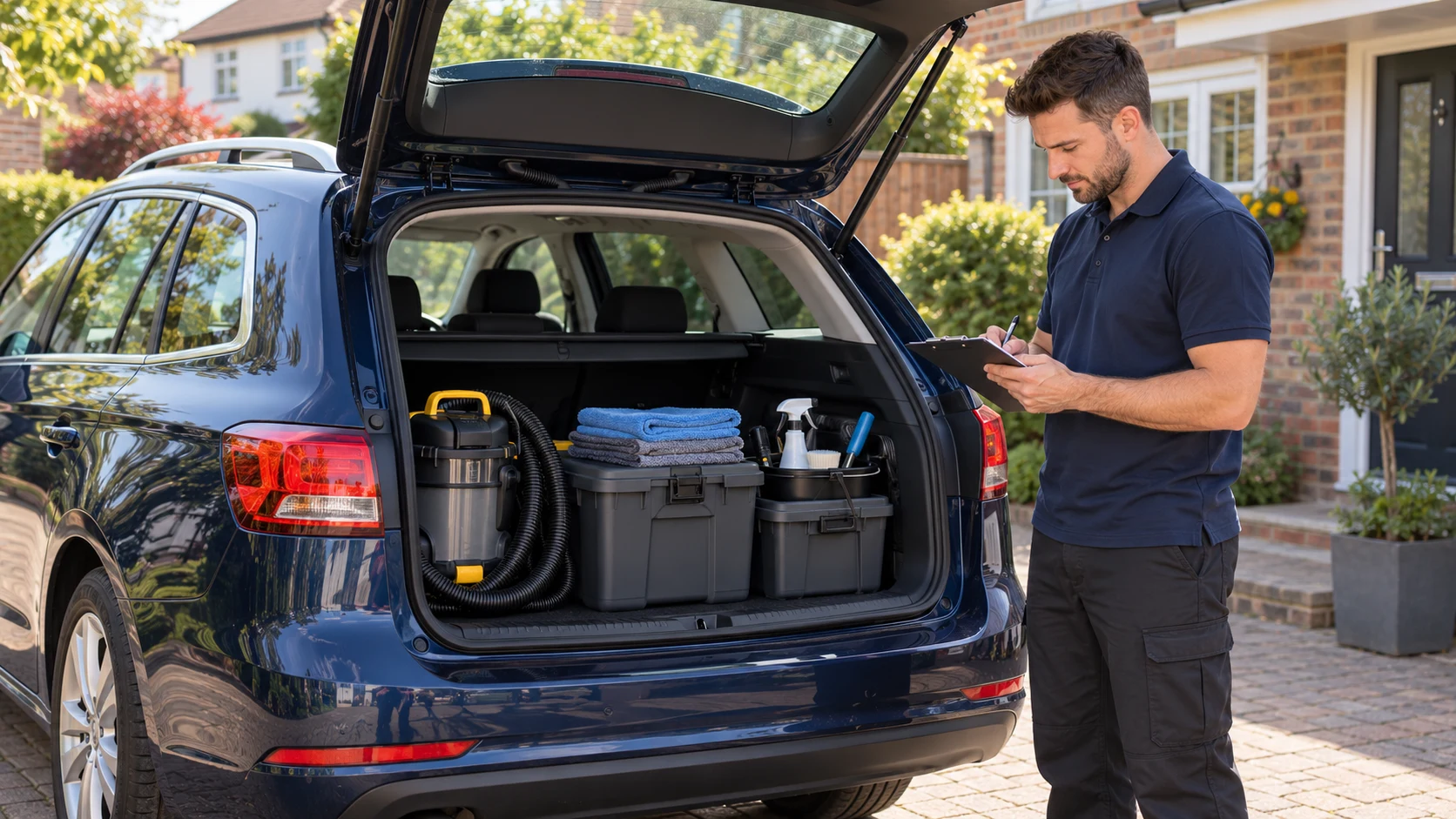
Yes, you can start a mobile car valeting business without a van. A suitable car can carry a modest setup for a carefully chosen service. The important question is whether you can transport your equipment safely, work at the customer’s location and deliver what you promise without relying on assumptions about water, electricity or space.
A van can become useful as the business grows, but buying one does not create customers or guarantee profit. Starting smaller may let you test demand before committing to another vehicle. This guide explains when that approach makes sense, where its limits are and what should trigger an upgrade.
Our Mobile Car Valeting Blueprint includes an 81-page beginner’s ebook and 12 practical PDF tools for planning, pricing and marketing. Explore the complete package on Payhip while you build your first service.
Choosing your vacuum? Read our wet-and-dry vacuum buying guide and the Kärcher WD 2 Plus product guide for practical buying and business-use checks.
What does “mobile” actually mean?
Mobile means you travel to the customer. It does not automatically mean you bring a large water tank, generator and permanent workshop installation. Some operators use customer supplies by agreement; others carry everything needed for their particular service.
Be precise in your advertising. If you need an accessible tap and suitable electricity supply, say so before confirming the booking. Calling yourself “fully self-contained” would create the wrong expectation. Clear requirements are more professional than arriving and asking the customer to solve an equipment problem.
Without a van is also different from without any transport. Carrying a vacuum, chemicals and used textiles on public transport is rarely a practical basis for regular bookings. If you have no vehicle, a permitted fixed working location may be a more realistic model to investigate.
Choose a service that fits your starting setup
A compact interior refresh is often easier to transport than a service requiring extensive exterior washing equipment. You might offer vacuuming, accessible interior surfaces and glass, with a clear policy for heavy pet hair, excessive dirt and items the customer needs to remove.
Exterior maintenance washing may also be possible, provided the location, water supply, runoff controls and vehicle condition suit your method. Do not treat a waterless or rinseless product as a universal answer to heavy mud or an unsuitable working site.
| Starting offer | Potential fit for a car-based setup | Main limitation to resolve |
|---|---|---|
| Interior refresh | Compact vacuum, brushes, cloths and suitable cleaners | Power, access and a clearly limited cleaning scope |
| Maintenance exterior wash | Possible with suitable portable equipment | Water supply, safe working space and wastewater control |
| Combined maintenance valet | Possible if the complete load fits safely | More equipment, laundry and setup time |
| Extraction or specialist detailing | Depends on equipment, competence and conditions | Extra machines, drying arrangements and greater complexity |
| High-volume fleet washing | Usually a poor first fit for a minimal setup | Capacity, site arrangements and sustained productivity |
For the wider startup decisions, read How to Start a Mobile Car Valeting Business in the UK. Start with work you can repeat reliably rather than a menu designed to impress everyone.
Check your car before buying more equipment
A roomy boot is useful, but volume is only one part of suitability. Measure the opening, check whether the vacuum fits upright and consider how you will load and unload without repeatedly lifting awkward items over a high sill.
Keep equipment secured and away from passengers. Bottles need suitable closed containers and protection against leaks. Clean cloths should stay separate from used textiles and dirty tools. Follow product storage instructions, and avoid turning the family passenger compartment into permanent chemical storage.
Check the vehicle’s permitted loaded weight and axle limits, allowing for people, fuel and everything you carry. GOV.UK explains maximum authorised mass and where to find it. Do not assume that anything fitting inside the car is safe to transport; use an appropriate weighbridge if you need to establish the actual loaded weight.
Build a compact kit around booked work
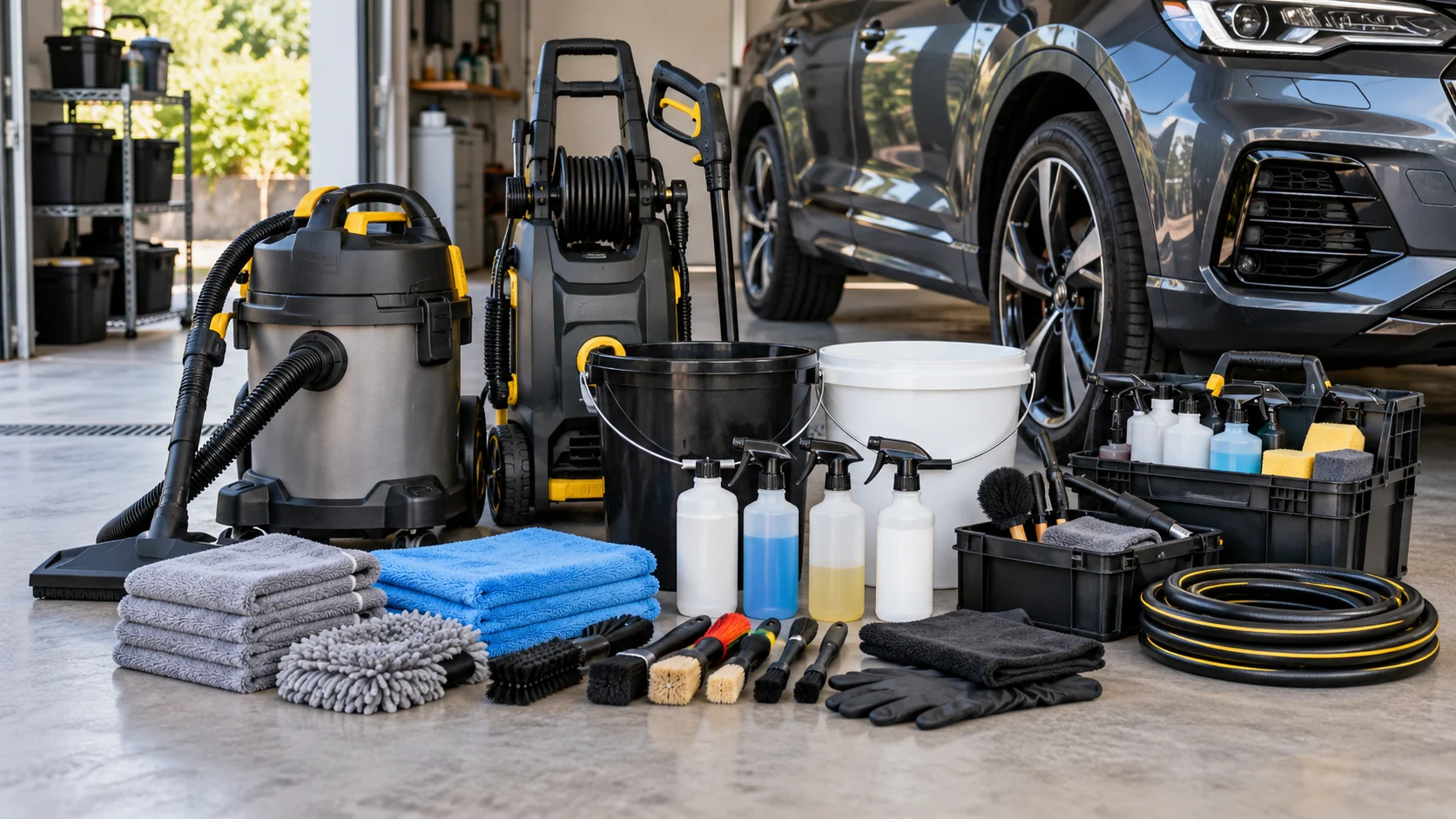
For a basic interior service, your load might include a suitable vacuum and attachments, soft brushes, compatible cleaners, glass cloths, general interior cloths, protective equipment and separate containers for clean and dirty supplies. Add a job checklist and a way to record the vehicle’s condition with permission.
An exterior service adds its own tools, rinse arrangements and wastewater equipment. Our beginner’s equipment checklist separates essentials from upgrades so that you can plan purchases in stages.
If you are comparing product collections, our Autoglym Supreme Car Care Collection guide explains the listed contents and practical limitations. It is an optional product range to consider, not a complete business setup or a requirement to begin. That recommendation page contains an Amazon affiliate link and its disclosure.
Agree water and electricity before you travel
Customer supplies can reduce the equipment you carry, but only when their use is agreed and the setup is suitable. Ask about tap location, parking distance, power access and permission to work on the site. A customer booking from a flat may not control the shared car park or have an accessible supply.
Inspect equipment and connections, keep electricity away from wet areas and follow the manufacturer’s requirements. Do not improvise a long chain of extension leads because the socket is further away than expected. Battery equipment may help with some tasks, but you still need enough runtime and a charging plan.
Build a fallback into your booking process: if the agreed facilities are unavailable, you may need to change the service or rearrange the visit. Explain that beforehand rather than negotiating after unloading everything.
Wastewater still matters when you work from a car
Using the customer’s tap does not make the customer responsible for your wash water. Check where runoff will travel before accepting exterior work. A roadside drain or a driveway sloping towards one can make a seemingly convenient location unsuitable.
In England, Environment Agency guidance explains that contaminated water should be collected for reuse, treatment or appropriate removal, or discharged to foul/combined drainage with the water company’s permission. It must not enter surface-water drainage. Check the relevant environmental regulator’s requirements elsewhere in the UK.
Containment and recovery equipment take up space too. Include them in your transport plan where needed, along with a suitable disposal arrangement. If the working method and location cannot be made appropriate, decline the exterior job or offer an agreed alternative. Owning a van would not remove this responsibility.
Check insurance and permissions for your actual work
Tell your motor insurer that you intend to travel between customers and carry valeting equipment. Ask them to confirm the appropriate cover for that use; do not assume your existing personal or commuting cover is sufficient. Explain any modifications or proposed trailer use before committing to them.
Discuss the work itself with a business insurer or broker, including accidental damage while cleaning a customer’s vehicle, tools in transit and any exclusions relevant to treatments you offer. Driving a customer’s car, even to reposition it, raises a separate question to clarify before doing so.
Also check permission to work at shared, rented or commercial premises. If your own car is leased or financed, check restrictions that may affect your intended use or modifications. These checks are part of choosing a workable operating model, not a reason to buy a van automatically.
Will customers take a car-based valeter seriously?
Some customers prefer a fully equipped van, particularly where they have no supplies available. Others will care more about punctuality, clear communication, careful work and the agreed result. You cannot serve every customer with a small setup, and you do not need to.
Present yourself honestly. Keep the vehicle and equipment tidy, confirm the service in writing and explain practical requirements before arrival. Use photographs of your own work with permission. Avoid showing a large commercial rig in your marketing if it creates expectations your setup cannot meet.
A modest service area also helps. Shorter journeys reduce fuel costs and make a return for replenishment less disruptive, although repeated trips home are a sign to reconsider your packing or booking capacity.
Compare the true costs before upgrading
Starting with a suitable car can avoid an immediate vehicle purchase, but the car is not free to operate. Include fuel, additional wear, insurance changes, cleaning, equipment storage and loading time in your calculations.
Compare a van’s additional monthly costs with the extra contribution it could realistically generate. For example, if a proposed upgrade adds an illustrative £300 a month and each additional job contributes £30 after its direct costs, you need ten additional jobs just to cover that increase. Those are planning figures, not market prices, and they do not cover every tax or ownership consideration.
The strongest reason to upgrade is a measured limitation: profitable bookings you cannot serve, too much loading time, inadequate safe capacity or a justified need for a professionally installed self-contained system. “It looks more established” is a weaker reason on its own.
A practical first-month test
- Define one service. Write down what is included, excluded and required at the customer’s location.
- Test the transport setup. Pack, secure, unload and repack the equipment before buying additional machines.
- Practise the complete job. Allow for travel, preparation, cleanup and laundry as well as cleaning.
- Take a manageable number of suitable bookings. Record time, costs and practical problems rather than rushing to fill every day.
- Review the evidence. Keep the car-based model, adjust the service or investigate a van based on what actually limits you.
The Mobile Car Valeting Blueprint gives you a structured companion for these decisions. You can get the ebook and supporting PDF tools through Payhip.
Frequently asked questions
Can I start with a small hatchback?
Possibly, with a limited service and a safely secured load. Check equipment dimensions, weight and separation from passengers. A small boot may suit interior work better than a full exterior setup.
Do I need to carry my own water?
Not necessarily. You can agree to use a suitable customer supply, but must confirm access and manage wastewater properly. Do not advertise a self-contained service if you depend on customer facilities.
Can I put a large water tank in my car?
Do not assume this is suitable. Water weighs approximately 1kg per litre, before the tank and fittings. Vehicle limits, secure installation and load movement all need proper assessment.
Would hiring a van be a useful stepping stone?
It can help assess space for occasional work, provided the hire agreement and insurance permit the intended use. Include hire, fuel, collection and loading time before deciding whether the job is worthwhile.
Should I charge less because I do not have a van?
Price the agreed work, time and costs. A different transport setup does not automatically justify a discount, but customers must understand any facilities they need to provide.
Start with a workable service, then grow
A van can be a useful investment when the work justifies it. Until then, a suitable car and a carefully limited service may help you test a real business without taking on unnecessary vehicle costs. Make safe transport, honest booking requirements and consistent results your starting point.
Plan your mobile valeting business step by step
Explore the Mobile Car Valeting Blueprint for the beginner’s ebook and 12 practical PDF tools covering planning, pricing and marketing.
Explore the blueprint collection for guides, planners and practical worksheets.