
Motorhome Travel & Portable Power
Portable Power Station or Campsite Hook-Up: Compare the Cost of a Weekend
Compare two-night camping costs, battery capacity, recharging and break-even weekends with clear UK examples and a practical power checklist.
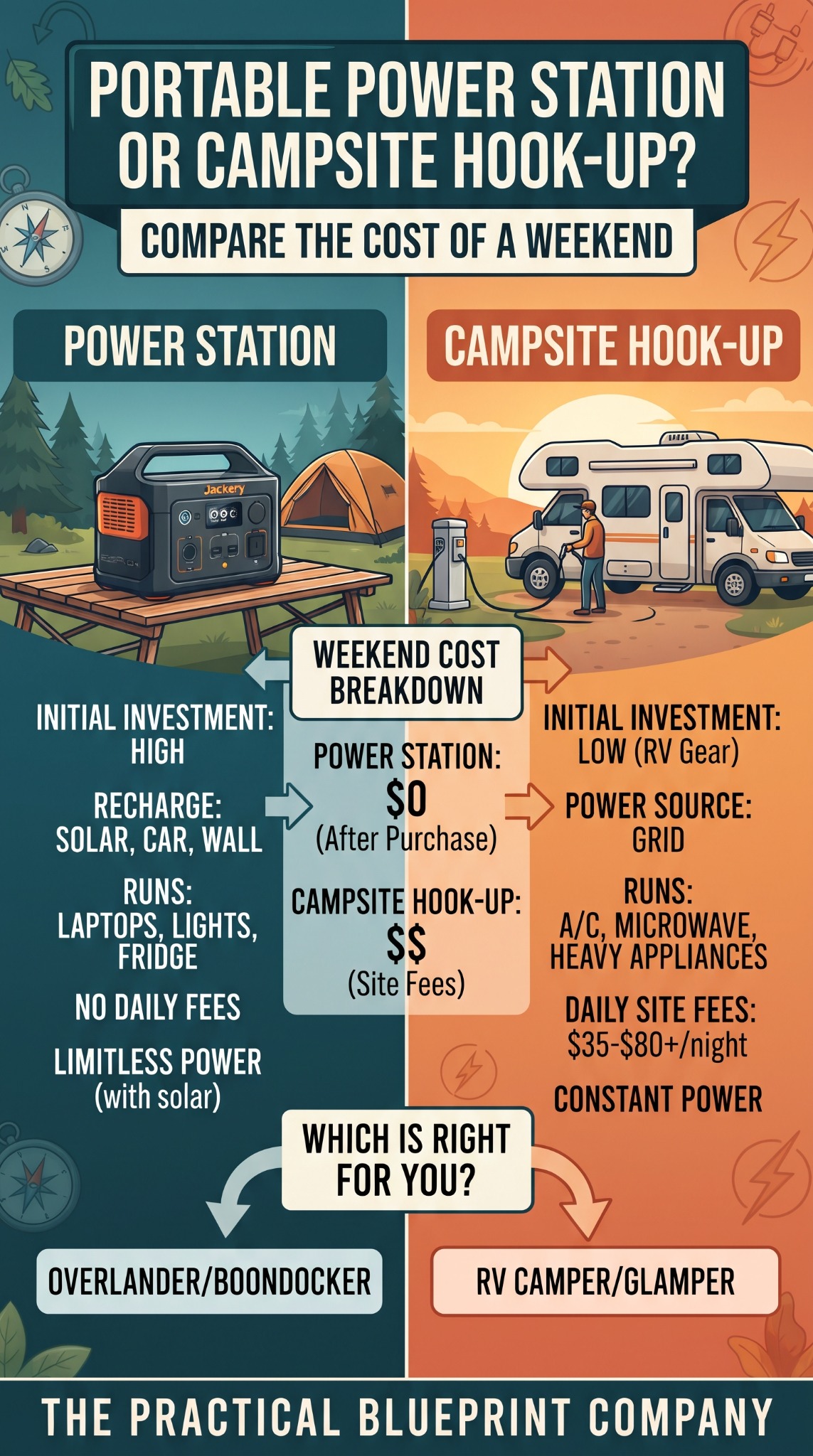
For an occasional weekend away, campsite hook-up can cost much less than buying a portable power station. If you already own a suitable battery, or regularly choose non-electric pitches, the calculation can change. The useful comparison starts with what you need to power and the extra amount you actually pay for electricity.
A phone and a couple of lights are one problem. A fridge, laptop and electric heater are quite another. Before spending hundreds of pounds, work through a realistic two-night trip and separate the purchase price from the running cost.
Our pin highlights freedom, upfront investment and campsite convenience. This guide puts those ideas into a UK budgeting example. All worked figures below are planning assumptions unless identified as published campsite tariffs. They are not product quotations or promises of savings.
Compare the extra charge, not the entire pitch fee
A campsite fee pays for a place to stay and may include toilets, showers, water, waste facilities and other services. Carrying a battery does not remove those costs. Compare equivalent electric and non-electric pitches for the same dates, party and facilities.
For example, Higher Harlyn Park’s published 2026 tariff lists a low-season non-electric pitch at £25 and an electric pitch at £30. The relevant difference is £5 per night, or £10 for two nights. Brook Lodge Farm lists electric hook-up separately at £6 per night: £12 for two nights. These are individual examples, not a national average; check availability and booking terms.
Some campsites include electricity in the pitch price. Others meter consumption separately. The Caravan and Motorhome Club explains that its metered arrangements separate electricity from the pitch fee. If declining electricity produces no discount at your chosen site, there is no avoided hook-up charge to recover through a battery purchase.
Our Motorhome Europe guide and travel planner can help bring overnight-stop choices and trip costs into one plan. Keep your electricity comparison alongside the rest of the journey budget.
Work out what your weekend needs
Power, measured in watts (W), tells you the instantaneous load. Energy, measured in watt-hours (Wh), tells you how much is used over time. Multiply watts by operating hours to estimate watt-hours. A 10W light running for five hours uses 50Wh.
Here is a deliberately modest, illustrative two-night budget. Use measured consumption or the manufacturer’s figures for your own equipment; these are not universal appliance ratings.
| Device | Weekend assumption | Energy |
|---|---|---|
| Two phones | Four charges at 15Wh each | 60Wh |
| LED lighting | 5W for 8 hours total | 40Wh |
| Laptop | 45W average for 4 hours | 180Wh |
| Subtotal | Device energy only | 280Wh |
| Planning allowance | 25% added for losses and uncertainty | 70Wh |
| Working budget | Before a separate emergency reserve | 350Wh |
A nominal 500Wh station might suit this light-duty example, but only after checking usable capacity, output compatibility and reserve. AC inverter standby consumption can matter when small loads run for long periods. Direct USB or suitable DC connections may reduce conversion losses, where the equipment supports them.
A fridge changes the picture. If your particular fridge consumes 400Wh per day under the expected conditions, two days add 800Wh before allowances. An absorption fridge running electrically can be a very different load from an efficient compressor fridge. Check the actual appliance rather than assuming every camping fridge behaves alike.
A clear two-night cost comparison
Assume the same campsite offers a non-electric pitch for £25 per night and an equivalent electric pitch for £30. Assume a suitable power station costs £400 and its home recharge uses 0.6kWh at an illustrative tariff of 25p/kWh. Recharge cost is 15p. These purchase and home-electricity figures are examples, not current market prices.
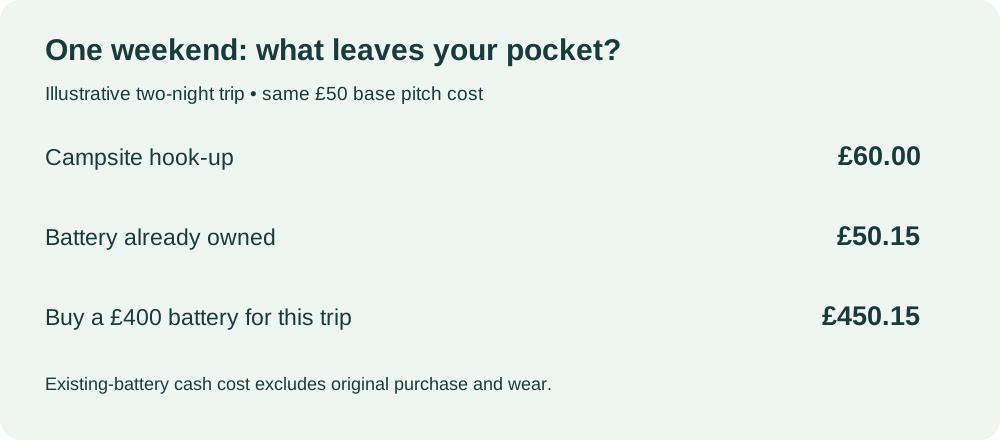
- Hook-up: £50 base pitch cost plus £10 electricity premium = £60.
- Battery already owned: £50 pitch cost plus £0.15 recharge = £50.15 immediate cash cost.
- Battery bought for this trip: £50 pitch cost plus £400 purchase plus £0.15 recharge = £450.15.
The existing battery saves £9.85 of immediate expenditure in this example. That does not make its electricity free or erase its original cost, wear or eventual replacement. Buying one solely for a single weekend costs far more than paying the hook-up premium.
Keep the comparison equally capable. A battery budget covering phones and a laptop does not provide the same service as hook-up used for cooking and heating. If you replace electric cooking with gas, include the fuel cost and appropriate equipment in the alternative budget.
How many weekends before a battery pays back?
A simple cash break-even calculation is: extra equipment cost ÷ net saving per trip. With the assumptions above, £400 ÷ (£10 − £0.15) is about 40.6, so you need 41 comparable weekends to pass the initial purchase cost.
At four such trips each year, that is just over ten years. At twelve, it is around three and a half years. Neither is a guaranteed payback period: prices, battery condition, trip frequency and the availability of cheaper pitches can change.
If you add an illustrative £200 solar panel, a £600 setup needs about 61 weekends at the same £9.85 saving. Even if solar removed the assumed home recharge charge entirely, £600 divided by £10 still means 60 weekends. In this example, the major expense is equipment, not the small recharge bill.
This simple calculation excludes financing, maintenance, depreciation, resale value and replacement. It also assumes the battery lasts long enough and actually enables you to avoid the premium on every counted trip. Buy for useful capability and enjoyment first; treat financial savings as something to test.
Solar, car charging or a wall socket?
Home charging offers a predictable departure state. Measure the energy drawn at the wall if you want a better recharge estimate: stored battery capacity alone does not include charging losses.
Solar can extend your stay, but output depends on daylight, weather, shade, orientation and compatible input limits. A panel labelled 200W does not supply 200W continuously throughout the day. Do not build a winter weekend plan around ideal summer output.
Vehicle charging depends on the station, socket or installed charger, input limits and time spent driving. A standard car socket may replenish energy slowly. Check the supported arrangements and protect the vehicle’s starting battery; do not idle the engine simply to make an optimistic cost calculation work.
For a product example already on our site, read the Jackery Solar Generator 2000 v2 and 200W panel guide. It explains relevant specifications and charging limits. This is a specification-based guide, not a hands-on test or a claim that a large bundle is necessary for every camper. The page contains an affiliate link; we may earn a commission from qualifying purchases.
Why heating and kettles change the decision
A 1,000W heater used for two hours consumes 2,000Wh before losses. A 1,500W kettle running for four minutes consumes about 100Wh. Short bursts can be manageable with a suitably rated station; sustained heating quickly consumes a much larger energy budget.
Check continuous output and appliance starting requirements as well as capacity. A unit may store enough energy for a task yet lack the output to start the appliance. Conversely, a high-output station can run a device briefly while offering much less runtime than expected.
Hook-up also has limits. At a nominal 230V, a 6A supply corresponds to about 1,380W and 16A to about 3,680W in total. Confirm the pitch rating and account for everything operating simultaneously. Turning on a kettle while other appliances are running can exceed the available supply.
Which option fits your kind of weekend?
Choose hook-up when you camp occasionally, want predictable power, need substantial electrical use or would otherwise buy equipment mainly to avoid a small nightly premium. For cold-weather comfort, investigate suitable arrangements before booking rather than relying on a small battery for space heating.
Consider a power station when you already own one, prefer non-electric pitches, travel frequently with modest loads or value portable charging away from a bollard. Check carrying weight, storage and how you will recharge between stops.
Consider a mixed approach when some trips are light-duty and others need mains power. Owning a battery does not oblige you to refuse hook-up. An existing leisure battery may already cover your needs, so assess your vehicle’s present system before adding another.
A portable station may also support selected emergency essentials at home. Keep that separate from campsite savings to avoid counting the same benefit twice. Our family emergency binder checklist and UK emergency grab-bag checklist help organise contacts, supplies and backup arrangements.
Before you book or buy
- Price equivalent pitches for your actual dates and confirm whether electricity is optional, included or metered.
- List device energy needs and keep a reserve for delayed charging.
- Check battery output, usable capacity, temperature limits and recharge times.
- Use suitable campsite-rated hook-up equipment and follow site and manufacturer instructions. Keep connections dry and fully uncoil cables.
- Do not improvise adapters or backfeed a motorhome electrical system. Obtain competent advice for integrated connections.
- Keep batteries dry, ventilated and within their specified operating conditions. The pin is an illustration, not a setup guide.
The best weekend power choice is the one that meets your needs at a cost you understand. Start with a small energy list and a real campsite quote. Then decide whether the flexibility of a battery justifies its purchase price.
For the wider trip, explore our Motorhome Europe guide and planner bundle, or view the digital bundle on Payhip. You can also find planning inspiration on our Practical Blueprints Pinterest board.
Frequently asked questions
Is a power station cheaper than hook-up?
It can reduce immediate trip costs if you already own a suitable unit and can book a cheaper non-electric pitch. A new purchase often takes many comparable weekends to recover through avoided premiums.
Will a 500Wh battery last all weekend?
Possibly for modest phone, lighting and laptop use. A fridge, heater or extended AC use changes the requirement. Calculate your own loads and allow for losses and reserve.
Does solar mean free, unlimited electricity?
No. Solar has an equipment cost, variable output and battery storage limits. It can replenish energy under suitable conditions, but a backup plan remains useful.
Can I charge the station at the campsite?
Ask permission and check charges and available supply. Charging from paid hook-up does not avoid that hook-up fee; shared sockets should never be assumed to be a free charging service.
What if electricity is included in my pitch?
If there is no cheaper equivalent non-electric option, the battery provides no direct pitch saving. You may still value its portability, but that is a different benefit.
Sources and assumptions
Checked 25 October 2026. Published examples: Higher Harlyn Park 2026 tariff; Brook Lodge Farm pricing; Caravan and Motorhome Club smart metering; Club site electrical rules; Jackery guidance on loads and inverter consumption. Check current tariffs before booking. Device loads, equipment prices and home charging tariffs used in worked examples are illustrative.
Get the Motorhome Europe Guide & Planner on Payhip
Explore the blueprint collection for guides, planners and practical worksheets.