Mobile Coffee Business
Mobile Coffee Business Equipment Checklist: What You Need and What Can Wait
Plan your mobile coffee equipment with a practical checklist covering brewing, refrigeration, water, power, payments and the upgrades that can wait.
A useful mobile coffee business equipment checklist starts with your menu, your pitch and the number of drinks you expect to serve. It should help you build a working service, rather than encourage you to buy every attractive coffee gadget you see.
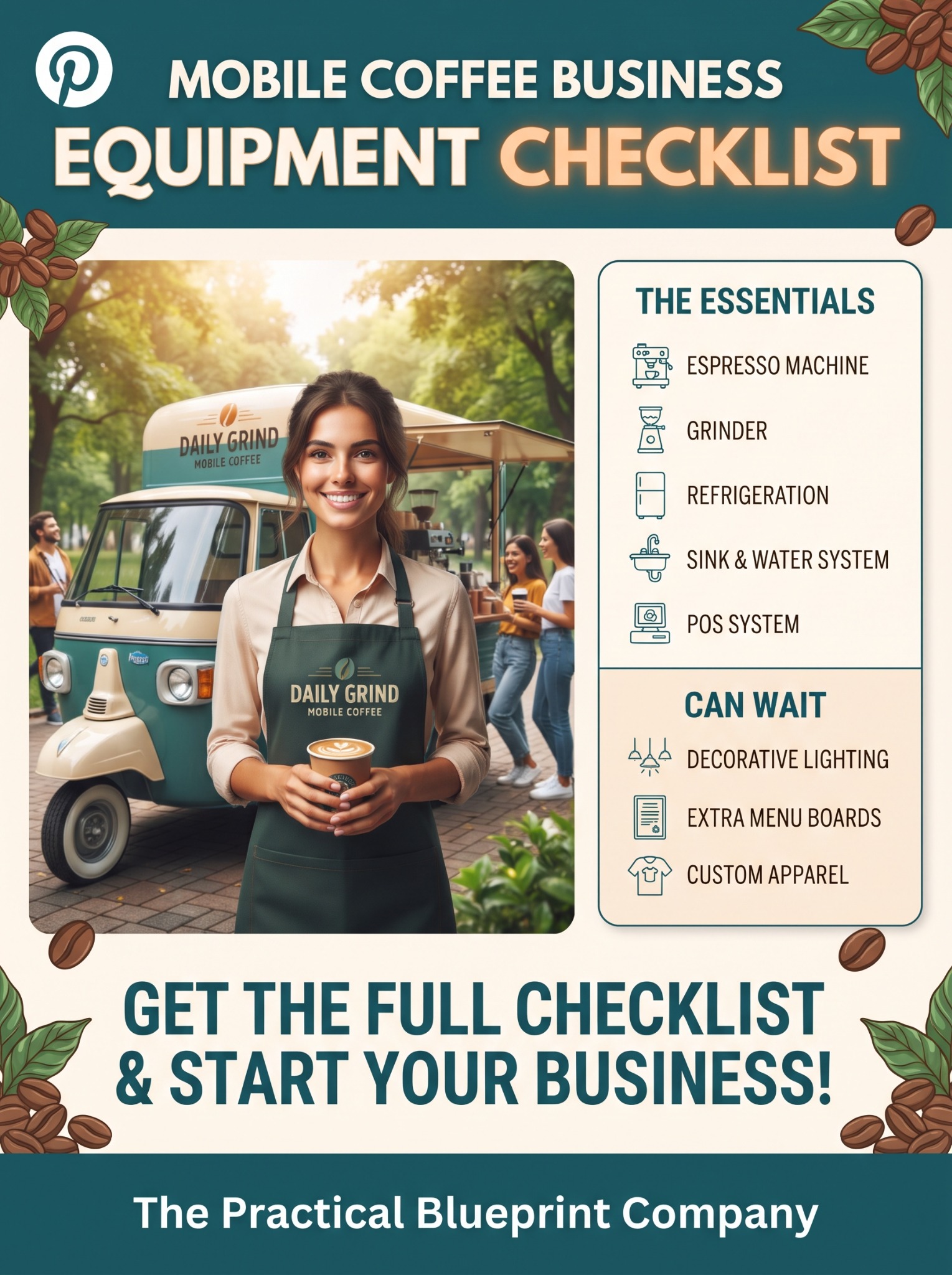
Our Pinterest pin highlights the main categories: brewing equipment, a grinder, refrigeration, washing facilities and a payment system. It also identifies spending that can often wait, including decorative lighting, additional menu boards and custom apparel. The distinction is practical: first equip yourself to serve customers reliably, then improve the appearance as the business develops.
This guide focuses on a small mobile espresso operation, while explaining where other formats differ. It is a planning checklist, not a technical specification or confirmation that a particular unit meets local requirements. Check your proposed setup with suppliers, competent installers and your local food-safety team before committing.
UK-focused guidance checked 24 October 2026. Equipment needs depend on your menu, facilities, operating conditions and local requirements. Illustrations show example arrangements, not installation instructions.
Start with four decisions before buying anything
Write down your opening menu, intended venues, available services and realistic busy-period demand. Selling filter coffee at a small indoor event is different from producing milk drinks throughout a morning rush at an outdoor market.
- Menu: espresso drinks, filter coffee, tea, iced drinks or food? Each addition affects storage, preparation and cleaning.
- Location: indoor venue, outdoor market, regular pitch or private booking?
- Facilities: what power, potable water, drainage and washing arrangements are genuinely available?
- Workload: how many drinks must you prepare during the busiest short period, not merely across the whole day?
Put the results alongside the mobile coffee business startup budget. This helps you compare complete setups rather than isolated prices. Include transport, installation, maintenance and replacement consumables in the purchasing decision.
Your equipment priorities at a glance
| Priority | Equipment or arrangement | What to check |
|---|---|---|
| Essential for your chosen menu | Brewer, grinder where needed, serving tools | Commercial suitability, capacity, cleaning and servicing |
| Essential where chilled ingredients are used | Reliable cold storage and temperature monitoring | Transport, trading conditions and safe storage procedures |
| Essential operating provision | Potable water, handwashing, equipment cleaning and wastewater arrangements | Requirements for your unit, menu and locations |
| Essential operating provision | Suitable power, secure storage, cleaning supplies and waste management | Whole-system compatibility and safe installation |
| Essential business function | Clear menu, prices and a way to take payment | Connectivity, charges and customer needs |
| Depends on the setup | Generator, battery system, gazebo, extra grinder or hot-water boiler | A defined operational need before purchase |
| Can often wait | Decorative lighting, multiple boards, branded clothing and specialist menu equipment | Whether an upgrade solves an observed problem |
1. Brewing equipment: match it to the service
An espresso machine is central if you intend to sell espresso-based drinks such as lattes and cappuccinos. It is not a universal requirement for every coffee business: a deliberately designed filter-coffee offer uses different brewing and holding equipment.
For espresso, ask about brewing and steaming capacity, recovery between drinks, warm-up time, water requirements and service support. A machine that fits the counter may still be unsuitable for the volume you expect or the power available.
A larger machine does not automatically make a solo operator faster. Consider how you will take orders, grind coffee, steam milk and hand over drinks. Ask to see the equipment demonstrated at a realistic workload, and check whether the warranty covers your intended commercial and mobile use.
2. Grinder, scales and small brewing tools
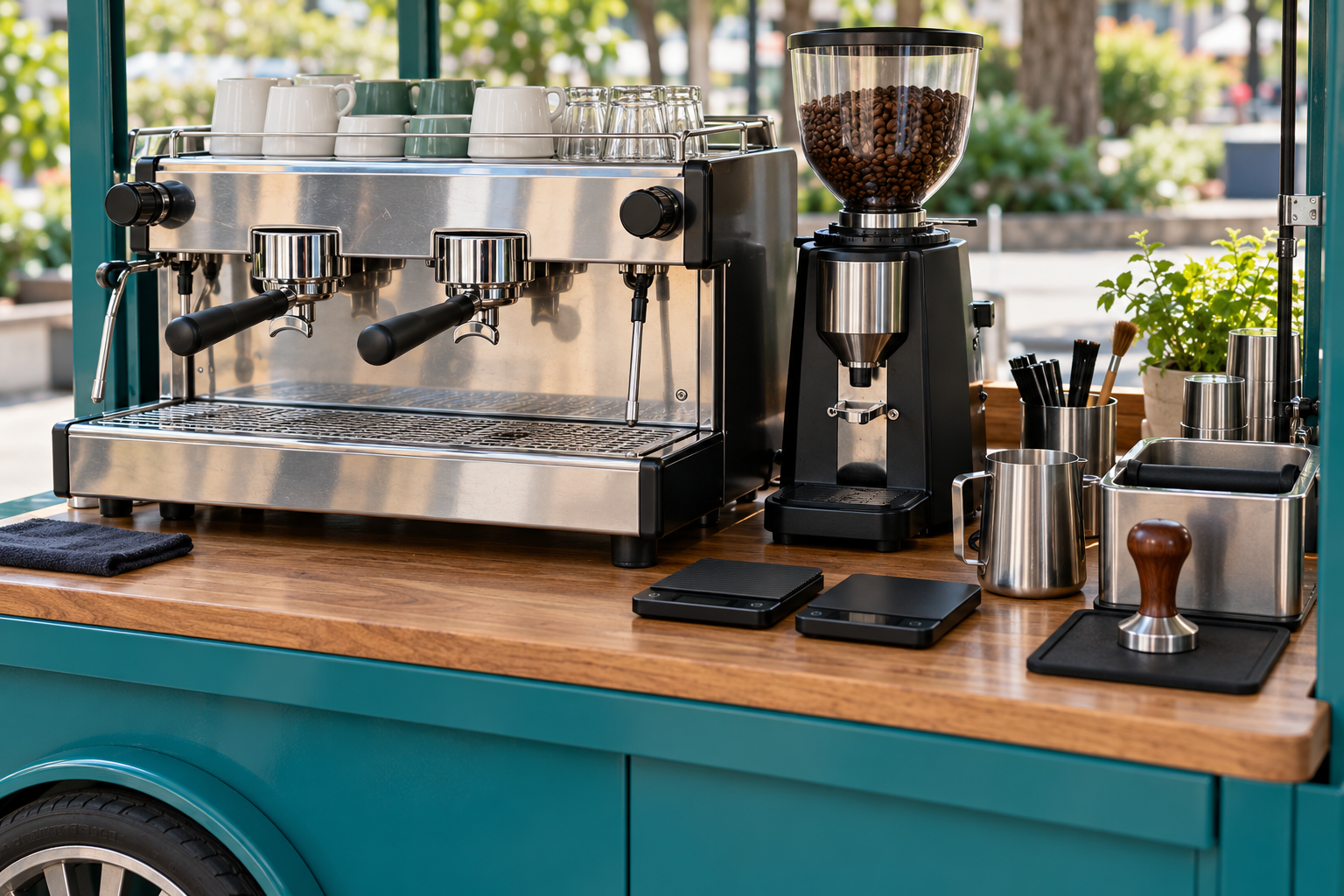
A suitable grinder deserves its own budget line. Check adjustment, consistency, output, cleaning access and the availability of replacement burrs. Do not spend the entire budget on a machine and assume any inexpensive grinder will support it.
For a conventional espresso setup, your small-kit list will usually include:
- Scales suitable for measuring coffee doses and drink yield.
- A tamper matched to the basket and an appropriate tamping surface.
- Milk jugs sized for the drinks you intend to prepare.
- A knock box and tools recommended for machine and grinder cleaning.
- A way to monitor relevant temperatures and check consistency.
- Enough clean utensils to maintain service without skipping cleaning routines.
A second grinder may become worthwhile for decaf or another bean, but decide how you will offer that option before buying. Avoid letting an expanding menu dictate expensive equipment purchases before demand is established.
3. Refrigeration: plan for the whole trading day
If you serve milk or other chilled ingredients, you need a reliable way to keep them safely stored during transport and service. Consider capacity, hot weather, frequent opening, secure positioning during travel and how the refrigeration will be powered.
Do not assume a small domestic fridge or a cool box will be adequate simply because it fits. Discuss your proposed storage method with your food-safety adviser and equipment supplier. Include temperature monitoring and a clear plan for equipment failure.
Check the storage instructions for each ingredient, including plant-based drinks once opened. A narrow opening menu can reduce the number of cartons competing for fridge space and make stock rotation easier.
4. Water, handwashing and equipment cleaning
These are core design decisions. You need potable water for drinks and relevant cleaning tasks, suitable handwashing provision, arrangements for cleaning equipment and a way to collect and dispose of wastewater appropriately.
The food hygiene requirements for movable and temporary premises address hygiene facilities, cleanable food-contact surfaces and contamination prevention. Ask your local authority how the requirements apply to your menu and operating arrangement before finalising the fit-out.
Confirm the handwashing and utensil-washing provision separately; do not assume one small sink automatically covers both. Include soap, hygienic hand-drying supplies, suitable containers and a cleaning schedule. Water treatment for the coffee machine must also match the manufacturer’s requirements.
Estimate water use across drinks, handwashing, cleaning and flushing. Then check capacity, replenishment and loaded weight. Hand sanitiser is not a replacement for suitable handwashing facilities.
5. Power: choose a compatible system, not a guess
Your machine, grinder, fridge, water heating, payment devices and lighting may all need power. Obtain specifications for the complete equipment list and ask a competent professional to assess the supply and installation.
A venue connection may make a generator unnecessary, but only if the agreed supply is suitable. A battery system needs assessment of both power output and energy capacity over the required operating time. Avoid selecting one from a headline wattage alone.
Where fuel-powered equipment or LPG is proposed, follow specialist installation, ventilation and maintenance guidance. Never run a fuel-powered generator inside a van, tent or other enclosed space. HSE’s catering gas-safety guidance explains the importance of competent maintenance and effective ventilation; warning alarms do not replace those safeguards.
The right choice depends on the pitch, menu and equipment. “Buy a generator” should not be an automatic item on every beginner’s shopping list.
6. Cleaning, storage and safety supplies
Allocate storage for cleaning products away from ingredients and serving items. Keep products identifiable and follow their labels, including dilution and contact-time instructions where applicable. Use the machine manufacturer’s recommended cleaning process.
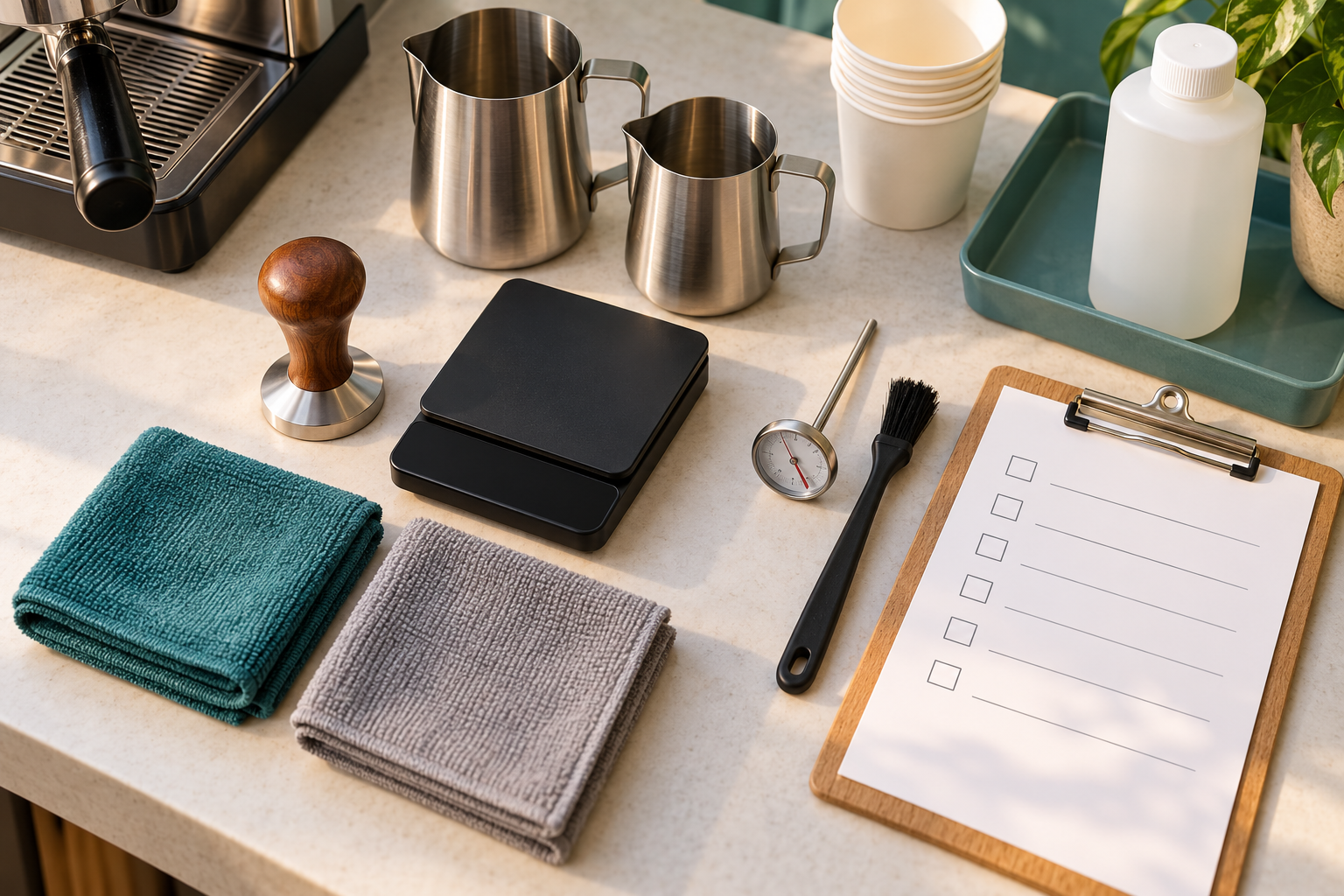
Include brushes, appropriate cloths, waste containers, spare bin liners and supplies for dealing with spills. Arrange separate uses for cloths so a counter-cleaning cloth does not become a steam-wand cloth. Plan where dirty utensils go without crossing the clean preparation area.
Worktops and storage should be suitable for food service and easy to clean. Secure equipment for transport and confirm that the fully loaded unit remains within applicable vehicle or trailer limits. Include first-aid provision and fire-safety measures selected through an appropriate assessment of your actual risks.
7. Payments, menu display and customer essentials
You need a reliable way to accept payment and record sales; you do not necessarily need an elaborate point-of-sale system. Compare device costs, transaction charges, subscriptions and connectivity requirements.
Test reception at the intended pitch. Understand the provider’s offline limitations before relying on them, and decide what you will do if the connection fails. Keep devices charged and customer payment information within the provider’s secure system.
One legible menu with clear prices may be enough at launch. Provide appropriate allergen information and ensure you can answer ingredient questions accurately. Cups, matching lids, napkins and organised handover space matter more than a complicated display.
What can usually wait?
The pin’s decorative lighting, extra menu boards and custom apparel are sensible candidates to postpone. Adequate working light and appropriate clean clothing still matter; the optional element is decorative or branded upgrading.
You can also consider delaying premium cup printing, elaborate vehicle wrapping, a large syrup collection, blenders and equipment for an untested food menu. These purchases should follow a clear purpose: faster service, better capacity, demonstrated customer demand or a stronger return than other uses of the money.
Keep a “later” list with a reason beside each item. “Customers regularly request this” is stronger evidence than “another coffee cart has one”. Preserve the cash reserve discussed in our beginner’s coffee business budget.
Before you pay: a supplier checklist
- Confirm commercial and mobile suitability in writing.
- Check dimensions, weight, power, water and drainage requirements.
- Ask what the quotation includes: delivery, installation, VAT and training.
- Check servicing options, spare parts and warranty exclusions.
- For used equipment, obtain maintenance history and an appropriate inspection.
- Test the complete service workflow before accepting paid bookings.
For a trial run, practise orders, preparation, payment, cleaning and restocking together. Record bottlenecks and revise the layout. The Mobile Coffee Business Complete Blueprint Bundle includes equipment and supplier planning, recipe cards, operating checklists and maintenance resources to help organise this work.
Frequently asked questions
Can I use a home espresso machine?
Do not assume it is suitable. Check commercial-use terms, capacity, durability, servicing and the requirements of your intended operation. Compare complete running costs, not just the purchase price.
Do I need a generator?
Only if your chosen setup requires one after assessing available supplies and alternatives. Confirm venue power and have the complete electrical arrangement assessed before buying equipment.
Can I start without an espresso machine?
Yes, if you deliberately design a different service, such as filter coffee, and equip it appropriately. That does not remove the need for suitable hygiene, storage, power and customer-service arrangements.
Should I buy everything second-hand?
Consider items individually. Condition, hygiene, service history, installation and repair support matter. A cheap machine requiring major repairs can consume the reserve you need for trading.
What should I buy first?
Confirm the menu and pitch requirements first. Then plan the compatible brewing, water, washing, refrigeration and power systems together. Purchase optional presentation upgrades after the essentials are funded.
Explore the blueprint collection for guides, planners and practical worksheets.