
Gardening Business Startup
How to Start a Gardening Business on a Small Budget
A practical UK guide to choosing a manageable service, controlling startup costs, pricing the whole job and finding your first gardening customers.
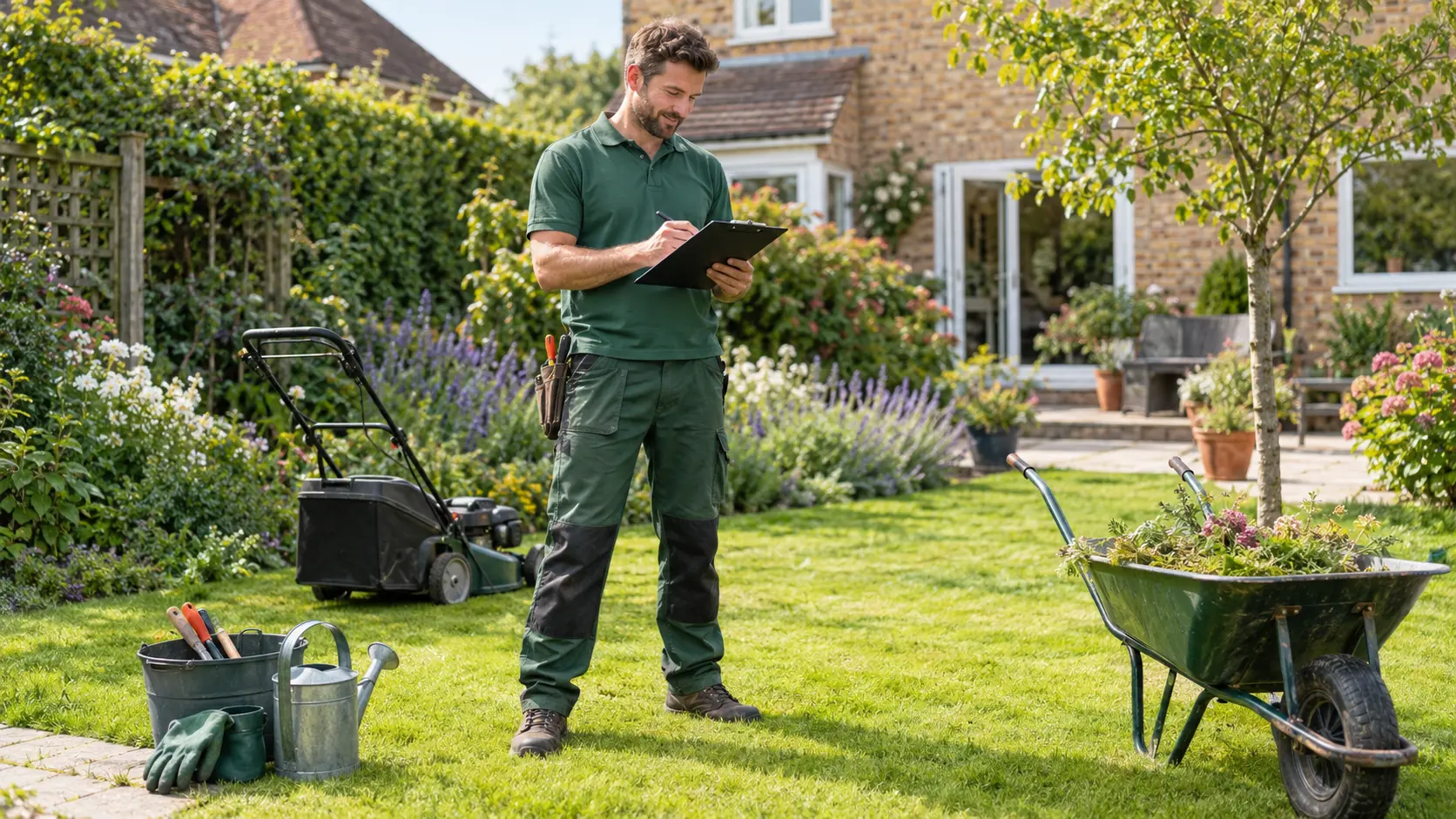
You do not need a new van, a workshop full of machinery or an expensive advertising campaign to begin a gardening business. A more manageable starting point is a small range of services, suitable tools and a clear understanding of what each job needs to earn.
This guide takes a practical UK approach: start with work you can deliver safely, protect your budget and let genuine customer demand guide your next purchase.
Want the worksheets ready to use? The Gardening Business Startup Bundle includes a 112-page guide, 25 printable resources, editable workbooks and an eight-tab business tracker.
Get the Gardening Business Startup Bundle — £9.99 on Payhip (opens in a new tab)1. Choose a service you can deliver confidently
Begin with work you can already do safely and well: hand weeding, routine border maintenance, planting, container refreshes, leaf collection, light tidying, mowing or basic pruning where you understand the plant and technique.
Keep tree surgery, high hedges, major landscaping and chemical treatments outside your offer unless you have the required competence, equipment, training and insurance. A narrow, dependable service is a better foundation than a long list you cannot yet deliver.
A useful starting description could be: “Regular garden maintenance for small local gardens, including weeding, planting and seasonal tidying.” Practise unfamiliar routine tasks first, time yourself and be honest about your limits.
2. Build your budget around the essentials
Write down what you already own, what needs replacing and what your chosen services genuinely require. Separate essential spending from purchases that would simply be nice to have.
| Item | Illustrative allowance |
|---|---|
| Basic hand tools | £150 |
| Footwear, gloves and protection | £100 |
| Bags, tarpaulin and cleaning supplies | £35 |
| Initial insurance allowance | £100 |
| Simple printed marketing | £15 |
| Initial local travel allowance | £50 |
| Uncommitted contingency | £150 |
These are planning examples, not current supplier quotes or a guaranteed start-up cost. Replace every figure with actual costs. This example excludes a vehicle, powered machinery, training and waste-removal costs, and assumes suitable transport and storage already exist.
3. Buy tools for booked work, not imagined work
For a hand-tool service, consider a sound spade and fork, rake, hoe, trowel, secateurs, broom and manageable collection bags. Match each item to the tasks you intend to sell. Second-hand tools can be worthwhile when you inspect handles, fixings, blades and working parts.

Before buying, ask whether a booked job requires the item, whether you can transport and maintain it, whether occasional hire makes more sense and how much additional profit it must generate to repay its cost.
4. Keep your working area small
Choose a compact starting area—perhaps your neighbourhood and nearby streets. Plan bookings by location rather than accepting scattered jobs without considering the journey. Three nearby gardens may be more profitable than similar work separated by long drives.
A van need not be your first purchase if your service can operate safely with smaller equipment. Before using an existing vehicle, confirm appropriate business-use insurance and safe arrangements for carrying tools. Let your equipment and bookings determine when a van becomes worthwhile.
5. Deal with the business basics early
A small operation still needs proper records, clear arrangements and appropriate protection. If you trade as a sole trader, keep records of income and expenses from the start. GOV.UK says you generally need to register for Self Assessment if your total gross trading income exceeds £1,000 in a tax year; that threshold concerns income before expenses, not profit. Check current guidance for your circumstances.
Arrange suitable public liability cover and describe your actual services accurately to the insurer. If you employ someone, employers’ liability insurance is generally compulsory, subject to exceptions. Before each job, assess tools, access, uneven ground, lifting and risks to customers, pets and passers-by.
Agree what happens to clippings and weeds before quoting. If transporting waste, check current registration and disposal requirements with the relevant environmental regulator. Leave pesticide treatments outside the starter offer until you have checked the training, certification and registration requirements.
6. Set prices that include the whole job
Your price needs to account for gardening time, travel, administration, equipment upkeep, insurance and other overheads. Leave room for weather disruption, holidays and replacing worn-out tools.
A simple planning calculation
Suppose you want £500 a week available for your own pay before personal tax, with £125 for overheads and reserves. With 25 billable hours, the calculation is £625 ÷ 25 = £25 per billable hour.
This is not a recommended market rate. If you achieve only 20 billable hours, the same target requires £31.25 per hour. Use realistic paid hours rather than every hour you are willing to work.
For a fuller explanation, read our guide to calculating a self-employed gardener’s hourly rate. The Gardening Business Startup Bundle also includes an hourly-rate calculator, job-pricing worksheet and income-target planner.
7. Find your first customers without overspending
State the work you offer, the area you cover and how someone can request a quote. Tell existing contacts exactly which gardening jobs you are taking on, post in relevant neighbourhood groups where promotion is permitted, use a small number of local leaflets and ask permission to advertise on community noticeboards.
Keep a record of where each enquiry came from. Avoid stock photographs presented as your own work or invented testimonials. A modest genuine example is more useful than an impressive claim you cannot substantiate.
8. Make repeat bookings straightforward
At the end of a successful visit, explain what you completed and what may need attention next. If regular maintenance would suit the garden, offer a realistic schedule. Keep notes on priorities, access arrangements and plants needing particular care.
Confirm whether each visit is for a fixed duration or a defined job. Set expectations about weather postponements and seasonal changes, and compare quoted time with actual time—including travel and clearing up.
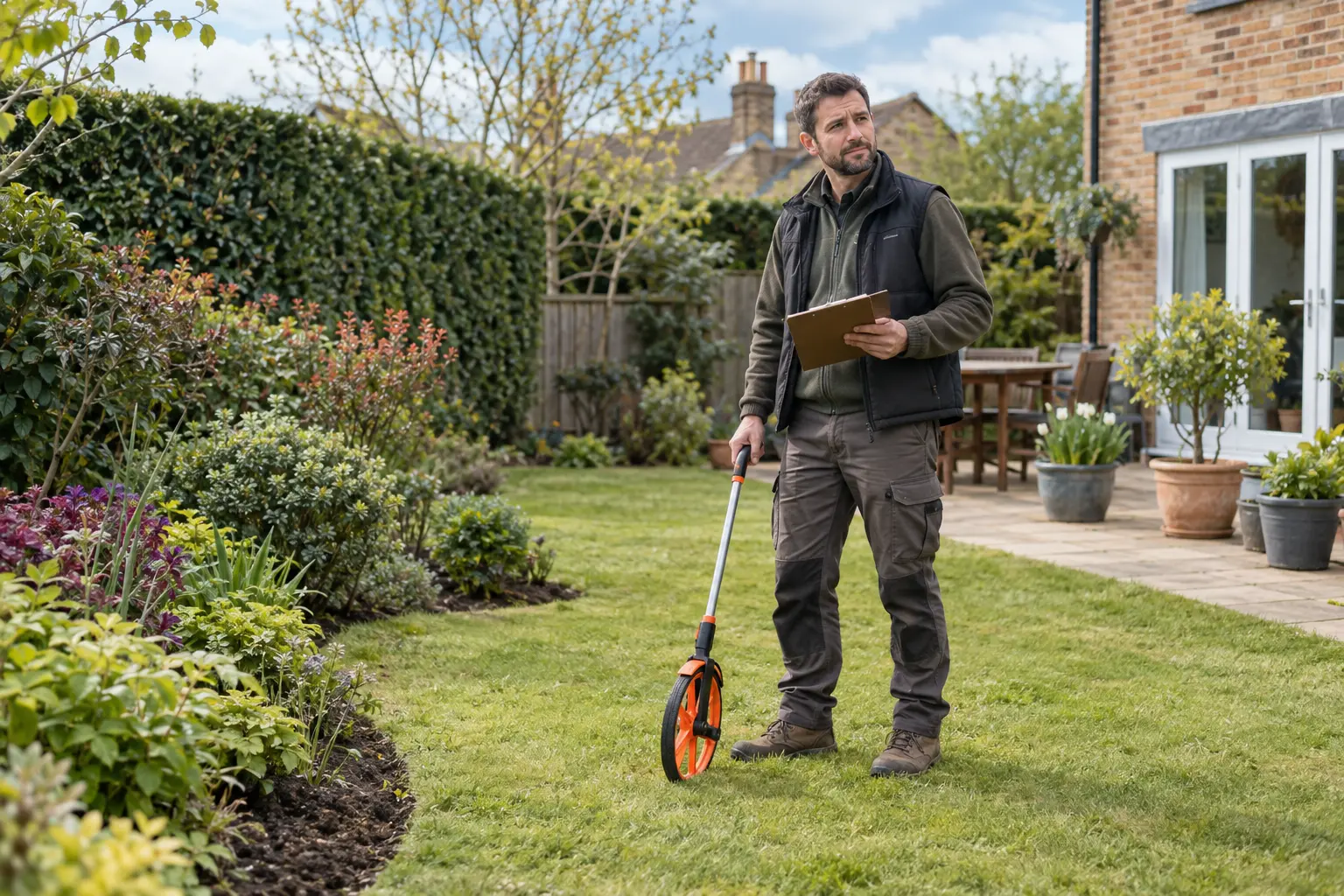
9. Give your first month a practical structure
- Week one: define the offer, working area and available hours; list existing equipment and obtain essential-cost quotes.
- Week two: complete checks, arrange cover, prepare a quotation template and establish waste arrangements.
- Week three: promote locally and quote for a manageable number of jobs.
- Week four: compare money received with costs and total time, request honest feedback and discuss repeat visits.
Keep diary space for administration and rescheduling. If you are starting alongside another job, the capacity-planning principles in our guide to scheduling a service business around full-time work may help.
Frequently asked questions
Can I start a gardening business with £500?
Possibly, if you already own suitable tools and transport and offer a limited service. Price insurance, protection and other essentials first. Treat £500 as a constraint to test, not a guaranteed launch budget.
Do I need a van straight away?
Not necessarily. A small hand-tool service may suit existing transport, provided the load is safe and the insurance covers the use. Let equipment and bookings determine when a van becomes worthwhile.
Should I charge hourly or give a fixed price?
Hourly work suits open-ended maintenance; fixed pricing suits a clearly assessed scope. In either case, confirm what is included, how additional work is approved and when payment is due.
Can I start alongside another job?
Consider a limited number of bookings if your employment terms and commitments allow it. Reserve time for travel, quotations, equipment care and weather delays—not just gardening.
Start small and build from evidence
Put your gardening business plan into a workable system
The Gardening Business Startup Bundle brings together the guide, planning resources, editable workbooks and business tracker.
Buy the Gardening Business Startup Bundle — £9.99 on Payhip (opens in a new tab)Guidance checked September 2026. This article provides general business information, not individual tax, legal, insurance, waste or health-and-safety advice. Confirm current requirements with GOV.UK, the relevant regulator and appropriately qualified advisers.
Explore the blueprint collection for guides, planners and practical worksheets.