Cleaning Business Startup
Domestic or Commercial Cleaning: Which Business Should You Start?
Compare domestic and small-office cleaning by working hours, costs, payment terms and customer expectations, then choose a practical first offer for your business.
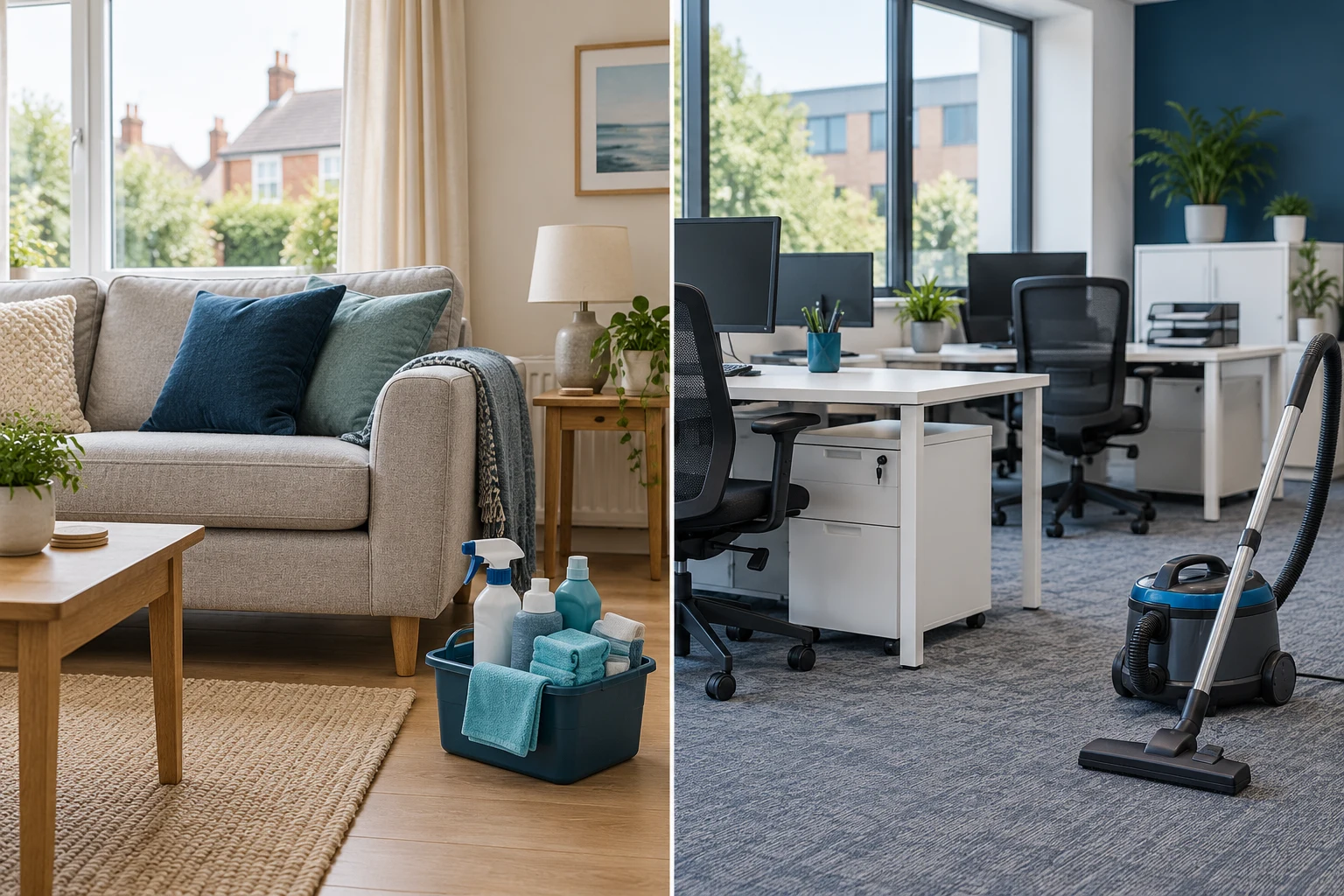
Starting a cleaning business sounds straightforward until you have to choose your first customer. Should you offer regular cleaning to local households, or approach offices and other businesses?
Both can support a worthwhile business. Neither automatically produces better earnings, easier customers or a more reliable diary. The useful question is which type you can deliver consistently, at a sustainable price, within the life you already have.
For a solo beginner with daytime availability, regular domestic cleaning can be a manageable starting point. Small-office cleaning may suit someone with reliable early-morning or evening availability and enough cash to cover costs while invoices are outstanding. These are starting assumptions to test locally, not rules.
Our Cleaning Business Startup Bundle includes foundations and pricing workbooks, residential checklists and a commercial cleaning pack. Get the complete bundle on Payhip to turn your choice into a practical launch plan.
What is the difference between domestic and commercial cleaning?
Domestic cleaning means working in people's homes. A starter offer might cover regular dusting, vacuuming, mopping, kitchens and bathrooms, with an agreed task list. Deep cleans and end-of-tenancy work need their own scope and time estimates.
Commercial cleaning serves business premises. For this comparison, think primarily of small offices with ordinary desks, meeting rooms, toilets and kitchenettes. Hospitals, industrial sites, commercial kitchens and other specialist environments can require different competence, procedures and equipment.
The main difference is the customer relationship. A householder usually buys help with their own living space. A business contact buys an agreed service for a workplace and may need approval from someone else before appointing you.
| Decision | Domestic cleaning | Small-office cleaning |
|---|---|---|
| Working hours | Often daytime, by arrangement | May be before or after office hours; daytime work also exists |
| Buying process | Usually direct with the householder | May involve a manager, owner or procurement process |
| Work pattern | Several shorter visits across a local route | Potentially longer blocks at fewer sites |
| Payment | Agree payment timing for each visit or billing period | Check invoicing, approval and payment terms before starting |
| Service expectations | Personal preferences and household priorities | Written tasks, frequencies, access and reporting arrangements |
| Main planning risk | Travel gaps and cancelled visits | Dependence on a large client and rigid service times |
1. Start with the hours you can reliably offer
Write down your real availability before comparing income possibilities. Include travel, preparation, messages, equipment care and recovery time. A two-hour booking uses more than two hours of your working day.
Domestic visits may fit between school runs or other daytime commitments, provided the customer accepts those hours. However, a tight collection deadline leaves little room for traffic, an access problem or a job that takes longer than expected.
An office contract can fit around daytime employment, but “evening work” must mean evenings you can sustain. If you already work nights, adding a physically demanding shift beforehand may be impractical. Protect sleep and allow for the journey home.
Ask potential customers when cleaning can happen. Do not choose a business model based on hours you hope they will accept.
2. Compare the complete job, not the headline rate
A commercial contract with a larger monthly invoice is not necessarily more profitable than a compact domestic round. Price the actual tasks, frequency and conditions, then count all the time needed to deliver them.
Consider this fictional weekly comparison. It illustrates a calculation, not market rates or predicted earnings:
- Domestic round: £300 sales, £60 allocated operating costs and 15 total business hours leave £240, or £16 per hour before personal tax.
- Office arrangement: £330 sales, £70 allocated operating costs and 17 total business hours leave £260, or approximately £15.29 per hour before personal tax.
The office arrangement produces more money overall but less per total hour. Change the travel, supplies, access time or price and the result changes. For a sole trader doing all the work, these remaining amounts still need to reward their own labour; they are not profit after paying themselves a wage.
Include insurance allocations, equipment upkeep and unpaid administration. If you employ help, include the full employment cost too. Our guide to pricing a cleaning job in the UK explains how to build a quote around your own costs.

3. Check when the money will arrive
Profitability and cash flow are different questions. You can agree a worthwhile price and still struggle to buy supplies because payment arrives after your bills.
With households, you might agree payment after each visit or another clear arrangement. Do not assume that every domestic customer pays immediately. Explain how and when payment is due before accepting the booking.
For commercial work, ask when you can invoice, what information the invoice needs, who approves it and when payment falls due. A monthly invoice payable later can leave several weeks of work to fund.
Check the actual contract and GOV.UK's guidance on late commercial payments. Do not assume that every business must pay you within 30 days. Build a cash forecast using the terms you have agreed and a realistic allowance for delays.
4. Buy equipment for the agreed service
Both routes can begin with a modest, suitable kit when the work is limited to straightforward cleaning. Commercial does not automatically mean buying a floor machine; domestic does not mean that any household vacuum will withstand frequent paid use.
Survey the premises first. Check floor types, stairs, storage, water access, sockets and the distance between parking and the work area. Clarify whether you or the customer supplies products, bin liners and washroom consumables.
List what is essential for the first confirmed jobs and what can wait. Specialist carpet work, high-level cleaning or difficult restoration should be separate decisions supported by appropriate training, equipment and insurance.
A simple offer delivered well is easier to manage than a broad promise that requires equipment you cannot yet afford.
5. Decide which customer relationship suits you
Domestic cleaning involves personal preferences. One customer may prioritise bathrooms; another may care most about floors or a particular room. You need tact, respect for belongings and confidence explaining what fits within the booking.
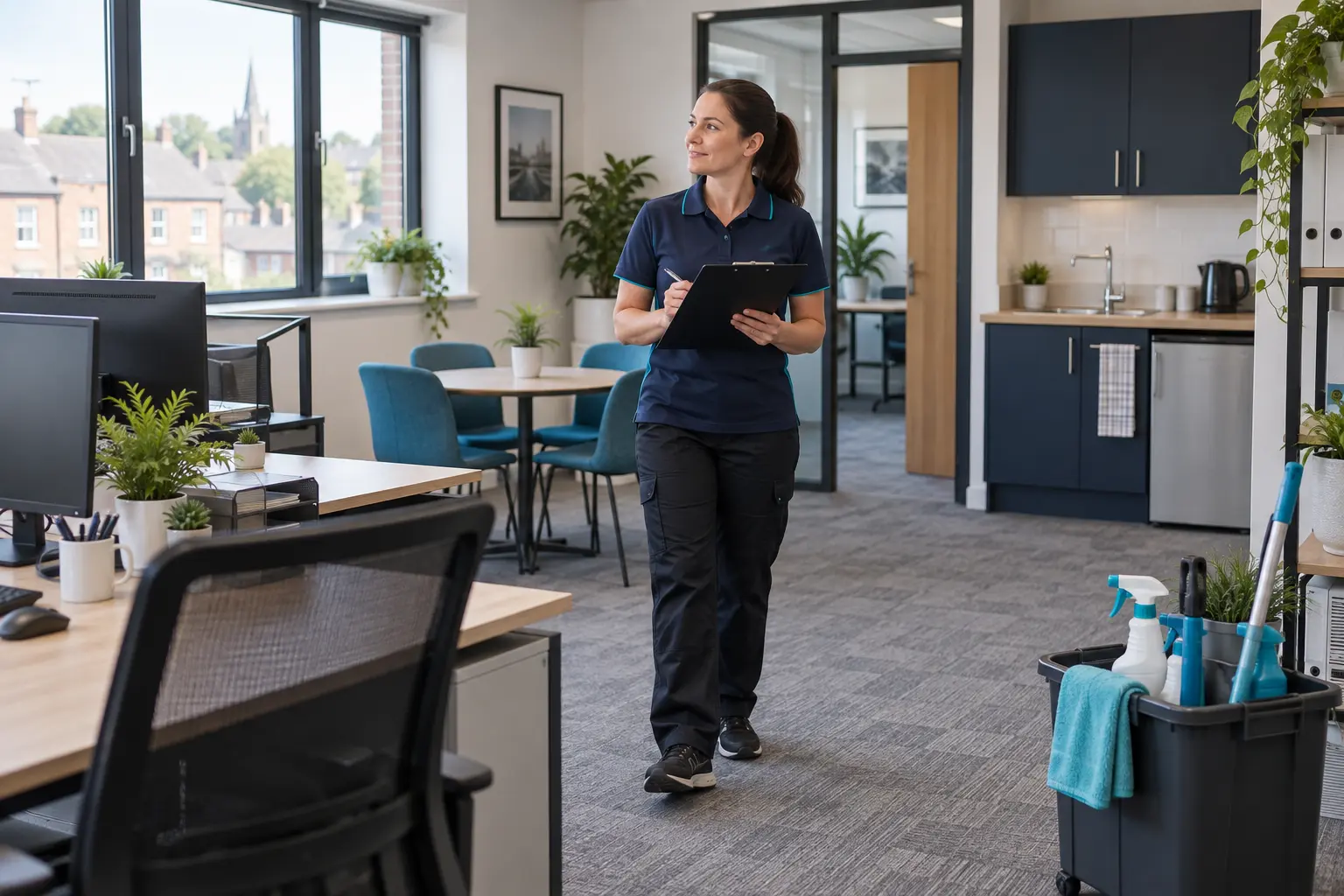
Commercial clients may expect a written specification: which areas are cleaned, how often, who checks the work and how problems are reported. Confirm arrangements for keys, alarms, confidential paperwork and areas you must not enter.
Neither type removes the need for boundaries. Extra tasks should be discussed and priced rather than silently added. Record the agreed service so “a quick extra” does not gradually turn into unpaid work.
For either route, our guide to finding cleaning clients will help you turn a specific offer into clearer enquiries.
6. Take safety seriously in both settings
A familiar-looking home is still a place where work can cause harm. Consider wet floors, lifting, repetitive tasks, electrical equipment and cleaning products. The appropriate controls depend on the task and the premises.
HSE's guidance for cleaners explains risks from wet work and cleaning substances, alongside controls such as safer techniques, storage, ventilation and suitable protective equipment. Follow product instructions and assess the work you actually intend to do.
Working alone also needs planning, whether you are in a private home or an empty office. Agree access, check-in arrangements and what happens if you cannot be contacted. If you engage other workers, use HSE's lone-working guidance to plan their protection and coordinate with the workplace.
Check that your insurance covers your actual services and working arrangements. A customer's request is not evidence that you are equipped or covered to do the task.
7. Think about the business you want to run
A domestic round spreads income across several households. Losing one booking may remove a smaller share of sales, but managing many visits creates more communication, travel and rescheduling.
A small number of office contracts can simplify your route and provide regular blocks of work. However, losing a major site can create a large income gap. Ask what your finances would look like if your biggest customer left.
Growth is possible in either direction. Adding staff introduces supervision, training and employment responsibilities; it does not automatically make the business easier. Start with work you can control, then expand when demand and delivery justify it.
A practical way to make your choice
Write two specific offers: one for nearby households and one for small offices. Compare each against your available hours, travel area, skills, equipment budget and cash buffer. Reject an option that fails an essential requirement, even if its potential invoice looks attractive.
Then speak to a few suitable prospects in each group. Ask about tasks, frequency, access times and how they choose a cleaner. These conversations test your assumptions; they are not a promise of bookings.
Choose one primary offer for your first month. Aim to survey suitable jobs, complete a manageable paid trial and record actual time, costs and feedback before filling the diary.
The Cleaning Business Startup Bundle supports that process with a Foundations Workbook, Enquiry, Survey and Quote Pack, residential and commercial resources, and an editable Pricing, CRM and Profit Tracker. You can buy the complete bundle on Payhip when you are ready to organise your launch.
Frequently asked questions
Is domestic cleaning easier for a complete beginner?
It can be a manageable starting point when you have relevant skills, suitable daytime hours and a small service area. You still need clear scope, safe working practices and sustainable pricing.
Does commercial cleaning pay more?
Not automatically. Compare revenue after costs and all working time, alongside payment terms. A larger contract can produce a lower effective return if it is underpriced or difficult to deliver.
Can I offer both domestic and commercial cleaning?
Yes, if the schedules, equipment and service standards are compatible. Establish one reliable offer first, then add the other when you can support it without weakening existing commitments.
Can one person clean offices?
A suitably scoped small office may be manageable alone. Survey it first and check the tasks, available cleaning window, lone-working arrangements and how missed visits would be handled.
Plan your cleaning business with confidence
Choose your starting service, work through the numbers and organise the steps from first enquiry to repeat booking.
Get the Cleaning Business Bundle on PayhipExplore the blueprint collection for guides, planners and practical worksheets.