
Gardening Business Startup
How to Offer a Wildlife-Friendly Autumn Garden Tidy
Plan and price a selective autumn tidy that clears useful areas while retaining seed heads, leaf litter and suitable wildlife shelter. Includes tools, packages and a customer handover checklist.
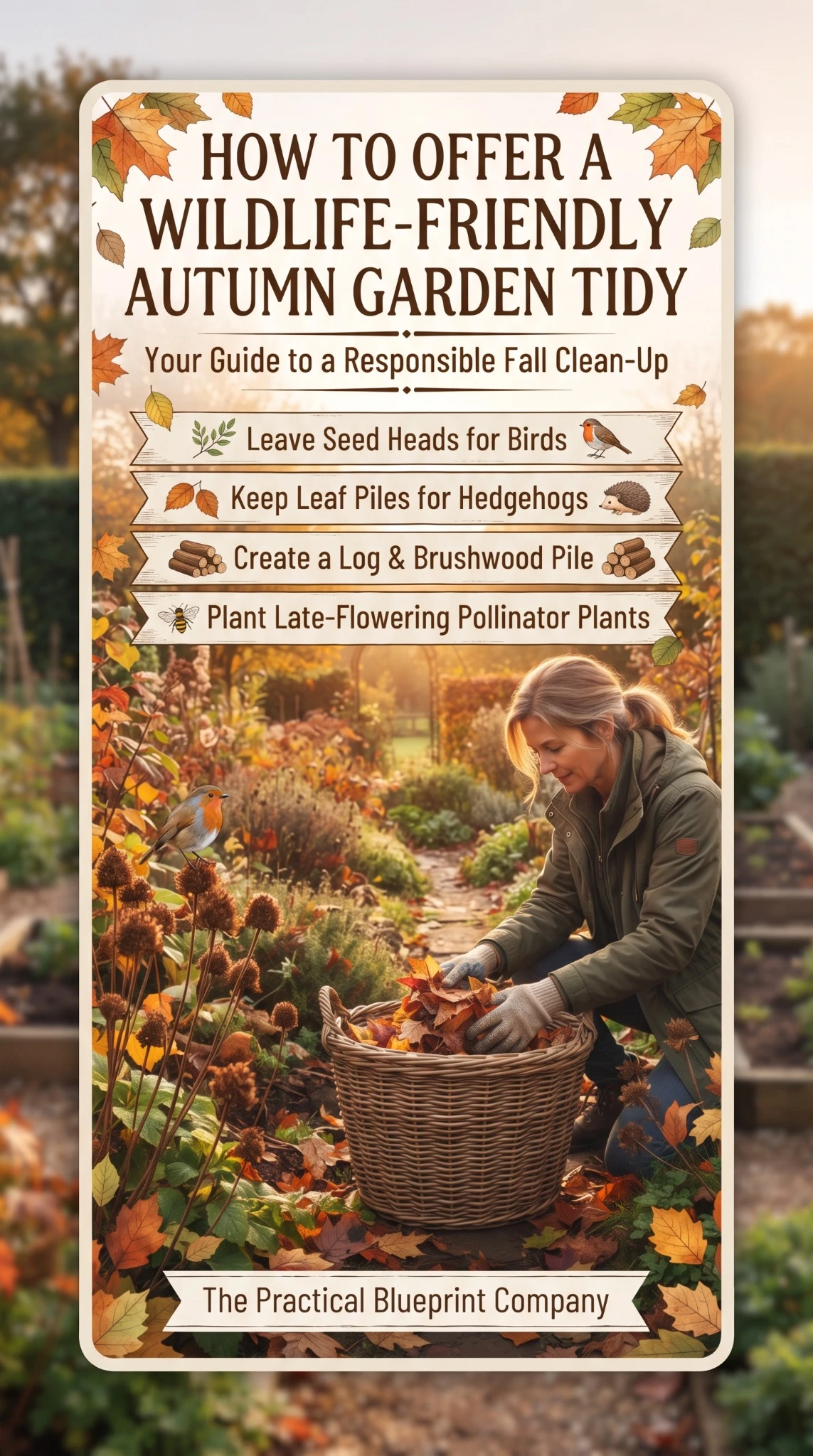
An autumn garden tidy can leave paths clear, lawns accessible and the whole space easier to enjoy. It can also remove the seed heads, fallen leaves and sheltered corners that wildlife needs through the colder months. For a gardening business, the opportunity is to offer a thoughtful service that balances both needs.
A wildlife-friendly autumn tidy focuses on agreed access areas, selective leaf clearing and careful plant maintenance while retaining suitable habitat. Start with a customer walkthrough, identify what should stay, and explain the finished result before quoting.
Our Pinterest pin suggests four useful themes: seed heads for birds, sheltered leaf piles, log and brushwood piles, and late-flowering plants. This guide turns those ideas into a service you can describe, price and deliver. For wider business planning, explore our Gardening Business Startup Bundle.
What does wildlife-friendly actually mean?
It means making specific choices that preserve useful resources and reduce unnecessary disturbance. You might clear slippery leaves from a path but retain leaf litter beneath a hedge. You could remove a collapsed stem from an entrance while leaving sound, suitable perennial stems standing elsewhere.
The RHS advises that some perennial stems can remain through winter as food and shelter before cutting back in spring. Hedgehog Street highlights quiet leaf and log piles as helpful garden features. These principles support a selective service rather than a promise to make every border look bare.
Avoid claiming that your visit will attract particular animals or guarantee better biodiversity. Gardens differ. Describe the actions you offer: retaining agreed seed heads, protecting existing shelter and leaving a designated area undisturbed.
Begin with a short garden walkthrough
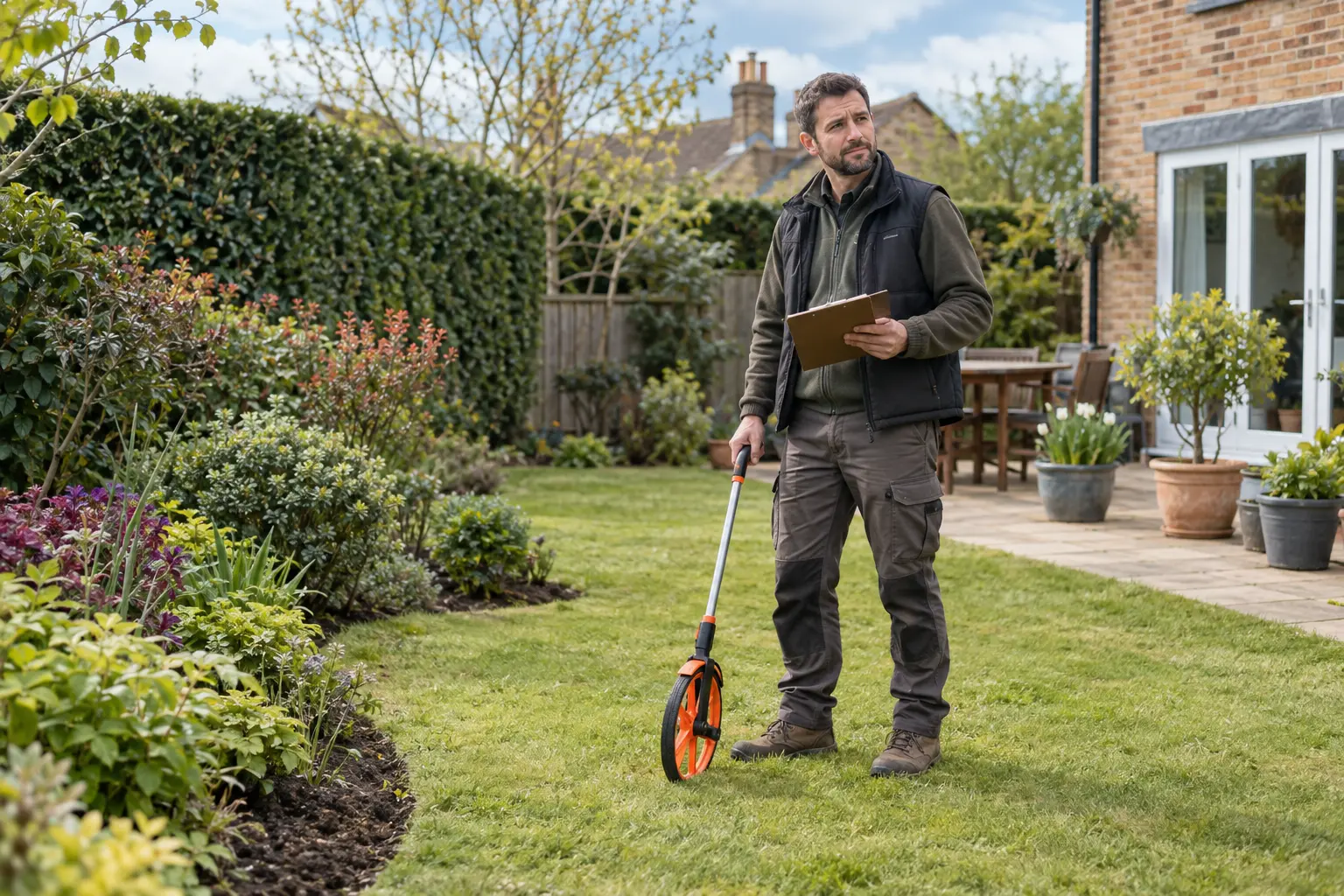
Ask the customer where they walk, where children or pets play and which areas must remain accessible. Find out whether they have seen hedgehogs, nesting birds or other wildlife, and whether there are established piles or corners they want left alone.
Then agree three simple areas: places to clear, places to work selectively and places to leave undisturbed. Mark them on a sketch or record them in your job notes. A photograph with the customer’s permission can help confirm the starting condition.
- Clear: agreed paths, steps, entrances and selected lawn areas.
- Work selectively: beds needing light maintenance, accessible weeds and suitable leaf redistribution.
- Retain: agreed seed heads, sheltered leaf litter and existing habitat piles.
Check access, parking, ground conditions, waste arrangements and the time available. Clarify that tree work, heavy clearance and specialist wildlife work are outside a basic tidy unless separately assessed and within your competence.
1. Keep useful seed heads and standing stems
Our pin’s first point makes a good conversation starter: “Would you like these seed heads left for birds and winter structure?” Some customers will appreciate the appearance once they understand the purpose.
Assess plants individually. Sound stems can provide structure and shelter, while some seed heads provide food. Plants differ in how and when they should be cut back, so use plant-specific guidance rather than applying one autumn rule to everything.
Where growth obstructs a path or has collapsed onto vulnerable neighbouring plants, agree a selective adjustment. If you suspect disease, identify the problem and follow appropriate advice for that plant; do not move questionable material around the garden as a universal mulch.
Record what remains so a later visit does not undo the plan. A spring review can decide when and how further cutting back is appropriate.
2. Clear leaves where necessary and retain them where useful
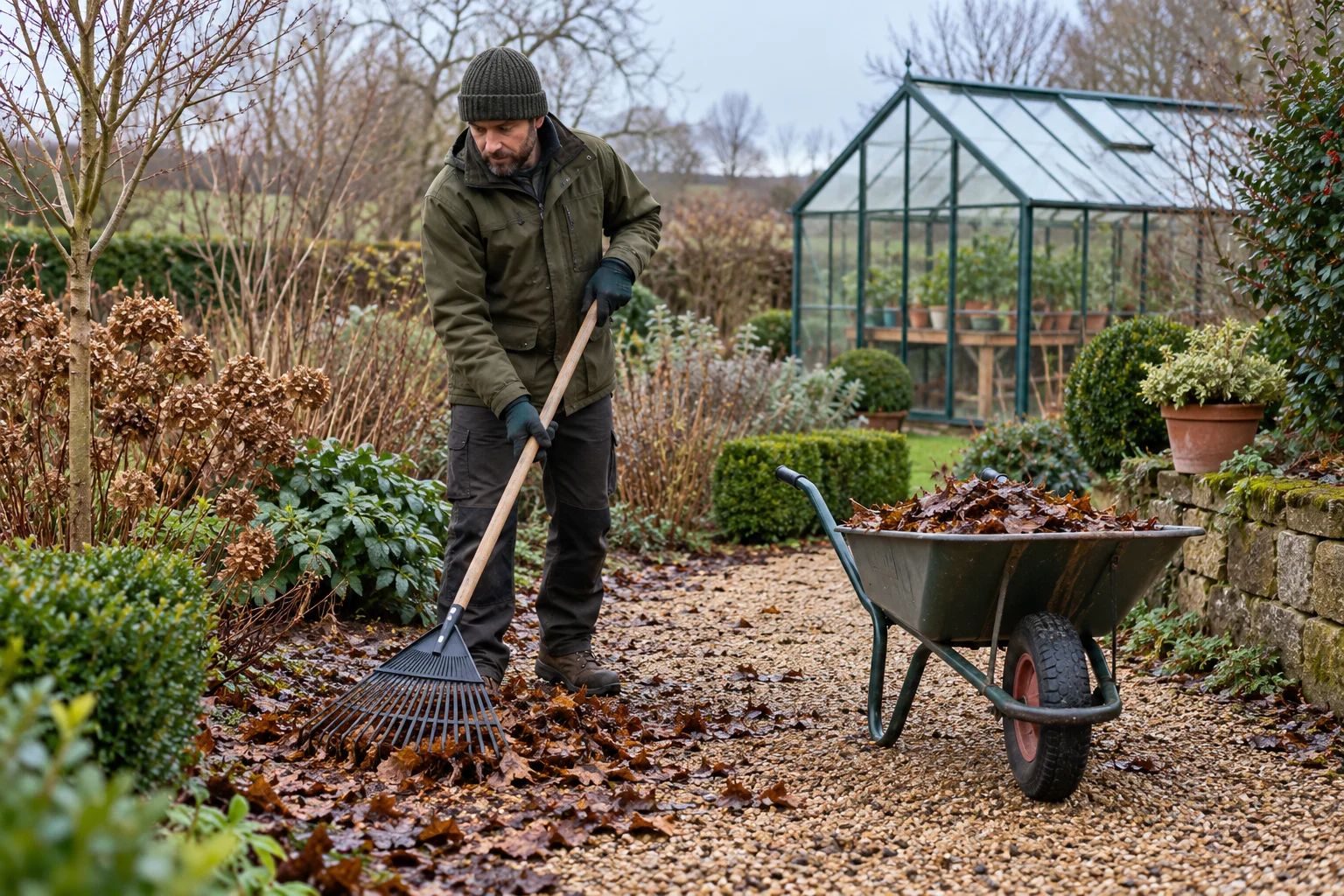
Leaves on steps and frequently used paths may need prompt attention, particularly when wet. Dense layers on an actively maintained lawn may also need collecting. That does not mean every leaf beneath every shrub must go.
With permission, retain suitable leaf litter in sheltered beds or beneath hedges. Keep entrances, drains and agreed access routes clear. If there are more leaves than the space can reasonably accommodate, discuss a separate leaf-mould area or another agreed destination.
An undisturbed habitat pile and a frequently managed leaf-mould store serve different purposes. Keep their locations clear in your notes. Do not repeatedly turn or empty a pile intended as winter shelter.
Inspect carefully before disturbing existing material. Do not plunge a fork, strimmer or powered vacuum into an established pile. If you find an occupied nest or an animal, stop work in that area and seek advice from an appropriate wildlife organisation rather than moving it simply to finish the job.
3. Offer a small log or brushwood feature
A sheltered, agreed corner can accommodate a modest pile of suitable logs or brushwood already on site. Hedgehog Street describes dead wood and leaf piles as useful shelter and sources of food through the invertebrates they support.
Get the customer’s agreement on location and size. Keep paths clear, make the arrangement stable and avoid creating sharp projections or trip hazards. Use suitable untreated material rather than waste timber with unknown coatings, nails or preservatives.
You do not need to sell a large construction project. A small retained feature may be enough for the garden. Do not collect material from parks or other land without permission, or promise that a hedgehog will move in.
4. Consider late flowers and next season’s planting
The pin also suggests late-flowering plants. Where the garden has a suitable space, you could offer a separately priced planting suggestion using plants suited to local conditions and the customer’s maintenance needs.
For example, appropriate forms of autumn-flowering asters or Hylotelephium may suit some sunny gardens. Check flowering period, soil, mature size and wildlife value before recommending a cultivar. Choose accessible flowers rather than assuming every ornamental variety provides the same benefit.
This is an optional addition, not a requirement for every tidy. Keeping existing useful flowers, berries and shelter can be a practical first step. Our guide to choosing gardening services helps keep your offer within your skills.
Choose tools that support careful work
A leaf rake, broom, gloves, suitable hand tools and collection containers can handle much of a small selective tidy. Quiet manual work gives control near retained planting and habitat.
For planting or soil tasks, our border spade and fork review may help you compare a compact tool set. Use a fork for appropriate ground work, never as a way of probing a possible nest.
For larger clear areas, read Do You Need a Leaf Blower for a Gardening Business—or Will a Rake Do? and our Bosch UniversalGardenTidy 3000 review. That model’s manual describes domestic intended use, so it should not be assumed suitable for paid rounds. Powered collection is also inappropriate around retained habitat or unexamined piles.
Visit Recommended Products for other equipment guides, but buy around your service rather than expanding your kit unnecessarily. Product guides containing affiliate links include disclosures; check each machine’s instructions and intended workload.
Package the service so customers understand the result
Try a clear description such as: “A selective autumn tidy to clear agreed paths and lawn areas, retain useful seed heads and preserve a designated wildlife corner.” List the exact areas and tasks rather than relying on a broad “eco” label.
A small package might include the walkthrough, path sweeping, selective leaf collection and a short handover. Planting, setting up a leaf-mould store or removing surplus waste can be quoted separately. Weather and ground conditions may require rearranging a visit.
Explain what staying untouched means. Customers are more likely to understand retained stems if they were agreed beforehand and look intentional, with a clear edge or defined location.
Price for the full job
Selective work still requires assessment, care and physical effort. Include travel, setup, agreed tasks, tool cleaning, administration and any collection or removal arrangements in your calculation.
As an invented example, a small visit might need 20 minutes of travel, 15 minutes for setup and handover, 90 minutes of garden work and 15 minutes to clean and pack tools. That is 140 minutes of working time before any separate disposal trip. Apply your own sustainable rate and actual costs; this is not a suggested market price.
Read our gardener hourly-rate guide and startup costs guide for the wider calculation. The Gardening Business Startup Bundle on Payhip supports planning services and business decisions together.
Finish with a simple customer handover
Walk through what you completed and point out the areas intentionally retained. Leave a brief note: paths cleared, selected leaves collected, seed heads retained and habitat corner left undisturbed.
Offer a follow-up for new leaf fall or a spring assessment. That can create useful continuity without turning the habitat area into a regular disturbance. For additional seasonal services, explore winter gardening business work.
For promotion, use permission-based photographs and describe visible actions accurately. Our guide to finding gardening customers without paid advertising offers practical next steps. You can also explore ideas on our Practical Blueprints Pinterest board.
Frequently asked questions
Does a wildlife-friendly tidy mean leaving everything untouched?
No. Clear agreed access areas and maintain the garden selectively while retaining useful shelter and food sources in suitable places.
Should I leave every perennial standing until spring?
No. Consider the plant, its condition and its location. Retain suitable stems and use plant-specific advice where cutting back is needed.
Can I move a leaf pile if I think a hedgehog is inside?
Stop work around it and seek appropriate wildlife advice. Avoid moving an occupied nest or disturbing an animal just to complete the tidy.
Do I need a leaf blower to offer this service?
Often you can start with manual tools. Assess the garden and keep powered equipment away from retained habitat and unexamined piles.
Can this become repeat gardening work?
Potentially. Offer agreed follow-ups for paths, new leaf fall and later plant care, while keeping designated habitat undisturbed. Demand and suitable tasks vary by customer.
Sources and further reading
For plant maintenance, see RHS guidance on cutting back perennials. For shelter, consult Hedgehog Street’s helpful garden features. For seasonal principles, read the RSPB’s autumn garden advice. Guidance checked 22 October 2026.
Ready to turn careful garden maintenance into a clear service? Use our Gardening Business Startup Bundle to organise your next steps.
Get the Gardening Business Startup Bundle on Payhip
Explore the blueprint collection for guides, planners and practical worksheets.