Cleaning Business Startup
How to Get Clients for a Cleaning Business
A practical plan for finding your first cleaning clients, turning enquiries into bookings and earning repeat work without racing to the lowest price.

Getting clients is often the hardest part of starting a cleaning business. You can be excellent at the work and still have an empty diary if local people cannot find you, understand what you offer or feel confident inviting you into their property. The solution is a small, repeatable process: choose the right customers, make a clear offer, show proof, reply promptly and ask for the next booking.
You do not need to advertise everywhere. Begin in a manageable service area and give every enquiry a professional experience. This guide focuses on practical steps for a new UK cleaning business, with principles that also apply elsewhere after checking local rules.
A specific service + a defined local area + visible trust signals + a simple way to enquire + consistent follow-up. Work on all five rather than waiting for one social media post to fill your calendar.
1. Decide which clients you want to serve
“I clean anything for anyone” sounds flexible, but it makes your marketing vague and your diary difficult to organise. Choose one primary customer and one starting service. You might offer weekly domestic cleaning for busy households within five miles, fortnightly cleaning for older homeowners, small-office maintenance, or end-of-tenancy cleans for local letting agents. Each needs different equipment, timing, quoting and proof.
Consider the journey between jobs, parking, access, work hours and whether you can reliably meet the service standard. Recurring domestic work can give a steadier diary; one-off deep cleans may bring larger invoices but require more quoting and scheduling. State what is included, what is excluded and whether you provide products. You can expand once you know what local customers actually request.
Write a one-sentence offer: “Reliable weekly and fortnightly home cleaning in [town and nearby areas], with a clear task list and a straightforward quote.” Put that sentence on your profile, leaflet and enquiry reply. If you need help calculating a sustainable rate before promoting it, read our guide to pricing a cleaning job in the UK.
2. Make it easy to trust and contact you
Before paying for adverts, create a simple online home for the business. A one-page site or well-maintained business profile should show your service area, services, working hours, contact method and how a quote works. Use your real business name and consistent phone or email details across listings. On your own site, add clear photographs of your equipment or work only where you have permission to use them.
If your business qualifies, a Google Business Profile can help local customers find your service. Follow the platform's eligibility and service-area rules; do not publish a customer's address as yours. Include genuine service descriptions and update your hours. Other local directories can help, but complete one good listing before multiplying incomplete ones.
Trust matters especially when you enter someone's home. Explain your approach to keys, access, breakages and cancellations. Check suitable insurance and any requirements for the specific work you offer. If you claim to be insured, make sure the policy actually covers that service. Never invent testimonials or imply that a check or accreditation is in place when it is not.
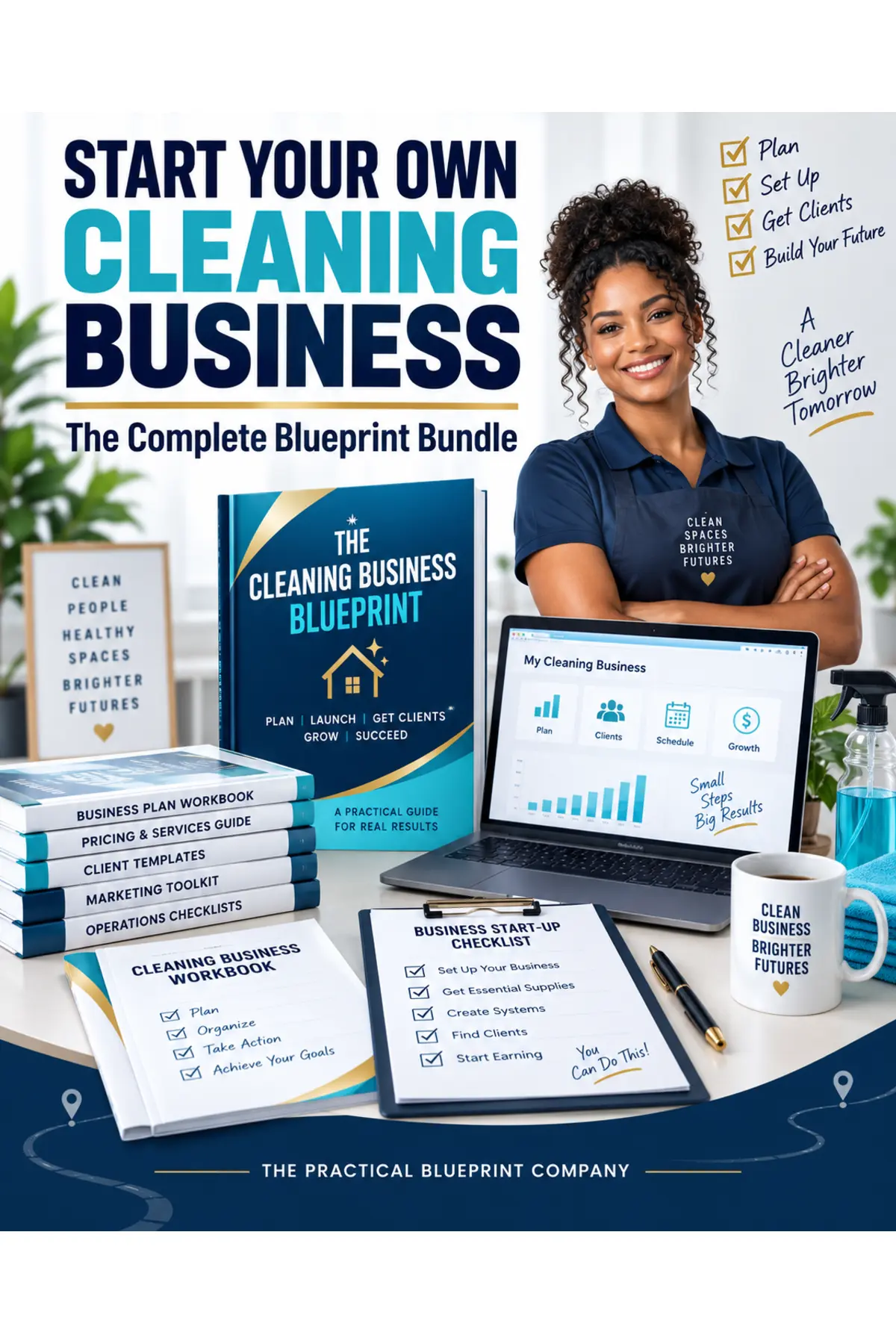
Build the business around the booking. The Cleaning Business Startup Bundle includes planning tools, enquiry and survey forms, a quotation pack, onboarding materials, service checklists and an editable pricing, CRM and profit tracker.
Explore the cleaning business bundle on Payhip (opens in a new tab)3. Start with people who already know you
Your first few customers often come through existing relationships. Tell friends, neighbours and former colleagues exactly which service you offer and where you work. Ask them to pass your details to someone who needs it; do not ask for a glowing endorsement from a person you have never cleaned for. A simple message works better than a long sales pitch:
“I’m taking bookings for weekly and fortnightly home cleaning in [area]. If someone you know wants a reliable cleaner, I can send a short service list and arrange a quote. Would you mind passing my details along?”
Contact local community organisations, independent businesses and property professionals where your service genuinely fits. Introduce yourself briefly and ask about their supplier process instead of sending an unsolicited essay. A letting agent may need a reliable turnaround cleaner; a small office may want work outside its public hours. Do not promise immediate availability or specialist services that you cannot deliver.

4. Use local marketing you can measure
Choose two or three channels that match your ideal client. A neighbourhood noticeboard, a local Facebook group that permits business posts, a small batch of leaflets in your defined service area and a complete search listing can be enough to start learning. Follow group rules and local distribution restrictions. Keep leaflet copy direct: service, area, contact, availability and one reason to trust you.
Track each enquiry's source. Ask “Where did you hear about us?” and record the answer. If fifty leaflets bring no suitable enquiries, change the offer, area or design before printing five hundred more. If a local listing attracts recurring customers, keep it accurate and gather genuine reviews there. Paid advertising can be tested later with a small capped budget, but it cannot rescue a slow response process or unclear offer.
For social posts, show helpful specifics: a short explanation of what is included in a regular clean, how you handle a first visit, or an available slot in a particular postcode. Before-and-after photos require the customer's permission and should avoid personal details. Show the standard of service rather than making exaggerated hygiene claims.
5. Turn enquiries into booked visits
Reply as soon as you reasonably can. A prospective client may contact several cleaners and choose the first who asks useful questions. Keep a short enquiry form or message template: postcode, property size, type of clean, preferred frequency, access, pets, products, parking, desired start date and any priorities. Ask for the information you need, and store personal details responsibly.
Do not send a firm fixed price for an unknown job based on the number of bedrooms alone. Explain whether you quote after photographs, a phone conversation or a site visit. Give the customer a clear written scope, estimated duration, price, first-visit conditions, payment terms and how changes are handled. A professional quote should be easy to accept and should say when the slot can be confirmed.
For example: “Thank you for your enquiry. Based on the details provided, I can arrange a short survey on Tuesday and send a written quote afterwards. The regular service would cover [tasks]; oven interiors and deep-clean work can be quoted separately. Would 5 pm suit?” This moves the conversation towards a useful next step without pressuring the customer.
If you have not heard back, one polite follow-up after a few days is reasonable: ask whether they had any questions and confirm how long you can hold the proposed slot. Then close the lead in your records and move on. The bundle's client survey and quote pack can help make this process consistent; see the full cleaning startup package.
6. Turn a first clean into regular work
Your best marketing begins with the job itself. Arrive when agreed, follow the written scope, treat the property with care and tell the customer promptly if something cannot be completed. Leave a clear record of what was done and any issue that needs a decision. Check that the customer is satisfied instead of assuming silence means delight.
If the first job was a one-off but the customer seems pleased, offer a realistic recurring option: “Would a fortnightly maintenance clean help keep this manageable?” Give the frequency, typical tasks and price in writing. Protect enough capacity for existing clients before promising more regular slots. A calendar full of underpriced work can prevent you from accepting better-fit bookings.
After a successful clean, ask for a genuine review with a direct link to the platform you use. Make the request optional and never offer incentives that breach the review platform's rules. You may also invite a referral: “If a neighbour needs a cleaner, please feel free to share my details.” Avoid sharing a client's name, photos or property details without permission.
7. Keep the numbers that actually matter
You do not need complicated marketing software at the start. Keep a small record of enquiries, source, service requested, quoted price, outcome, follow-up date and whether the client rebooked. Review it once a week. Which channel brings suitable enquiries? How many quotes become bookings? Are first-time customers booking a second visit? Which jobs take longer than planned?
Suppose a channel produces ten enquiries, six suitable quotes and three bookings. That tells you more than a post with hundreds of views and no work. If enquiries are plentiful but few book, look at response speed, clarity, service fit and the quote process. If bookings are plentiful but profit is weak, revisit scope and pricing before spending more on promotion. Our cleaning pricing guide shows how to allow for travel, products, overhead and billable time.
A practical 30-day client plan
- Week 1: Define one service, a realistic service area and your minimum profitable price. Prepare your enquiry questions and a written quote template.
- Week 2: Publish a complete local profile and a clear contact page or equivalent. Tell your existing network precisely what work you are accepting.
- Week 3: Test two local channels, such as a permitted community post and a focused leaflet run. Record the source of every enquiry and reply promptly.
- Week 4: Follow up open quotes, complete first jobs carefully, request honest feedback and review bookings and profit. Keep the channels that bring suitable clients.
Small actions repeated each week are more useful than one burst of advertising. As your diary fills, narrow your travel area, improve your systems and make sure regular clients receive the service you promised.
Frequently asked questions
How do I get my first cleaning client with no reviews?
Start with a specific local offer, honest details about your service and a professional quote. Tell people who know you that you are taking bookings. A genuine first customer can then provide feedback if they choose; never manufacture reviews.
Should I offer a discount to attract clients?
Only if the job remains profitable and the terms are clear. A limited introductory offer may help some businesses, but an unsustainably cheap regular rate is difficult to correct. Calculate your costs first and compete on reliability, clarity and fit.
Are leaflets or social media better for a cleaning business?
Either can work locally. Test a small, well-targeted leaflet run and a permitted local post, then track suitable enquiries and bookings. Choose based on results in your service area rather than views or impressions alone.
How do I keep cleaning clients coming back?
Agree the scope in writing, arrive reliably, deliver consistent work, communicate about changes and offer a realistic recurring slot. Ask for feedback after the first visit and act on reasonable concerns.
What should I say when someone asks for a price?
Ask about the property, frequency, priorities and access, then explain your survey or estimate process. Send a written quote that states the scope, price, exclusions and booking terms. For a detailed method, use our UK cleaning job pricing article.
Plan. Quote. Follow up. Grow.
Put your client-getting process into action
The Cleaning Business Startup Bundle combines an 88-page startup ebook, a 143-page action toolkit, 14 standalone printable packs and an editable XLSX pricing, CRM and profit tracker. Use the marketing, enquiry, survey, quotation and onboarding materials to build a more organised route from first contact to repeat booking.
Buy the Cleaning Business Startup Bundle on Payhip (opens in a new tab)General business guidance. Verify current local rules, insurance and platform policies for your service and location.
Explore the blueprint collection for guides, planners and practical worksheets.