
The £10,000 Micro-Wedding Blueprint
How to Plan a UK Wedding for Under £10,000
A practical UK wedding budget guide covering priorities, guest numbers, venues, suppliers, hidden costs and a realistic £10,000 plan.
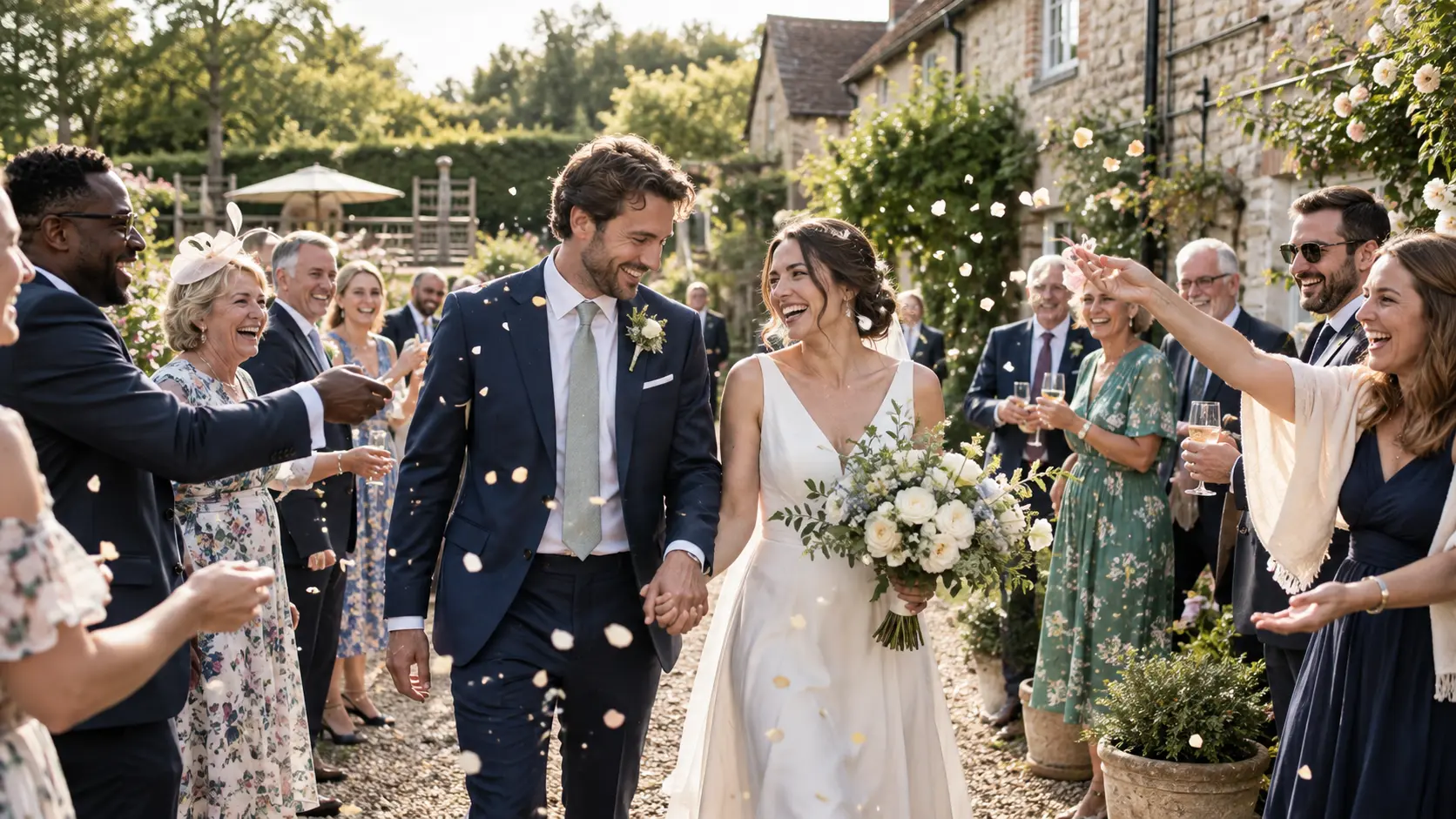
A beautiful UK wedding for under £10,000 is possible, but it needs a clear order of decisions. The budget works best when you decide what matters most, keep the guest list deliberate and price the complete day rather than a collection of attractive individual purchases.
The aim is not to make every choice as cheap as possible. It is to spend confidently on the parts you will value, simplify the rest and keep enough money uncommitted for costs that appear later.
In this guide, £10,000 is the total available for the ceremony and celebration, including a £1,000 contingency. Your rings, honeymoon, hen or stag plans, and guest travel are separate only if you consciously decide and record that at the beginning.
Prefer a complete planning system? The £10,000 Micro-Wedding Blueprint combines a 78-page guide with a 44-page action pack and four printable planning packs for budgets, suppliers, guests, RSVPs and wedding-day coordination.
Get the Micro-Wedding Blueprint on Payhip (opens in a new tab)1. Agree what the wedding must deliver
Before searching for venues, each partner should privately choose three priorities. You might care most about excellent food, relaxed photographs and having every guest stay nearby. Your partner may choose a meaningful ceremony, live music and a comfortable indoor space. Compare the lists and agree the three or four things the budget should protect.
Then write the boundaries. Set the absolute total, the maximum number of guests, the geographical area and whether the date is fixed or flexible. Decide which expenses are inside the £10,000. Without those definitions, it is easy to call the reception a £10,000 wedding while quietly paying for clothes, legal fees and stationery elsewhere.
Finally, separate must have, would enjoy and not important to us. A champagne toast, matching bridesmaid outfits or a formal wedding car may be lovely, but none is compulsory. Cutting an entire low-priority category saves more than chasing tiny discounts across twenty purchases.
2. Use a budget that totals £10,000
This example is an allocation, not a prediction of average prices. It shows how a couple might protect food, photography and contingency while keeping other areas proportionate. Replace every figure with written quotes for your date and location.
| Category | Planning allowance | What it may cover |
|---|---|---|
| Venue and ceremony | £1,800 | Room hire, registrar or ceremony fee, furniture and basic setup |
| Food and drink | £2,600 | Meal, evening food, welcome drink and table drinks |
| Photography | £1,200 | A shorter package from an experienced professional |
| Outfits and alterations | £1,000 | Both partners’ clothes, shoes and necessary alterations |
| Flowers and décor | £600 | Seasonal flowers, simple table details and reusable items |
| Entertainment | £700 | DJ, musician or carefully planned alternative |
| Cake or dessert | £250 | Small display cake, cutting cake or chosen dessert |
| Stationery and postage | £200 | Invitations, information cards and place cards |
| Transport or accommodation | £400 | One priority journey or room, rather than transport for everyone |
| Legal and administration | £250 | A planning allowance; check the exact local charges |
| Contingency | £1,000 | Price changes, overlooked fees and genuine last-minute needs |
| Total | £10,000 | The contingency is part of the total, not extra money |

Create three columns for every category: planned, committed and paid. A £900 quote is not yet a £900 final cost if delivery, travel, VAT, overtime or equipment hire are excluded. Keep the contingency untouched until the main contracts and final guest count are settled.
3. Let the guest list shape the day
Food, drink, furniture, stationery, transport and venue capacity all respond to guest numbers. Reducing the list from 80 people to 40 can change the style of venue available and allow you to give each guest a better experience without doubling the total budget.
Build the list in two stages. First, name the people without whom the day would feel incomplete. Second, add people you would genuinely choose to spend several hours with—not everyone you have ever met or everyone a relative expects. Apply one consistent rule to partners, children and extended family so decisions feel fair.
A micro-wedding of roughly 15–50 guests is not a lesser version of a large wedding. It can offer more conversation, a calmer timetable and more flexibility over dining spaces. Confirm accessibility, dietary needs and travel realities before assuming a smaller group is automatically simple.
4. Choose the venue and date strategically
Ask venues for prices on weekdays, Sundays and quieter months, but compare the full package. A low dry-hire price may require you to source tables, chairs, staff, linen, crockery, heating, lighting and waste collection. A higher package price may already include items that make it better value.
Village halls, restaurants with private rooms, small hotels, pubs with gardens and register-office ceremony rooms can suit an intimate celebration. Look for a venue that already feels pleasant, because decorating an unsuitable blank room can consume both money and time.

Keep the legal ceremony separate in your mind from the party. Requirements differ across the UK. In England and Wales, GOV.UK says couples must decide the venue before giving notice, give notice at least 29 days before the ceremony and hold it within 12 months. Civil ceremonies require at least two witnesses. Read the current England and Wales ceremony guidance and notice rules; use the official services linked there for Scotland and Northern Ireland.
Before booking, confirm the ceremony space, licensed status where relevant, registrar arrangements, access time, finish time, sound limits, wet-weather plan and cancellation terms. Never assume the venue booking automatically secures the legal official.
5. Compare complete supplier quotes
Give each supplier the same clear brief: date, postcode, guest count, timings and exactly what you need. Ask what is included, what could change the price, the deposit, balance date, cancellation terms and replacement plan if they cannot attend.
For catering, request a per-person figure plus staffing, crockery, glassware, linen, delivery, setup, clearing and VAT. For photography, compare coverage hours, number and format of images, usage rights, delivery times and backup arrangements. For music, check equipment, setup, requests, finish time and overtime.
- Is VAT included in the stated total?
- Are travel, accommodation or delivery charged separately?
- Does the price depend on a minimum number of guests?
- Are setup, collection and waiting time included?
- What happens if timings overrun?
- When do the deposit and final balance become non-refundable?
- What evidence of insurance or permissions does the venue require?
Do not choose purely by price. A reliable professional with a clear contract can be better value than a cheaper booking that leaves important details unresolved. Check recent work, reviews and communication, then record the decision and payment schedule.
Keep quotes, deposits and deadlines in one place. The complete Micro-Wedding Blueprint includes supplier comparison pages, a budget dashboard, guest tracking, venue questions, hidden-cost prompts and final-week planning sheets.
Download the complete wedding planning pack from Payhip (opens in a new tab)6. Save on clothes, flowers, food and décor without false economies
For outfits, set a total that includes shoes, underwear, accessories, cleaning and alterations. Sample sales, pre-loved clothes, high-street tailoring and renting can work well, but buy early enough for fittings. A bargain that needs extensive alteration may not remain a bargain.
Ask a florist which seasonal stems give the look you want within a fixed amount. Reuse ceremony flowers at the reception and concentrate arrangements where guests will notice them. Small vases, candles permitted by the venue and good table spacing can feel intentional without a large installation.
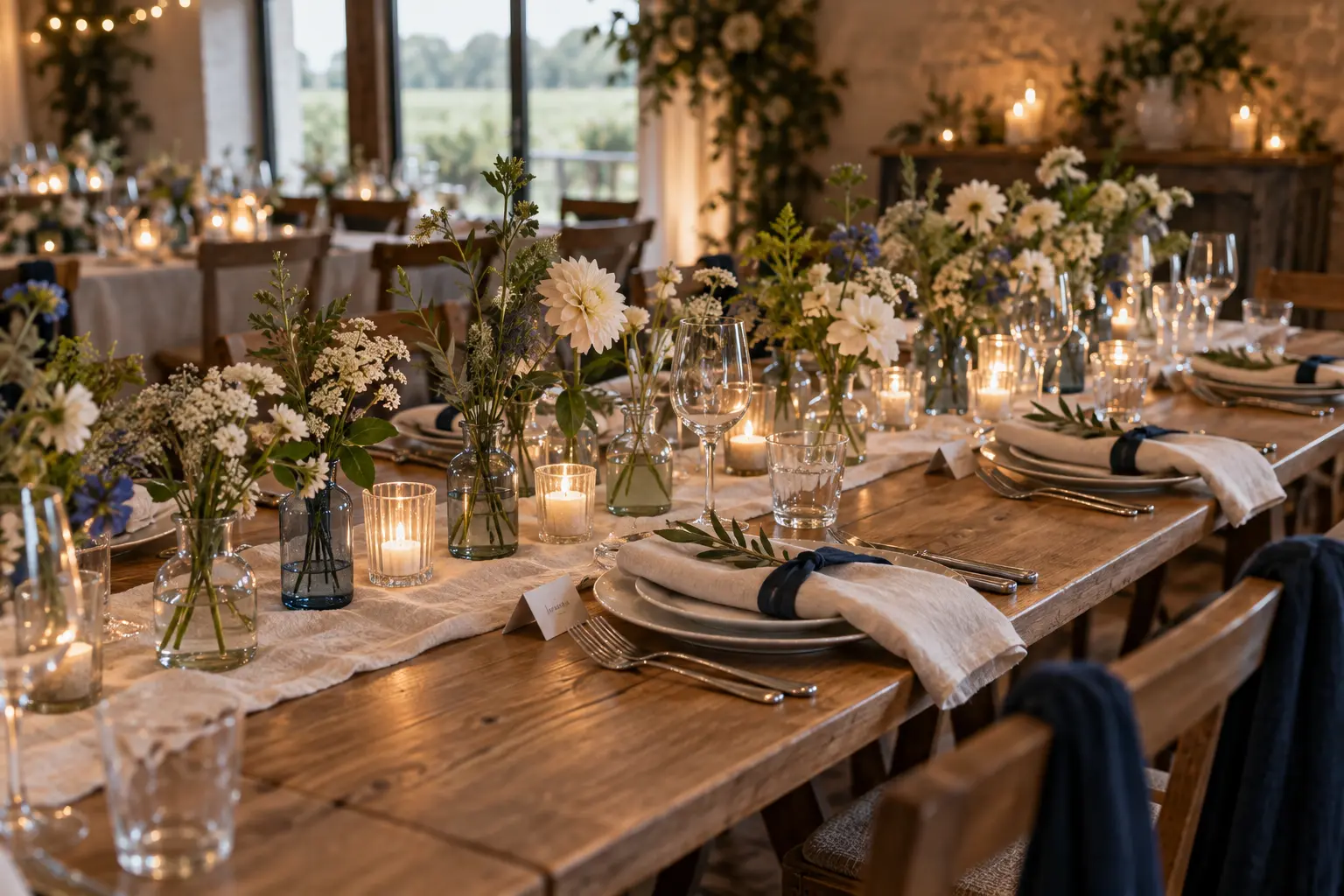
Food does not have to be a formal three-course meal. A generous sharing menu, afternoon celebration, restaurant meal or excellent buffet may fit the occasion better. However, self-catering is only cheaper if storage, food safety, transport, serving, clearing and the workload on relatives are genuinely manageable.
Limit DIY to tasks you enjoy and can finish early. Do not make the wedding party spend the morning collecting chairs, arranging flowers and solving equipment problems. Time, storage and transport are real costs even when nobody sends an invoice.
7. Turn the budget into a payment timeline
Wedding costs arrive in waves. Deposits may be due soon after booking, followed by staged payments and several final balances in the last month. List every due date beside the amount and the person responsible. Keep invoices, contracts and written changes together.
Break the whole project into weekly decisions. Our article on turning a big project into a weekly plan helps convert a long wedding list into manageable actions. If you are mixing printed sheets and digital records, use the advice on making your PDF planner work for you to maintain one current version.
Pause before every new purchase and ask: which category pays for this, what is the new category balance, and does it support one of our agreed priorities? If the answer is unclear, wait 48 hours. Small impulse purchases are one of the easiest ways to lose the contingency.
Your next-action checklist
- Agree the exact expenses included within your £10,000.
- Choose three shared priorities and a maximum guest count.
- Reserve £1,000 for contingency from the beginning.
- Create planned, committed and paid columns for every category.
- Shortlist venues only after deciding the ceremony type and area.
- Request like-for-like quotes that include every likely extra.
- Read contracts before paying deposits.
- Record every balance date on one timeline.
- Review the budget whenever the guest count or plan changes.
- Stop adding details when the day already delivers your priorities.
Frequently asked questions
Is £10,000 enough for a UK wedding?
It can be, particularly for an intimate celebration with a controlled guest list, a flexible date and clearly ranked priorities. Location, season and expectations matter, so use local written quotes rather than national averages.
How many guests can we invite on a £10,000 budget?
There is no fixed number, but 15–50 guests gives many couples more room to protect food, photography and the overall experience. Work backwards from real venue and catering prices before promising invitations.
What is usually the biggest opportunity to save?
Guest count, venue format and date usually change the budget more than small decorative savings. Choosing a suitable smaller venue on a less popular date can reduce several connected costs at once.
Which wedding costs are easiest to forget?
Alterations, supplier travel, VAT, corkage, delivery, setup, overtime, stationery postage, meals for suppliers, cake cutting, cleaning and next-day collection are commonly missed. Ask every supplier for the complete payable total.
Should the contingency be inside the £10,000?
Yes, if £10,000 is your absolute limit. Reserving it inside the total prevents an unexpected charge from becoming extra borrowing or forcing a stressful last-minute cut.
Does DIY always make a wedding cheaper?
No. Materials, failed attempts, storage, transport and your time can outweigh the saving. DIY works best for a small number of repeatable jobs that can be completed well before the day.
Plan the day, track every pound
Put your £10,000 wedding plan on paper
The £10,000 Micro-Wedding Blueprint gives UK couples a complete guide, fillable action pack and focused printable planners for budgets, suppliers, guests, RSVPs, roles and the wedding-day schedule.
Buy the Micro-Wedding Blueprint on Payhip (opens in a new tab)Guidance checked September 2026. This article provides general planning information. Supplier prices, contracts, ceremony rules and local authority charges vary. Confirm current requirements with the relevant official service, your register office, venue and suppliers before paying.
Explore the blueprint collection for guides, planners and practical worksheets.