
Furniture Upcycling Business
How to Start a Furniture Upcycling Business: A Beginner’s Step-by-Step Guide
Start a furniture upcycling business with practical steps for choosing projects, pricing work, finding customers and planning a manageable first month.

A tired bedside cabinet can become a useful, attractive piece again. Turning that transformation into a business takes something extra: knowing which jobs to accept, what they really cost and how to find people willing to pay for your work.
You do not need a showroom full of stock to begin. A sensible starting point is one manageable service, a suitable workspace and a small number of carefully chosen projects. This guide explains how to start a furniture upcycling business without letting enthusiasm outrun your skills or budget.
If you prefer ready-made worksheets alongside the steps below, The Upcycling Entrepreneur ebook and starter kit is available on Payhip, with tools for planning, pricing, quoting and finding customers.
1. Choose how your business will earn money
Furniture upcycling usually begins with one of two models. With resale, you buy or collect furniture, improve it and sell the finished piece. With customer commissions, someone pays you to work on furniture they already own.
Resale gives you creative control, but ties money and storage space up in unsold stock. Commissions reduce that stock risk, but require clear agreements about the finish, condition, price and completion date. You can eventually offer both; start with whichever you can deliver reliably.
Write a one-sentence offer, such as: “I refresh small wooden tables and bedside cabinets for local customers, with agreed colours and collection by appointment.” Avoid promising antique restoration, upholstery or structural repairs before you have the necessary competence.
2. Test demand before buying stock
Look at local furniture listings, specialist sellers and completed sales where the platform makes them available. Record the type of piece, dimensions, finish, condition, advertised price and delivery arrangements. An asking price shows someone’s expectation; it does not prove that a buyer paid it.
Speak to potential customers about what they need. Is their problem a dated finish, an awkward drawer or furniture that no longer matches a room? Ask what would make paying for an update worthwhile.
Use this research to choose one test project. A small, sound piece that fits in your vehicle is easier to manage than a large wardrobe requiring several people to move it. Set a maximum buying price before you collect.
3. Build repeatable skills on practice pieces
Practise on furniture you own before taking responsibility for a customer’s sentimental piece. Learn to identify solid wood, veneer and laminate, assess existing finishes, make suitable minor repairs and apply a compatible coating system.
Follow the product manufacturer’s instructions for cleaning, preparation, recoating and curing. There is no universal “no preparation needed” method. A finish that looks dry can still need time before normal use or transport.
Keep a project record: before photographs, materials used, active working time, waiting time and problems encountered. Your first few records will reveal which jobs suit you and which need more training. Make referrals part of your service rather than accepting everything.
4. Set up a safe, workable space
Plan separate space for incoming furniture, preparation, finishing and undisturbed curing. Check door widths, lifting arrangements, lighting and secure storage. Keep children, pets, food and household belongings away from workshop activities.
Wood dust requires proper controls. The HSE’s wood-dust guidance explains extraction and suitable cleaning methods. An open garage door does not replace dust extraction or appropriate protective equipment.
Unknown old coatings need assessment before disturbance. Do not dry-sand or burn off suspected lead paint; consult official lead guidance and obtain competent help. Read safety information for paints, adhesives and finishes, including ventilation, storage and waste instructions. Specialist spraying is a separate capability, not an automatic beginner purchase.
5. Budget for the whole job
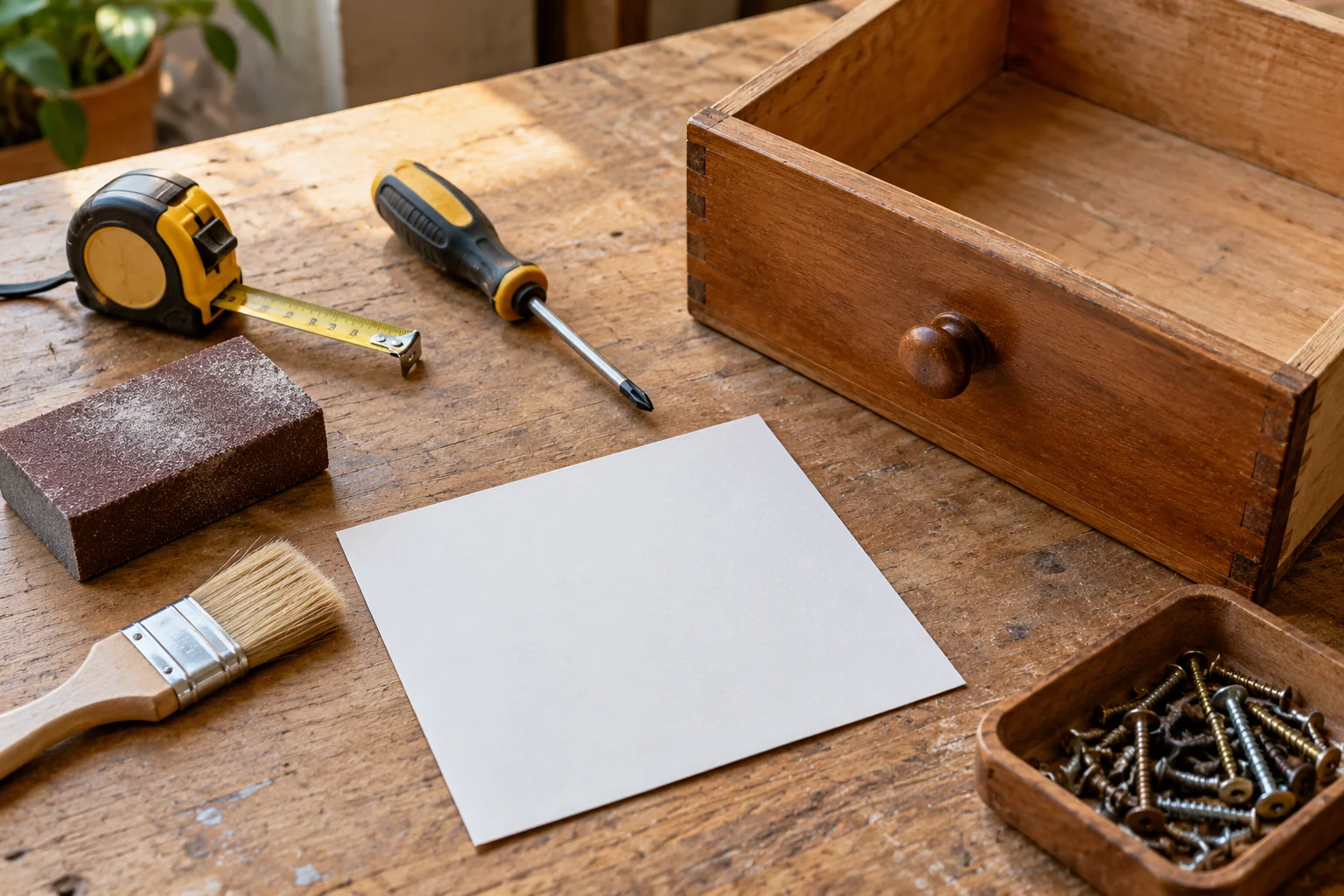
Start with suitable hand tools, a measuring tape, brushes or rollers, abrasives, compatible repair materials and the safety equipment your tasks require. Budget separately for dust control, storage and a stable work surface. Borrowing appropriate equipment can help, provided you know how to use it safely.
Include less visible costs: collection, fuel, packaging, replacement hardware, insurance, selling fees, cleaning and waste disposal. Keep money available for mistakes and rework. A free cabinet can still be an expensive project if it needs extensive repairs.
Divide your shopping list into “needed for the first job” and “buy when demand justifies it”. Obtain local quotes instead of treating a generic startup figure as a guarantee. The bundle’s tools and workshop budget planner helps organise those decisions.
6. Check business requirements where you live
Before accepting paid work, check your business structure, registration, tax records, home-business permissions and insurance. Describe the work accurately to your insurer, including customer furniture in your care, collection or delivery, and any visits to customers’ homes.
- UK: use GOV.UK’s sole-trader guidance to check registration and record-keeping responsibilities. Check council, landlord or mortgage conditions for working from home.
- US: consult the Small Business Administration’s launch guidance and relevant state, county and city authorities for registration, tax and permit requirements.
- Canada: check federal and provincial registration guidance and use BizPaL to investigate permits and licences.
Check consumer obligations and product-safety rules for what you sell. Upholstered furniture, children’s furniture and electrical conversions introduce additional issues; leave them outside your initial offer unless you can meet the relevant requirements. This guide provides planning information, not individual legal or tax advice.
7. Price your time as well as your materials
For resale, start with the purchase cost, transport, materials, labour, allocated overheads and selling costs. Add your intended profit allowance. For commissions, omit the furniture purchase but include consultation, preparation, administration and any collection or delivery you provide.
A simple resale costing example
Suppose a cabinet costs £25, materials £30, transport £15 and allocated overheads £10. Five hours of labour at an illustrative £20 per hour adds £100. Your costed floor is £180 before selling fees, any additional profit allowance and applicable taxes.
If a platform charged an illustrative 10% of the selling price, covering that £180 alone would require £200: £180 ÷ 0.90. These are teaching figures, not recommended market rates or a profit forecast.
Compare your calculated price with evidence of local demand. If buyers will not support it, reconsider the piece, purchase price or process before committing. Do not make the calculation work by quietly removing your labour.
Our guide to calculating a self-employed gardener’s hourly rate explains the same useful distinction between working hours and billable hours. For furniture-specific worksheets, get the upcycling ebook and pricing toolkit on Payhip.
8. Agree customer work in writing
Ask for photographs, measurements, existing damage, previous treatments, intended use and the desired finish. Inspect the piece before giving a firm commitment when photographs leave important questions unanswered.
Your written quote should state the work included, exclusions, colour or finish approval, price, payment stages, estimated timing and collection arrangements. Use terms appropriate to local consumer law; copying a “no refunds” statement from another seller is not a substitute.
Record the item’s condition on arrival. If hidden damage changes the job, pause and obtain written approval for the revised scope and cost. Never assume a customer will accept an unexpected extra charge at collection.
9. Create proof and find your first customers
Photograph your actual practice projects in consistent daylight, against an uncluttered background. Include the whole piece, details, interiors and remaining imperfections. Keep colours accurate and obtain permission before sharing customer furniture or identifying information.

Start with one clear local listing describing your service area, accepted furniture, enquiry process and collection options. Follow community-group rules, introduce yourself to relevant local businesses and ask satisfied customers for honest reviews.
For resale listings, include dimensions, materials where known, work completed, condition, price and delivery terms. Do not describe a painted veneer piece as solid wood or claim environmental benefits you cannot substantiate.
Our article on finding your first local service customers offers transferable ideas for referrals and follow-up. Adapt the approach to furniture rather than copying a cleaning offer.
10. Run a small first-month launch
Keep your first month focused on learning whether you can deliver good work at a sustainable price.
- Week one: define your service, research local demand and check workspace, insurance and business requirements.
- Week two: complete a suitable practice piece and record every cost and working hour.
- Week three: photograph the result, prepare your quote process and publish a clear local offer.
- Week four: handle enquiries, accept only suitable work and review what the figures tell you.
Schedule curing, collection and administration as well as hands-on work. If you are starting alongside employment, our guide to scheduling a service business around a full-time job provides useful capacity-planning principles.
Track enquiries, completed jobs, selling prices, direct costs, total hours and rework. Expand only when the evidence supports it. A repeatable process for small jobs is a stronger foundation than a workshop packed with unfinished furniture.
Frequently asked questions
Can I start a furniture upcycling business from home?
Potentially, if your space, permissions, insurance and local rules support the work. Consider dust, fumes, noise, storage, customer visits and safe access. A spare room suitable for paperwork may be unsuitable for preparation or finishing.
Do I need qualifications before starting?
Requirements depend on your location and activities. Do not assume one qualification covers every repair. Develop demonstrable skills, check applicable rules and insurance conditions, and refer work beyond your competence.
What furniture should a beginner choose?
Consider small, sound, non-upholstered pieces with straightforward surfaces and manageable transport needs. Avoid major structural damage, suspected contamination and valuable antiques until you have the expertise to assess them properly.
Should I flip furniture or accept commissions?
Flipping offers control over the design but carries stock and selling risk. Commissions require careful customer agreements but avoid buying speculative stock. Test one model first and use your actual results to decide whether to add the other.
How quickly can the business become profitable?
There is no reliable timetable. Profit depends on demand, buying decisions, prices, costs and your working time. Review several completed projects before treating early sales as dependable income.
Plan your first projects with practical tools
The Upcycling Entrepreneur: A Beginner’s Guide to Launching Your Furniture Repair Business pairs the ebook with 15 companion resources covering launch planning, furniture assessment, pricing, enquiries, quotes, marketing and customer handover.
The companion kit provides 46 pages per edition in A4 and US Letter, plus selected editable templates. Use the guidance to make decisions, then put the worksheets to work on your own projects.
Buy The Upcycling Entrepreneur bundle on Payhip (opens in a new tab)Explore the blueprint collection for guides, planners and practical worksheets.