
Gardening Business Startup
How to Find Your First Gardening Customers Without Paid Advertising
Find local gardening customers through referrals, community groups, respectful introductions and simple flyers, with sample wording and a seven-day action plan.
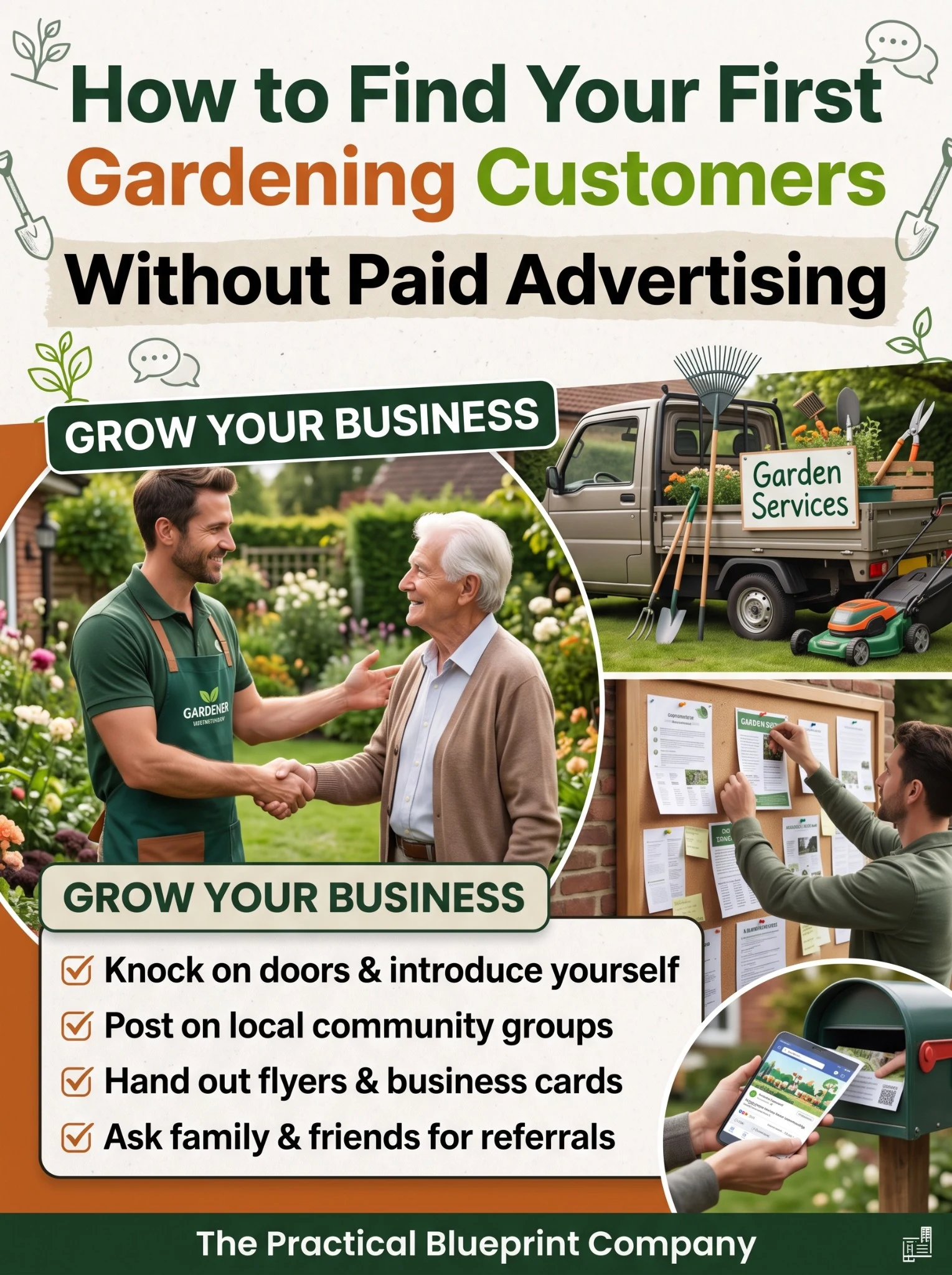
You can find your first gardening customers without buying online adverts by making a useful local offer, showing evidence of your work and giving people an easy way to contact you. You do not need hundreds of followers. You need a few nearby households whose gardening needs match the services you can deliver well.
Our Pinterest pin suggests four practical routes: introduce yourself locally, post in community groups, hand out flyers and business cards, and ask family and friends for referrals. This guide turns those ideas into manageable actions, without promising that a particular number of posts or conversations will guarantee bookings.
“Without paid advertising” here means without buying adverts or boosted posts. Printed cards, travel and your time still have costs. You can begin with the free approaches and add a small print run only when your message is clear.
Start with an offer people can understand
“I do gardening” gives someone very little to pass on. “I offer regular lawn mowing and hand-weeding in two nearby villages” makes it easier for them to recognise a suitable customer.
Choose two or three services that match your competence, tools and availability. A simple first offer might be small-lawn maintenance, border weeding and seasonal tidying. Explain what is excluded, particularly tree work, specialist treatments and substantial landscaping.
Our guide to choosing gardening services that match your skills can help. Then put your service area, working hours and first offer into a one-page gardening business plan.
Keep the area small enough that travelling between customers does not swallow the day. If you are working around another job, advertise the appointments you can reliably offer. See our guide to running a gardening side hustle around full-time work before filling every spare hour.
1. Ask family and friends for introductions
Begin with people who already know you, but give them a specific request. Asking them to “spread the word” is easy to forget. Give them a short message they can forward when someone mentions needing garden help.
“I’m starting a small gardening service covering [area], offering [two or three services]. I have space for [genuine availability]. If someone you know needs help, please pass on my number and ask them to contact me for a chat about their garden.”
Ask people to pass your details to the prospective customer rather than sharing someone else's phone number without permission. That gives the customer control and makes the introduction less awkward.
You do not need to work free for everyone you know. If you complete a practice job for a friend, agree the scope beforehand and be honest when describing it later. Permission to work in their garden is not automatically permission to use photographs publicly.
2. Introduce yourself locally without applying pressure
The pin's suggestion to knock on doors can work as a brief introduction, but it is optional. If you dislike it, focus on community groups, referrals and noticeboards instead. You can build relationships without becoming a pushy salesperson.
Where you do introduce yourself, choose reasonable daytime hours, respect “no cold callers” notices and local restrictions, and stay outside unless invited. Never enter a garden to inspect it without permission. Leave promptly when someone is not interested.
“Hello, I’m [name]. I’m offering garden maintenance locally, including [services]. I’m just introducing myself. Would you like a card to keep in case you need help another time?”
Avoid commenting negatively on someone's garden or suggesting urgent work to create a sale. An untidy space may reflect illness, caring responsibilities or simply different priorities. Offer help respectfully and allow time to decide.
If interest develops, arrange a separate assessment and written quote. Before agreeing work at a customer's home, read the GOV.UK doorstep-selling guidance. Off-premises service contracts can involve information and cancellation requirements, including a 14-day cancellation period where applicable. Starting within that period requires the appropriate request and information; do not assume a verbal “go ahead” covers everything.
3. Post in local community groups
Look for neighbourhood, village and residents' groups where business posts are permitted. Read the rules first: some allow promotion only on particular days, while others do not allow it at all. Ask an administrator if the policy is unclear.
Write a short, useful introduction with your location, services and a simple contact method. One genuine photograph of your work is more persuasive than a grand claim that you are the area's best gardener.
“Hello, I’m [name], a local gardener covering [area]. I offer [services] and currently have [actual availability]. If you would like help keeping a small garden manageable, message me with your postcode and the work you have in mind. I’ll explain the next steps and arrange a quote if it looks suitable.”
Do not paste the same advert repeatedly or send unsolicited private messages to group members. Respond helpfully when someone asks for a service you provide, identify yourself as the business owner and keep personal customer details out of public comments.
Match the offer to the season. For autumn and winter enquiries, our article on winter gardening services can help you describe useful work beyond mowing, without promising tasks unsuitable for the weather or your skills.
4. Use flyers and cards selectively
A small batch of simple flyers can support conversations. Include your business name, service area, two or three services, contact details and a clear next step. Make the telephone number readable; a QR code can be helpful, but should not be the only contact route.
Ask permission before leaving cards in shops, garden centres, community halls or on noticeboards. Some charge for space; choose free boards if you want to keep this approach free of advertising fees. Respect no-junk-mail notices and never attach material to property without permission.
Test a small batch before ordering hundreds. Ask each enquiry where they found you. A card kept by one suitable household may be more useful than a large distribution across places you cannot serve economically.
For a no-print alternative, create a simple digital contact card containing the same information. Friends can forward it when appropriate. Check every link and phone number before sharing it.
Build proof before making big claims
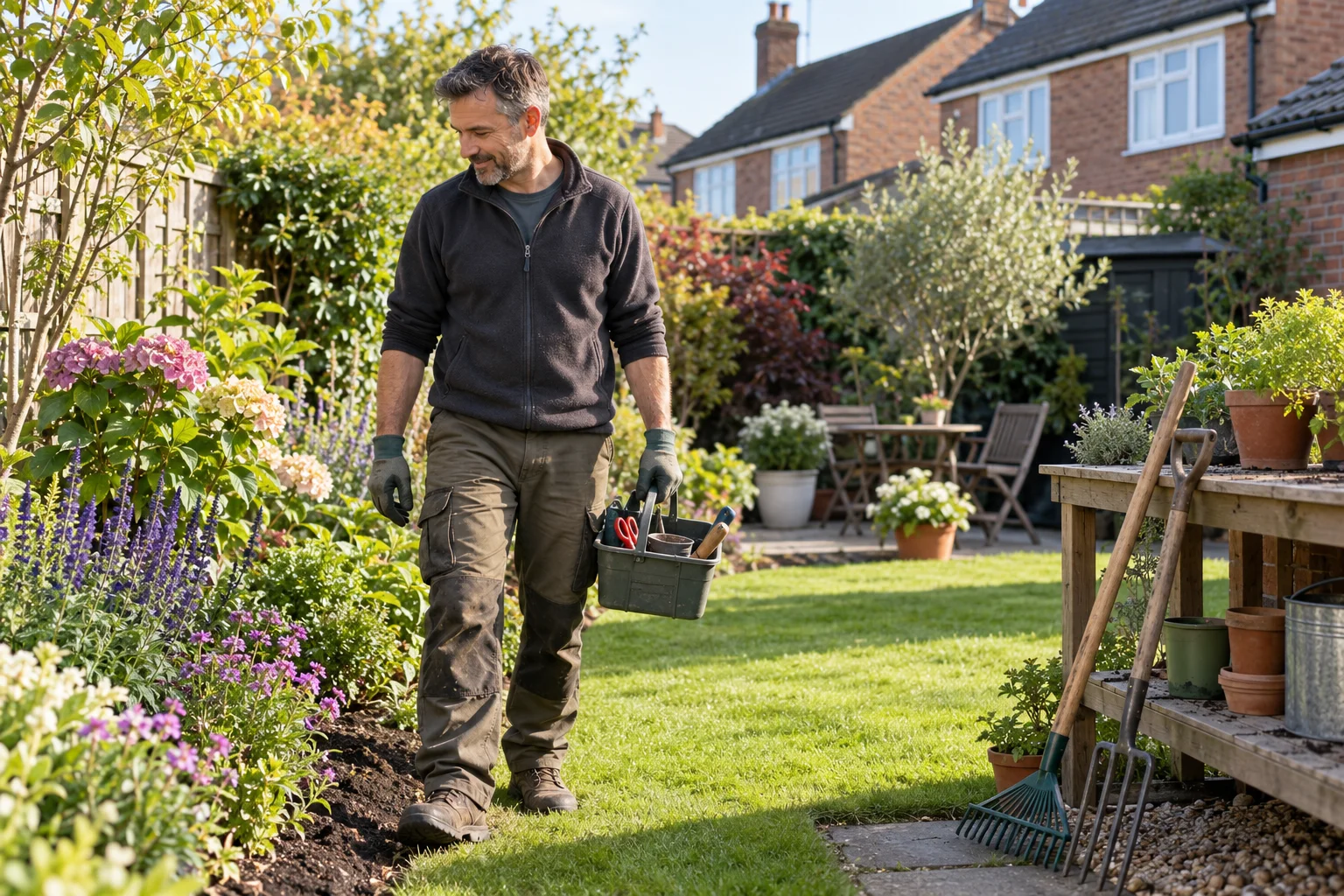
Photograph genuine work with the owner's permission: a weeded border, neat lawn edges or a tidied path. Take before-and-after images from the same position where possible. Describe the work accurately and avoid filters or edits that exaggerate the result.
Keep house numbers, faces, vehicle registrations and personal belongings out of the frame. Say clearly if a photograph shows your own garden or practice work. Never present stock pictures or AI illustrations as examples of jobs you completed.
Being new is not something to disguise. Our guide to starting without professional gardening experience explains how to communicate your abilities honestly while building experience.
Help local customers find and check you
An eligible gardening business can use a free Google Business Profile. Give accurate contact details, services and hours. Follow Google's verification process; creating a profile does not guarantee immediate visibility or a particular ranking.
If you travel to customers and do not receive them at your address, follow Google's service-area business guidelines and hide your address from the public profile. Do not invent an office address.
After completed jobs, invite customers to leave honest feedback. Google prohibits incentives in exchange for reviews, including discounts. Do not ask friends who have never been customers to review you, or request only positive reviews.
Turn an enquiry into a clear next step
Reply within the timeframe you advertise. Ask for the postcode, requested tasks, approximate garden size, access details and photographs if useful. Clarify whether the customer wants a one-off tidy or ongoing maintenance.
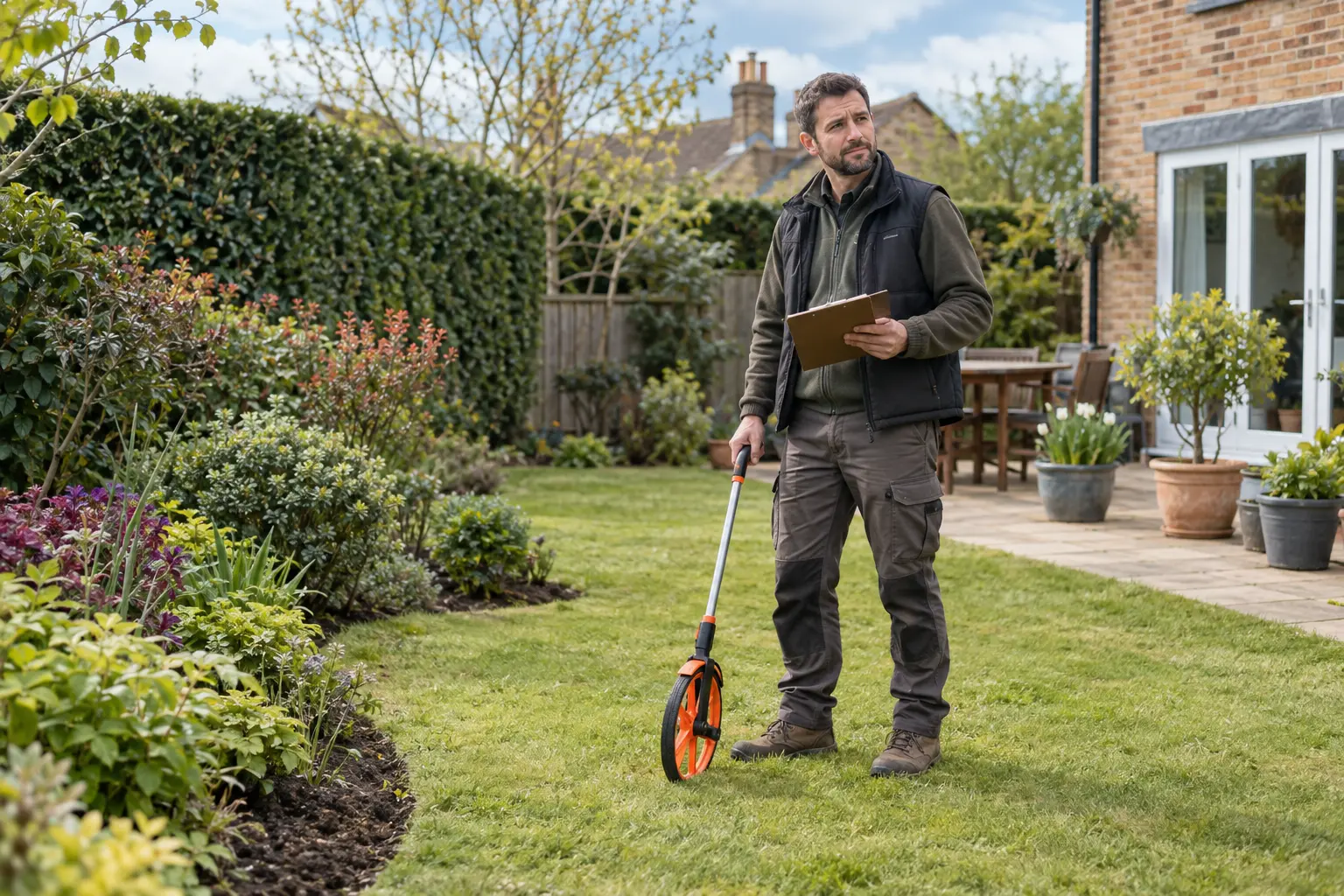
For suitable enquiries, arrange an assessment and explain when they will receive a quote. Confirm tasks, exclusions, price, waste arrangements and proposed timing in writing. If you need more information, ask before guessing.
Use our gardener pricing guide to account for travel, tools and non-billable time. Your first customer should not lock you into a loss-making price. If a budget is too small, offer a smaller scope where appropriate rather than promising the same job for less.
Buy for the work you have agreed
You do not need a van full of equipment to introduce your business. Check your startup costs and buy for the services you are actually offering. Suitable insurance, safe working arrangements and competence matter more than looking busy with expensive tools.
For border work, our stainless-steel border spade and fork review provides a product comparison point. Choose tools that suit your height, strength and the ground; a purchase should solve a working need. That review contains affiliate links, which may earn us commission at no extra cost to you.
For planning and customer organisation, the Gardening Business Startup Bundle includes enquiry, assessment, quotation and tracking resources. Use these to keep conversations organised as bookings begin to arrive.
A practical seven-day starting plan
- Day one: choose your services, coverage area and realistic availability.
- Day two: prepare a short introduction and a few authorised photographs.
- Day three: ask a small number of friends and family for suitable introductions.
- Day four: post in one relevant community group, following its rules.
- Day five: ask about free noticeboard space or make a few respectful local introductions.
- Day six: respond to enquiries, assess suitable jobs and send clear quotes.
- Day seven: record results and decide which approach deserves another week.
This is an action plan, not a seven-day customer guarantee. Track enquiries, quotes, bookings, repeat visits and time spent finding work. If you get no enquiries, review the offer and where you are sharing it before spending money.
Frequently asked questions
Do I need a website before finding customers?
No. Clear contact details, genuine work examples and reliable communication can support your first bookings. A simple website can become useful as customers want to check your services.
Should I offer the first job free?
Not automatically. Practice can help build skills, but paid work needs a sustainable price. Any introductory offer should have clear limits and must not depend on receiving a positive review.
What if I am uncomfortable knocking on doors?
Use referrals, permitted community posts and noticeboards. Choose an approach you can repeat comfortably and respectfully rather than forcing yourself into unsuitable sales conversations.
How do I get repeat bookings?
Deliver the agreed work, communicate delays and ask whether a regular visit would help. Suggest a realistic schedule and confirm its scope and price without pressuring the customer.
Take the first local step
Start with one clear offer and a few relevant conversations. Build trust through the way you respond, quote and work. For more ideas, visit our Practical Blueprint Pinterest board, or use the Gardening Business Startup Bundle to organise your launch.
Get the Gardening Business Startup Bundle on Payhip
Explore the blueprint collection for guides, planners and practical worksheets.