
Gardening Business Startup
What Work Can a Gardening Business Offer in Winter?
Eight practical winter gardening services, plus clear packages, a pricing example and advice on planning work around weather, skills and customer needs.
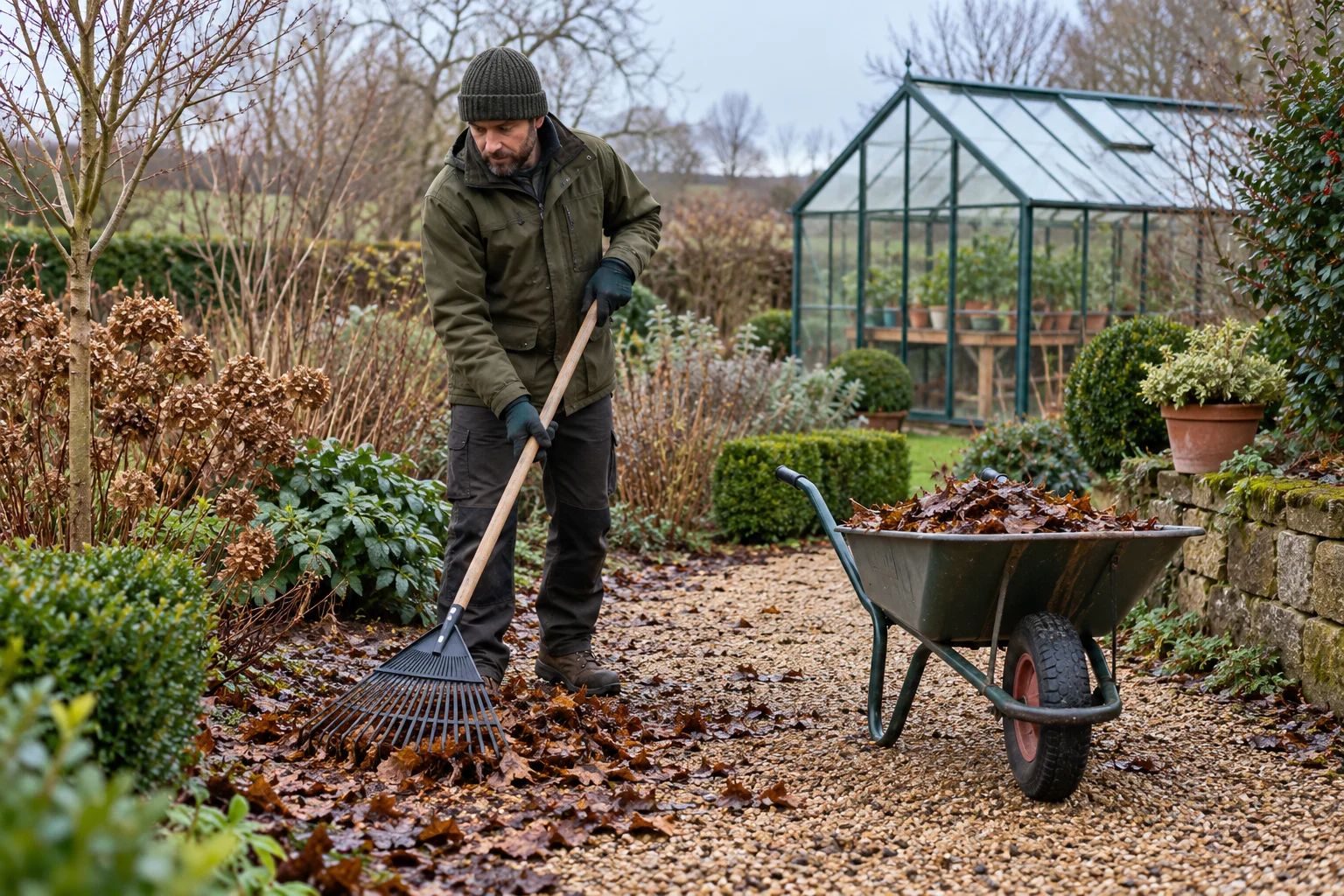
If most of your gardening income comes from mowing lawns, winter can feel like someone has turned the business off. The grass slows down, daylight disappears early and customers assume they will not need you until spring.
A gardening business can offer winter leaf clearance, suitable pruning, mulching, plant protection, greenhouse cleaning, bare-root planting, careful path maintenance and spring preparation. The opportunity is to solve seasonal problems for existing customers, with jobs that suit your skills and the conditions.
Taking inspiration from our Pinterest pin, here are eight services worth considering. They can contribute to winter income, but profitability depends on demand, pricing, travel and the time each job actually takes. You do not need to offer all eight.
If you are building your first service menu, start with our Gardening Business Startup Bundle, then use this guide to develop a manageable winter offer.
1. Leaf clearance and light garden tidying
Wet leaves collect on paths, steps, lawns and entrances long after the first autumn tidy. A return visit can be valuable, especially for customers with mature trees or limited mobility.
Offer a clearly defined service: rake agreed lawn areas when conditions allow, sweep accessible paths, collect fallen twigs and organise suitable leaves for composting or leaf mould. Avoid walking repeatedly over frozen or waterlogged lawns. Leave appropriate habitat areas undisturbed rather than promising a completely bare garden.
Ask where the material will go before quoting. Bagging it for an agreed on-site compost area is different from loading, transporting and paying to dispose of it. For a beginner, small, well-defined clearance visits can be easier to estimate than an entire overgrown garden.
2. Pruning suitable trees and shrubs
Winter pruning can be useful work, provided you can identify the plant and know how it should be managed. It is not a general invitation to cut every shrub back.
The RHS winter-pruning guide covers established, free-standing apple and pear trees. Trained forms need different treatment, while plums and cherries are generally pruned in spring or summer because of disease risks. Check plant-specific guidance before promising a winter appointment.
Keep your offer within your competence: accessible, small-scale pruning with suitable hand tools may be appropriate; climbing, chainsaw work and large branches over buildings belong with qualified specialists. Explain the intended result and agree how the cuttings will be handled.
Check for wildlife before starting. Active bird nests can occur outside the main breeding season; GOV.UK explains their legal protection. Do not proceed if the work would damage an occupied nest.
3. Mulching and border care
Customers often understand mowing but may not realise that borders also benefit from seasonal attention. An agreed weed-and-mulch visit can give them a clear result without needing expensive machinery.
Remove accessible weeds where the ground is workable, then spread suitable organic mulch around agreed plants. Keep material clear of trunks and stems. The RHS guidance on feeding and mulching fruit trees provides a useful starting point for that particular planting group.
Assess access and delivery arrangements before pricing. Carrying bags through a narrow side passage can take longer than spreading them. Postpone work on frozen or saturated ground rather than compacting soil to keep a booking. Make material quantities, delivery and any supplier charges clear in the quote.
4. Plant protection and winter preparation
A winter-preparation visit can combine several small jobs: moving manageable pots to a sheltered position, checking that containers drain freely, fitting suitable protection to vulnerable plants and inspecting accessible ties or supports.
The aim is practical prevention, not a promise that every plant will survive every frost. Different plants need different protection, and tightly wrapping the wrong material around foliage can create problems of its own. Use the RHS advice on preventing winter damage to guide your preparation.
Agree whether protection needs checking or removing later. That follow-up may be a useful repeat visit, but it should be explained and priced in advance. Do not move heavy containers alone simply because they look small from the driveway.

5. Greenhouse, pot and sheltered workspace cleaning
A greenhouse that is empty or partly cleared offers a different kind of winter booking. You might wash accessible glazing, clean staging, sort reusable pots and remove agreed plant debris before the next growing season.
Arrange protection for any plants that must be moved, and choose a mild day. Check for cracked glass and avoid leaning ladders against glazing. Keep roof work and electrical repairs outside a basic cleaning service.
State what is included: an accessible internal clean is different from a full external wash or dismantling fixtures. Use cleaning products only as labelled and suitable for the surfaces. Sheltered jobs can provide flexibility, but an unheated greenhouse is not automatically safe or comfortable during freezing weather.
6. Bare-root planting and small planting projects
The dormant season creates opportunities to plant suitable bare-root hedging, roses and fruit trees. For customers who already know what they want, you could provide a labour-only planting service or quote separately for sourcing plants.
Check suitability for the site, mature size, spacing, underground services and access before digging. Do not plant into frozen or waterlogged soil. Explain watering and aftercare, because winter rainfall does not remove the need to monitor newly planted roots.
Start with projects you can assess confidently. A few appropriate plants in a prepared border are a different commitment from installing a long boundary hedge. Agree who bears responsibility for plant selection, delivery and any replacement policy before ordering materials.
7. Path sweeping and careful surface maintenance
Keeping entrances and garden paths clear can be a useful addition to a regular visit. Sweep loose debris, remove accessible weeds by hand and flag damaged paving or drainage problems to the customer.
Pressure washing is a separate service, not an automatic upgrade. Surface condition, equipment competence, insurance, runoff arrangements and temperature all matter. Never create water runoff that could freeze into a slipping hazard, and do not promise that cleaning makes a surface permanently slip-free.
If this is an area you want to develop properly, explore our Pressure Washing Business Bundle. For your first winter, a straightforward sweeping and debris-removal offer may fit your equipment and experience better.
8. Spring preparation and scheduled garden check-ups
Some customers want help staying on top of their garden rather than a large one-off project. A short winter check-up could cover agreed tidying, inspecting plant protection, noticing damaged supports and making a prioritised spring task list.
For vegetable growers, you might label beds, organise empty containers or plan a later preparation visit. Work only where conditions permit and avoid unnecessary digging of wet soil. Ask what the customer wants to grow rather than redesigning the whole space.
Write down what you checked, what you completed and what needs a specialist. A repeat visit should provide a useful service each time; do not sell a monthly subscription without enough real work to justify it.
Turn the services into three clear packages
Customers find it easier to book an outcome than choose from a long list of gardening tasks. Try a small menu with written boundaries:
- Winter tidy: agreed leaf collection, path sweeping and light debris clearance.
- Garden protection visit: suitable pot relocation, plant protection and accessible support checks, with materials itemised.
- Spring-ready visit: agreed greenhouse cleaning, container sorting and a practical task list for the next season.
Assess each garden before giving a fixed price. State the area, tasks, materials, waste arrangements and exclusions. A two-hour visit should have a priority list rather than a promise to finish everything.
Our article on matching gardening services to your skills can help you choose your first package. For a wider planning framework, get the Gardening Business Startup Bundle on Payhip.
Price the whole job, including the hidden time
Winter bookings can involve shorter working days, slower travel, wet equipment and rearranged appointments. Allow for these realities before copying another gardener's hourly rate.
Illustrative calculation, not a market rate: imagine two hours working in the garden plus one hour for travel, loading and administration. At an illustrative business charge of £30 per total working hour, the time element is £90. Add £20 of materials and £15 of disposal costs, and the starting quote becomes £125.
That is turnover, not take-home pay. The time charge must also support overheads and equipment replacement; taxes and your own circumstances affect what remains. Check whether your figures leave a sustainable margin, and make any applicable VAT treatment clear. Record actual time after the job so your next estimate improves.
Handle weather, waste and bookings professionally
Set a clear weather policy before accepting work. Explain that freezing conditions, saturated ground, high winds or unsafe access may require a change of task or a new date. Keep spare capacity for rearrangements instead of filling every daylight hour.
If you remove garden waste, check the applicable registration, transport and disposal requirements. In England, start with GOV.UK's waste-carrier registration guidance and business-waste responsibilities. Scotland, Wales and Northern Ireland have their own regulators. Do not assume a household recycling centre accepts your commercial loads.
Offer winter visits to existing customers first, using a short description of the problem you can solve. If gardening fits around employment, our guide to running a gardening side hustle around a full-time job will help you protect realistic working hours.
Build a winter service you can repeat confidently
Choose two or three suitable services, try them with a small number of customers and review the time and costs. Winter does not need to match summer's workload to be worthwhile. A modest, well-organised offer can maintain customer relationships and prepare the ground for spring.

Frequently asked questions
Can a gardening business earn money throughout winter?
Yes, but the amount depends on local demand, weather and your service mix. Repeat tidying, appropriate pruning and preparation work can contribute income; none guarantees a full diary.
What winter gardening jobs suit a beginner?
Small leaf-clearance visits, sweeping, pot sorting and straightforward tidying can be manageable starting points. Assess risks and waste arrangements, and learn plant-specific skills before offering pruning.
Should I mow lawns in winter?
Only when grass is growing and conditions are suitable. Avoid frozen, waterlogged or very wet lawns. Mowing should follow the lawn's needs rather than a fixed year-round timetable.
Do I need expensive new equipment?
Not for every service. Start with suitable hand tools, protective clothing and safe transport arrangements. Buy additional equipment when a confirmed service and realistic workload justify it.
How do I find winter gardening customers?
Begin with existing clients and a clear seasonal offer. Use before-and-after photographs with permission, explain what is included and invite local enquiries. You can find more ideas on our Practical Blueprint Pinterest board.
Plan your gardening business for every season
Use the Gardening Business Startup Bundle to organise your service ideas, work through pricing and turn your next steps into a practical plan. See what is included, or buy the digital bundle through Payhip.
Get the Gardening Business Startup Bundle on PayhipExplore the blueprint collection for guides, planners and practical worksheets.