
Airbnb Host Operations
The Complete Airbnb Turnover Checklist: Everything to Do Between Guests
A complete room-by-room Airbnb turnover checklist covering inspection, cleaning, laundry, restocking, maintenance and the final guest-ready check.

An Airbnb turnover is everything that happens between one guest leaving and the next guest arriving. Cleaning is a major part of it, but a reliable turnover also includes inspecting the property, checking for damage, changing linen, restocking supplies, testing essential equipment and confirming that the home is genuinely ready for the next arrival.
When these jobs live only in your head, small omissions are almost inevitable. A missing towel, a flat remote-control battery or yesterday’s food in the fridge may look minor to a host, but to a tired guest they can suggest that the entire property was not checked properly.
This complete Airbnb turnover checklist gives you a repeatable process that can be adapted for a room, flat, cottage or larger holiday home. Airbnb’s ground rules for home hosts require listings to be clean and free of health hazards before check-in, and specifically expect cleaning between every stay. Its guest ratings also separately consider cleanliness, check-in, accuracy and host communication, so a good turnover protects more than the cleaning score.
The Airbnb Host Operations Bundle includes a reusable Turnover Checklist, Cleaning Checklist, Maintenance Log, Supplier Contacts Directory and seven other hosting resources. The complete bundle is £9.99.
Get the Airbnb Host Operations Bundle — £9.99 on Payhip (opens in a new tab)Start before the guest checks out
The smoothest turnovers are planned before departure morning. Confirm the checkout time, who is completing the clean, how they will enter, when linen will be available and whether another guest is arriving that day. If a cleaner, laundry service or maintenance person is involved, everyone should know the access arrangements and the deadline for reporting problems.
Review messages from the departing guest. A guest may already have mentioned a slow drain, damaged glass, weak Wi-Fi or a missing kitchen item. Put that issue on the turnover list instead of trusting somebody to remember it later.
- Confirm the guest’s checkout time and the next arrival time.
- Assign the cleaner or turnover person and a backup contact.
- Check whether fresh linen, towels and consumables are available.
- Review reported faults, special requests and maintenance notes.
- Confirm access codes, keys and parking arrangements.
- Allow a realistic buffer for inspection and unexpected problems.
Phase 1: secure and inspect the property
Do not begin by immediately stripping beds and spraying surfaces. First walk through the property while it is still in its post-stay condition. This gives you the best chance of noticing damage, missing items, unusual stains or signs that an appliance has failed.
Open curtains and switch on the lights. Check every room, outdoor area and guest-accessible cupboard. Photograph anything unusual before moving or cleaning it. If there is serious damage, keep communication on the booking platform and follow the current reporting and evidence requirements.
Initial inspection checklist
- Confirm all guests have left and collect every key or access device.
- Check doors, windows, locks, balconies and outside areas.
- Look for damage, heavy staining, missing items or evidence of smoking.
- Check for belongings left behind and store them safely.
- Inspect bins, the fridge, oven, microwave and dishwasher.
- Test for unpleasant smells, leaks, pests, mould or excessive damp.
- Record maintenance problems before cleaning hides the evidence.
Separate ordinary wear from genuine damage. A scuff, loose handle or worn seal may simply belong on the maintenance list. The aim is an accurate record, not looking for a reason to blame the previous guest.
Phase 2: laundry and room-by-room cleaning
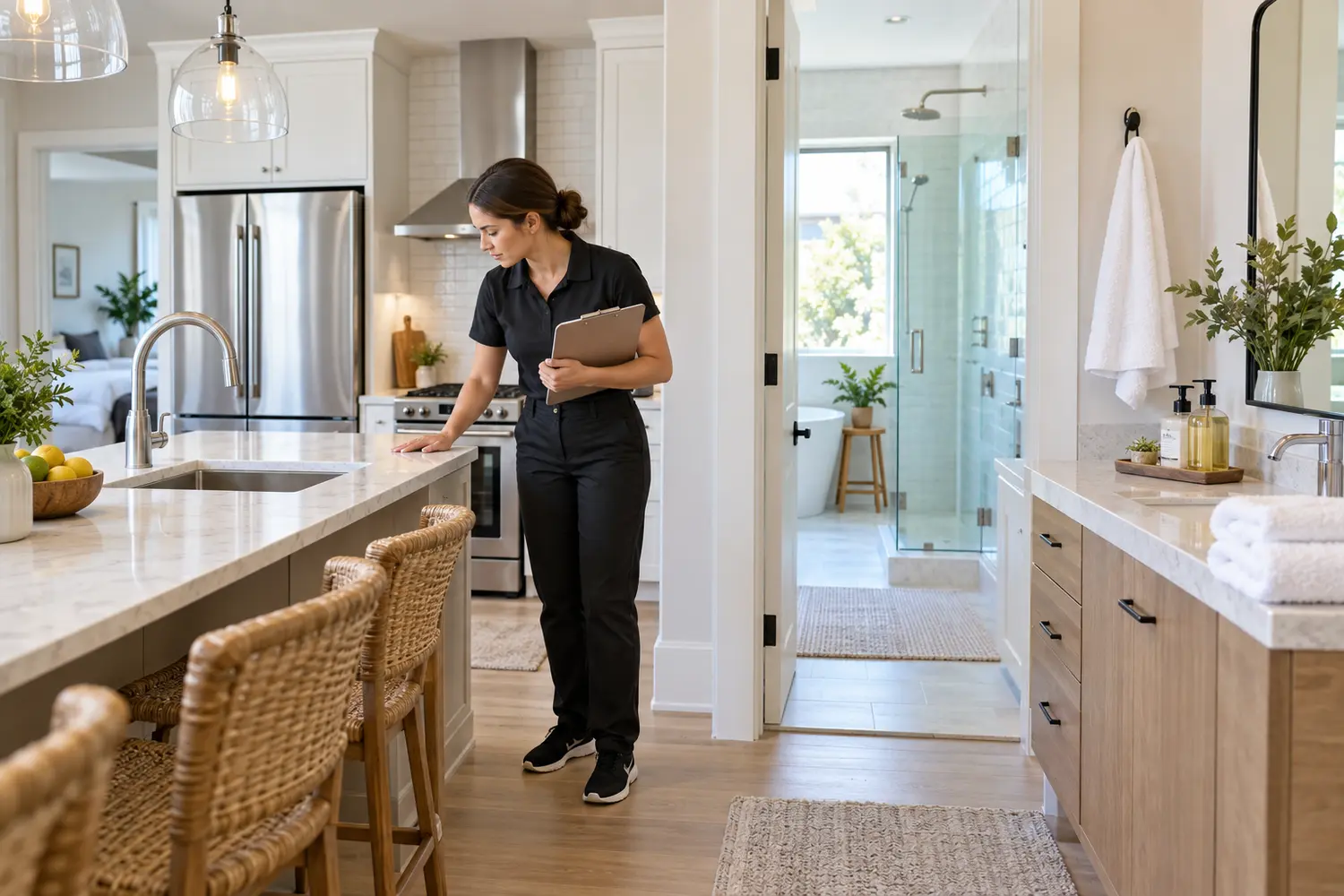
Start laundry early because it often determines how quickly the turnover can finish. Strip every used bed, collect towels, bathmats and kitchen linen, and inspect each item before washing. Keep spare sets so a delayed wash does not delay check-in.
Bedrooms
- Strip used linen and inspect the mattress, protector and pillows.
- Dust furniture, lamps, headboards, skirting boards and reachable surfaces.
- Vacuum under beds where accessible and check wardrobes and drawers.
- Make beds with fresh, stain-free linen and present them consistently.
- Confirm the promised number of pillows, hangers and spare blankets.
- Test bedside lights, sockets, curtains or blinds and heating controls.
Bathrooms
- Clean and disinfect the toilet, sink, shower and bath.
- Remove hair from drains, floors, grout lines and behind doors.
- Polish mirrors, taps and shower glass without leaving streaks.
- Check for leaks, slow drainage, mould, loose fittings and poor ventilation.
- Replace clean towels and bathmats in the same arrangement every time.
- Refill toilet paper, hand soap and the toiletries promised in the listing.
Kitchen
- Empty and clean the fridge, checking shelves, drawers and door seals.
- Clean the oven, hob, microwave, toaster, kettle and coffee equipment as needed.
- Check that crockery, cutlery, pans and glasses are clean and complete.
- Wipe cupboards, handles, worktops, splashbacks and high-touch surfaces.
- Empty bins, fit fresh liners and remove odours rather than covering them.
- Run or empty the dishwasher and put everything back in its designated place.
Living areas and entrances
- Dust and clean tables, shelves, screens, controls and decorative items.
- Vacuum upholstery and check beneath cushions for rubbish or lost property.
- Clean floors last, including corners and underneath movable furniture.
- Reset furniture, cushions, lamps and accessories to match the listing photographs.
- Check the entrance, path, steps, outside lighting and parking area.
- Test the television, Wi-Fi and any equipment guests are likely to use immediately.
Phase 3: restock against fixed minimum levels
“Check the supplies” is too vague. Decide the minimum quantity that should be present at every arrival. The turnover person can then compare what remains with the required level and refill only what is needed.
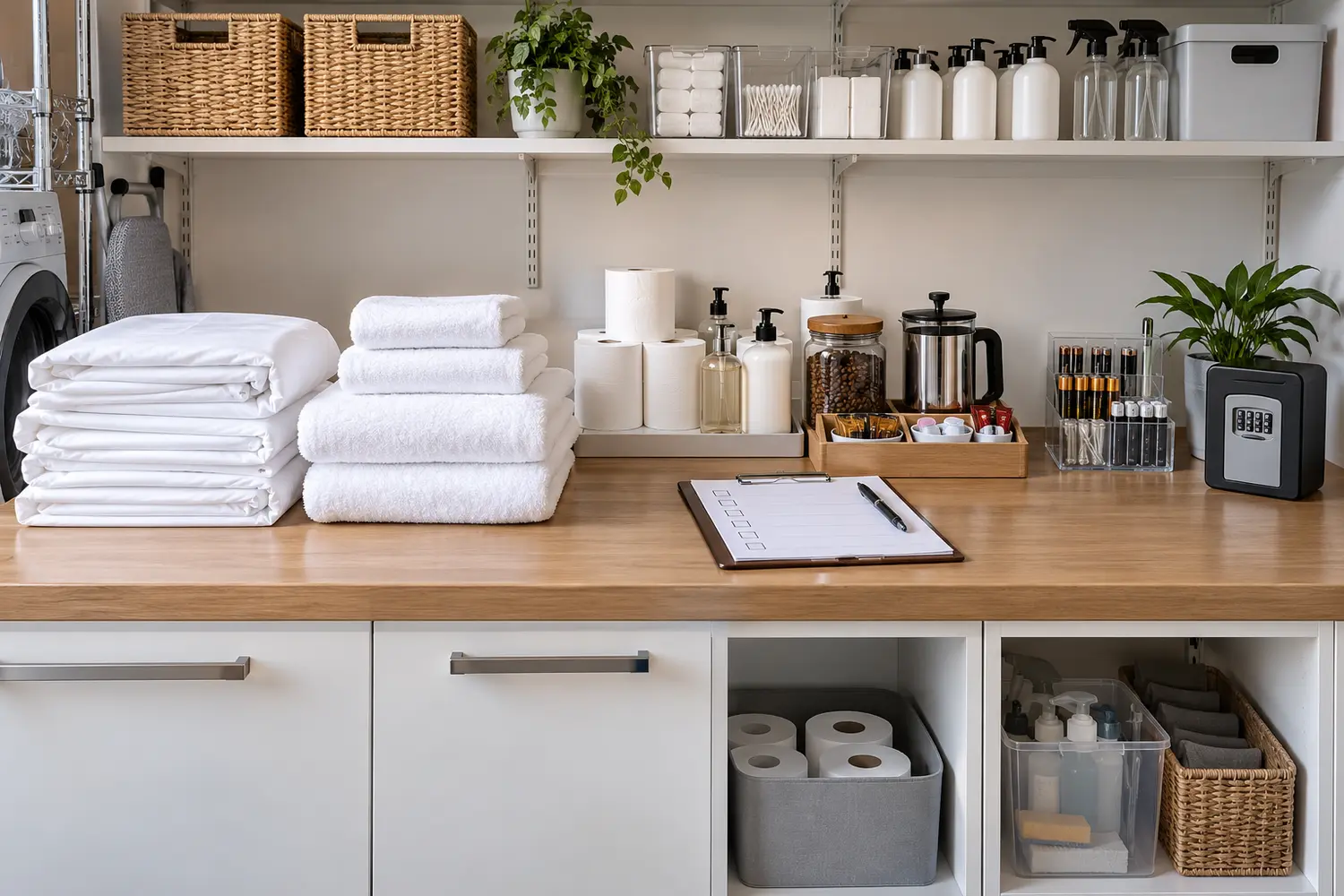
Your list might include toilet paper, hand soap, washing-up liquid, dishwasher tablets, bin bags, tea, coffee, sugar, cooking basics, laundry products and spare light bulbs or batteries. Only advertise supplies you can reliably provide. If guests expect coffee capsules or toiletries because they appear in the listing, they should be present for every applicable stay.
Keep host stock separate from guest-accessible supplies. Use a simple stock sheet and set a reorder point before the last item is used. The reusable resources in the Airbnb Host Operations Bundle help bring turnover, cleaning, maintenance, suppliers and monthly tasks into one consistent system. You can get the complete £9.99 bundle securely through Payhip.
Phase 4: complete maintenance and safety checks
A turnover is an opportunity to find problems before the next guest does. You do not need to conduct a full technical inspection after every stay, but you should notice obvious changes and test the items that affect immediate comfort and access.
- Check lights, remote controls, batteries and frequently used sockets.
- Test heating, cooling and hot water where practical.
- Confirm Wi-Fi is working and the displayed instructions are correct.
- Look for leaks, blocked drains, loose handles and damaged furniture.
- Check smoke and carbon-monoxide alarms according to manufacturer and legal requirements.
- Confirm fire-safety equipment and emergency information remain accessible.
- Inspect outdoor furniture, gates, steps and guest-accessible amenities.
Record non-urgent work in a maintenance log with the date, issue, priority, person responsible and completion status. If a promised amenity is not working, repair it before arrival or communicate accurately with the incoming guest. Never leave a safety-critical fault for later.
Phase 5: perform the final guest-ready inspection
The person who cleaned a room can stop seeing it objectively. Where possible, have somebody else complete the final inspection. If you work alone, step outside for several minutes, then return through the same entrance the guest will use.
Check the property at guest eye level. Is the first impression fresh? Does the bed look properly made? Are there fingerprints on the mirror, crumbs in a drawer or a hair in the shower? Do the key code and Wi-Fi details work? Is the temperature comfortable?
- Walk the complete guest route from parking or pavement to the entrance.
- Test the key, lockbox or smart-lock code.
- Confirm every room is clean, correctly staged and free from personal items.
- Count towels, linen and essentials against the booking’s guest number.
- Check smells, lighting, temperature, Wi-Fi and immediate-use appliances.
- Take time-stamped completion photographs where appropriate.
- Send the incoming guest the agreed arrival information.
- Record the turnover as complete only after every exception is resolved.
How to handle same-day Airbnb turnovers
Same-day changeovers need realistic timing rather than rushed standards. Work backwards from check-in and include time for inspection, laundry, cleaning, restocking, quality control and travel. If the normal process takes four hours, do not accept a three-hour window and hope nothing goes wrong.
Keep spare linen, duplicate frequently used supplies and contact details for a backup cleaner or local tradesperson. Use consistent storage locations so nobody wastes time searching. Airbnb’s guidance on simplifying hosting during busy periods recommends a repeatable checklist, spare linen and scheduled supplies to make quick turnovers easier. The Airbnb Host Operations Bundle on Payhip gives you the printable resources to put that routine into practice.
If you need help organising longer-term tasks around back-to-back stays, read how to turn a big project into a weekly plan. You can also use the advice in how to make your PDF planner work for you when adapting the bundle’s printable pages to your property.
Copy-ready Airbnb turnover checklist
- Departure confirmed and property access arranged.
- Property secured and initial damage inspection completed.
- Lost property collected and unusual issues photographed.
- Linen and towels removed, checked, washed and replaced.
- Bedrooms cleaned, inspected and consistently staged.
- Bathrooms cleaned, disinfected, dried and restocked.
- Kitchen appliances, surfaces, crockery and bins checked.
- Living areas, entrance and outside guest spaces reset.
- Consumables refilled to the property’s minimum levels.
- Maintenance faults recorded and urgent issues resolved.
- Safety equipment and essential services checked appropriately.
- Keys, codes, Wi-Fi, lighting and heating confirmed.
- Final guest-ready walkthrough completed.
- Arrival instructions sent and turnover completion recorded.
Considering a pedal-wringer system? Our Masthome Spin Mop and Bucket Set guide explains five practical benefits and the floor-care and workload checks to make before buying.
Frequently asked questions
How long should an Airbnb turnover take?
It depends on the property size, laundry arrangements, condition after departure and number of people working. Time your normal process rather than using a generic estimate, then add a buffer for maintenance or unusually heavy cleaning.
What is the difference between cleaning and turnover?
Cleaning removes dirt and prepares rooms hygienically. A turnover includes cleaning plus inspection, laundry, restocking, maintenance reporting, access checks, staging and final quality control.
Should guests be expected to clean before checkout?
Guests can reasonably be asked to follow clearly disclosed checkout instructions, such as locking doors or putting rubbish in the correct place. Avoid transferring the normal turnover clean to guests. Airbnb’s ground rules for home guests state that hosts should not impose charges or penalties merely because a guest failed to perform specific cleaning or checkout tasks.
Should I take photographs after every turnover?
Completion photographs can provide a useful quality-control record, especially when a team works remotely. Keep the process proportionate, respect privacy and store records securely.
How often should an Airbnb receive a deep clean?
Set a schedule based on occupancy, property type, pets, season and areas that cannot be completed during a normal turnover. Airbnb’s host guidance suggests planning regular deep cleans for work that is difficult to fit between back-to-back stays.
Get the full Airbnb Host Operations Bundle for £9.99. It includes the complete ebook plus ten downloadable resources covering turnovers, cleaning, check-in, guest communication, house rules, maintenance, suppliers, monthly operations, welcome information and income and expenses.
Buy the Airbnb Host Operations Bundle — £9.99 on Payhip (opens in a new tab)Airbnb is a trademark of Airbnb, Inc. This independent article is not affiliated with, endorsed by or sponsored by Airbnb. Platform rules and local hosting requirements can change. Check the current rules that apply to your property and location.
Explore the blueprint collection for guides, planners and practical worksheets.