
Gardening Business Startup
Gardening Business Startup Costs: What to Budget for Before Your First Job
A practical UK guide to tools, insurance, transport, waste, working capital and the realistic costs of starting a gardening business.
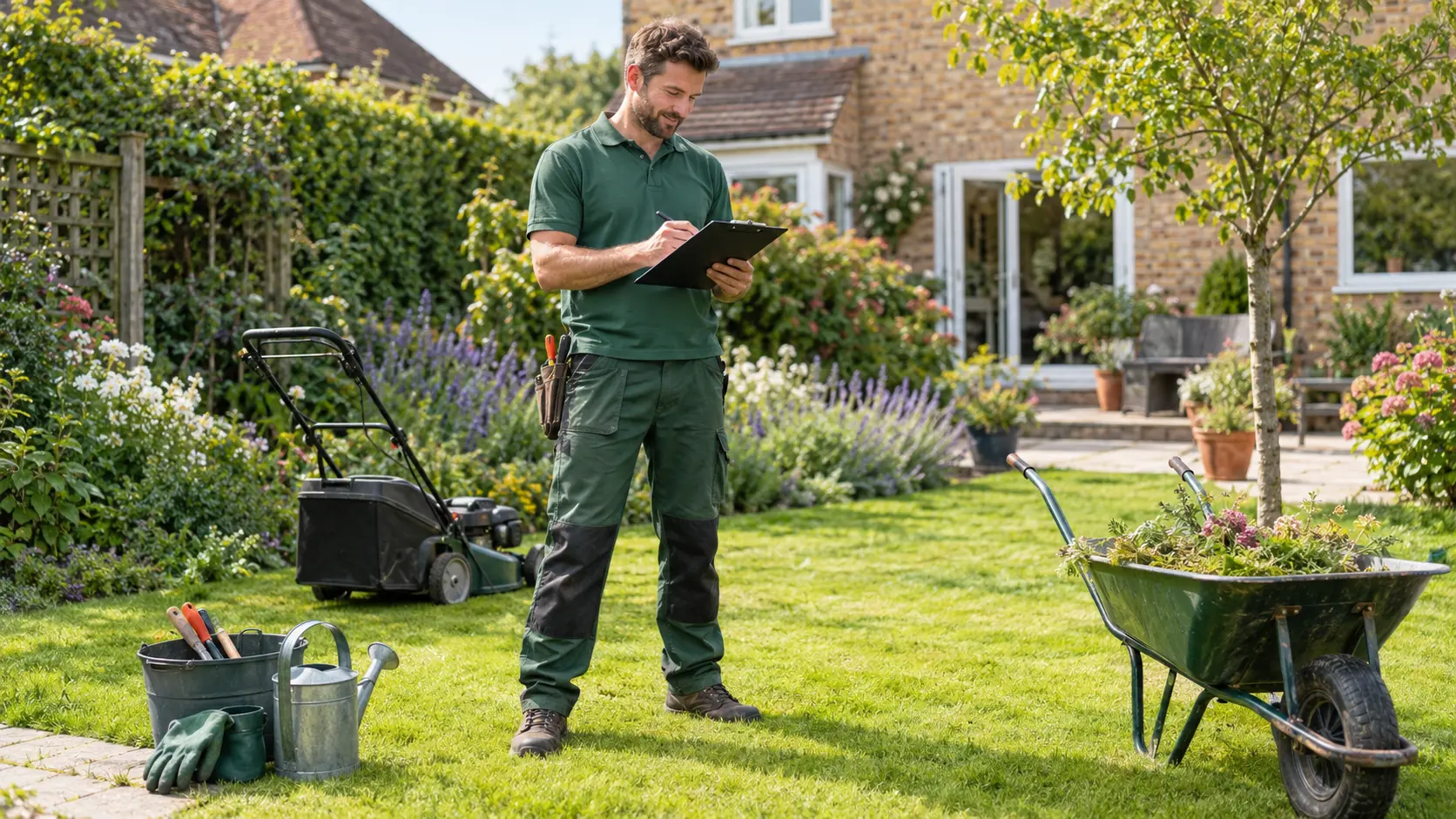
Buying a mower is easy to put on a startup list. Remembering the insurance, replacement blades, disposal charges and money needed while your diary fills up takes a little more thought.
A useful gardening business budget should answer two questions: what must you pay before you can work, and what will keep you going until customer payments reliably cover your costs?
This UK-focused guide helps you build that budget without treating every possible purchase as a first-day essential.
Want the planning tools ready to use? The Gardening Business Startup Bundle brings together a guide, printable resources, editable workbooks and an eight-tab business tracker.
Get the Gardening Business Startup Bundle — £9.99 on Payhip (opens in a new tab)1. Decide what your budget needs to support
Start with your services, not a shopping list. Someone offering hand weeding, planting and border maintenance needs a different setup from someone mowing large lawns or taking on overgrown garden clearances.
Write down the tasks you can deliver safely and competently, the size and type of gardens you intend to serve, your working area and transport arrangements, whether you will remove garden waste and how many days you initially expect to work.
Keep specialist work outside the starting offer unless you have the necessary skills, equipment and cover. Your budget should support the business you are actually launching, not every service you might offer eventually.
2. Separate setup spending from money held back
Divide your budget into four parts:
- Setup purchases: tools, protective equipment and initial preparation.
- Recurring costs: insurance, transport, communications and maintenance.
- Job-specific costs: materials, equipment hire and waste disposal.
- Reserves: money for the early trading period and unexpected problems.
Then mark each item “needed before the first job”, “needed for a booked job” or “can wait”. This prevents two common mistakes: spending all your cash on equipment and forgetting that bills continue when you have no bookings.
3. Budget for a complete working toolkit
For a hand-tool-focused service, your list might include a spade, fork, rake, hoe, secateurs, trowel, broom, tarpaulin and reusable collection bags. Check what you already own before buying. Inspect handles, fixings and cutting edges, and allow for replacing anything unsuitable for regular paid work.
If mowing is part of the offer, cost the complete setup rather than the mower alone. Consider edging equipment, batteries and chargers or suitable fuel arrangements, replacement cutting parts and servicing. Record the full price payable, delivery, necessary accessories and likely upkeep.

4. Include protective equipment and practical clothing
Allow for footwear with appropriate grip and protection, suitable gloves, weatherproof clothing and task-specific protective equipment identified by your risk assessment. Choose protection to match the task and equipment instructions.
Add basic first-aid supplies, drinking water and suitable arrangements for cleaning your hands and equipment. Keep branded clothing separate from safety spending. A printed logo can wait; equipment needed to work safely cannot.
5. Get insurance quotes before finalising your figures
Public liability insurance can cover certain claims involving injury to other people or damage to their property arising from your work. Check policy wording, limits, exclusions and excess rather than choosing solely by premium.
Describe your services accurately and ask about tools in storage, vehicles, accidental damage and restrictions relevant to your work. If you use a vehicle for business, confirm appropriate motor cover. If you employ someone, employers’ liability insurance is generally compulsory, subject to exceptions.
Record both the annual cost and payment schedule. A monthly payment may help cash flow, but compare the total payable and keep the policy excess in mind when deciding how much emergency cash to retain.
6. Count the full cost of getting to jobs
A vehicle budget is more than fuel. Consider insurance changes, maintenance, tyres, parking, breakdown arrangements and safe load storage. If you already have suitable transport, calculate its additional business costs before committing to another vehicle.
Do not leave a necessary vehicle out simply to produce an attractive startup total. Also budget your time: a short job with a long journey may use much more of your working day than the customer sees. Group nearby bookings before expanding your area.
7. Make garden waste a separate decision
“Take everything away” should not be an unpriced extra. If you transport waste, check registration requirements with the environmental regulator for your UK nation. Obtain commercial disposal prices and confirm the site accepts your waste.
Budget for loading, transport, unloading and necessary records as well as disposal charges. Alternatively, agree a suitable on-site arrangement, such as composting appropriate material. Check local collection rules before promising to use a customer’s garden-waste bin.
State the arrangement in your quotation so both parties understand what the price includes. Our article on setting a self-employed gardener’s hourly rate explains how waste, travel and other costs affect sustainable pricing.
8. Keep administration and marketing proportionate
Start with a reliable way to receive enquiries, prepare quotes, issue invoices and record income and expenses. A spreadsheet may suit your initial planning, but check what records and reporting your circumstances require. Include software, accountancy help, bank charges or payment-processing fees where applicable.
If operating as a sole trader, you generally need to register for Self Assessment when gross trading income exceeds £1,000 in a tax year. That means income before expenses, not profit. Keep business records from the start.
For marketing, set a small test budget. Consider straightforward printed material and permitted local promotion before paying for elaborate branding or several subscriptions. Record which activities produce suitable enquiries.
9. Build a worked budget, then replace the assumptions
The example below is an illustrative allocation, not a survey of current prices or a guaranteed launch cost. It assumes a solo, hand-tool-focused service, existing suitable transport and storage, no employees and agreed on-site handling of appropriate garden material.
| Budget item | Illustrative allowance |
|---|---|
| Hand tools, bags and basic cleaning kit | £250 |
| Protective equipment, footwear and workwear | £150 |
| Insurance allowance, subject to quotations | £200 |
| Transport preparation and insurance adjustment | £100 |
| Initial marketing | £40 |
| Administration and basic storage supplies | £60 |
| Setup subtotal | £800 |
| Initial working-capital reserve | £400 |
| Separate contingency | £150 |
| Total example funding requirement | £1,350 |
This excludes powered machinery, vehicle purchase, paid storage, waste removal, specialist training and personal living costs. If chosen powered equipment adds £900, the example becomes £2,250 before associated training, transport or running-cost increases. Replace every allowance with quotations and recalculate.
10. Give your working-capital reserve a job
Working capital is money available to pay business bills while you wait for enough customer payments. It is not spare money for a better mower. Estimate unavoidable weekly outgoings, then test a slow start.
Reserve example
If early business outgoings average £100 a week, a £400 reserve covers four weeks before allowing for customer receipts. If the actual figure is £180, that reserve covers just over two weeks. Choose the reserve from your costs, not from a round number that feels comfortable.
Plan household costs separately. If you need the business to pay your bills immediately, include that funding gap in your decision about when to launch. Keep contingency distinct from expected spending: a known annual renewal belongs in your forecast, while an unexpected repair belongs in contingency planning.
11. Connect your spending to your prices
Your startup budget also needs a route to being earned back. Suppose you choose to recover £800 of setup spending over 40 working weeks. That means allowing £20 a week within your pricing plan, alongside ongoing costs and your own pay.
This is a planning calculation, not tax treatment, and it does not mean adding an unexplained charge to invoices. Base prices on realistic billable hours and leave time for quotations, travel, maintenance and administration.
Keep a separate tax reserve based on your circumstances. Self Assessment payments on account may affect the cash you need at tax-payment time, so ask for advice if you are unsure how to forecast them.
A final check before your first job
- Your equipment is suitable, complete and ready to use.
- Required protection, cover and registrations are arranged.
- You can transport everything safely.
- Materials and waste arrangements are priced and agreed.
- The scope, payment terms and customer expectations are clear.
- You still have money available after paying setup costs.
The goal is not the cheapest possible launch. It is a manageable launch with fewer avoidable surprises. For a step-by-step launch plan, read our guide to starting a gardening business on a small budget.
Frequently asked questions
How much does it cost to start a gardening business?
There is no single reliable total. Services, existing tools, transport, insurance and cash reserve determine the figure. The £1,350 example here is a planning exercise for a limited setup, not an industry average or minimum.
Can I start for less than £1,000?
Possibly, if you already have suitable equipment and transport. Check actual quotes and retain working capital. Do not make the budget fit by leaving out necessary cover, safety equipment or unavoidable running costs.
Should I buy new or second-hand tools?
Compare condition, suitability and total ownership cost. Inspect used equipment and allow for servicing or repairs. If you cannot assess a machine confidently, seek competent help before buying.
Do I need to buy a van before taking bookings?
Only if your service genuinely requires one. Assess load size, safe transport and insurance first. If a van is necessary, include its purchase and running costs rather than treating it as a later problem.
Should I include my own wages in the startup budget?
Include the money you need to live on while the business develops, but show it separately from business setup spending. For a sole trader, money taken for personal use is drawings, not an employee salary.
Budget carefully. Start realistically.
Organise the costs before you accept the first job
The Gardening Business Startup Bundle helps you plan services, equipment, pricing, customers, expenses and first-year goals.
Buy the Gardening Business Startup Bundle — £9.99 on Payhip (opens in a new tab)Guidance checked September 2026. Figures are illustrative UK planning examples, not quotations or guaranteed costs. This article provides general information, not individual tax, legal, insurance, waste or health-and-safety advice. Confirm current requirements with GOV.UK, the relevant regulator and appropriately qualified advisers.
Explore the blueprint collection for guides, planners and practical worksheets.