
Dog Walking Business Startup
Wet-Weather Dog Walks: Your Customer Agreement and Kit Checklist
Agree rainy-day services, fair cancellation arrangements and muddy-dog handovers, with a practical kit checklist for your dog walking business.
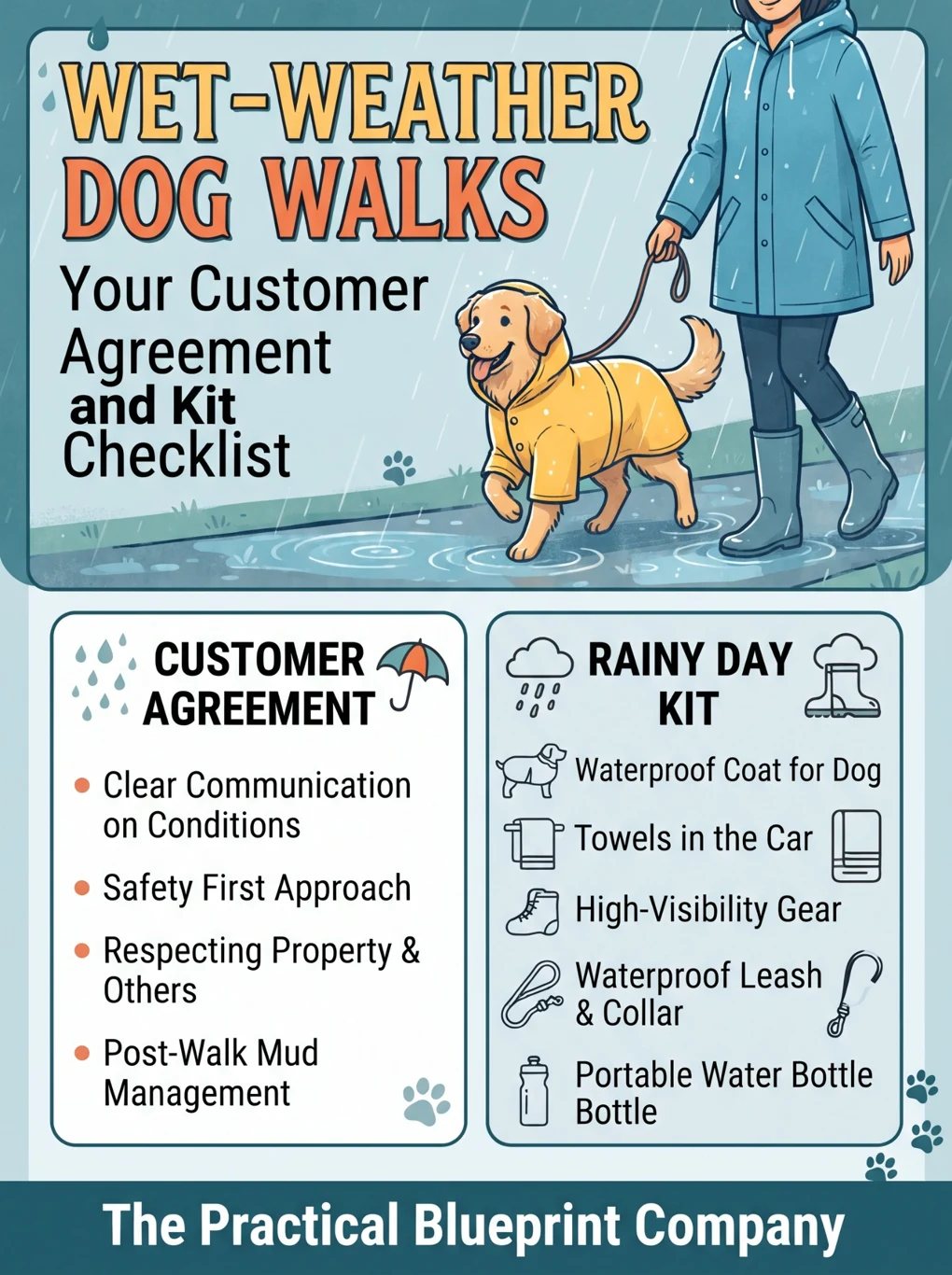
A wet Tuesday can expose gaps in a dog walking business surprisingly quickly. One customer expects the usual hour outdoors. Another assumes you will cancel. A third wants their muddy dog returned completely clean, although you have never discussed towels, washing facilities or extra time.
A clear wet-weather agreement and a dependable kit make these conversations easier. Customers know what they are buying, you have room to make sensible safety decisions, and the dog’s needs remain central. You do not need a van full of gadgets. You need a workable plan before the rain starts.
This UK-focused guide covers the conversations, equipment and routines to prepare. The suggested wording is a starting point for discussion, not a complete legal contract. Have your final terms checked for your service and location.
1. Separate ordinary rain from unsafe conditions
“We walk in all weather” sounds reassuring until someone expects you to drive through flooding or take a nervous dog out during thunder. Explain instead that ordinary rain does not automatically cancel a booking, but conditions may require a different route, shorter outing or agreed alternative visit.
Check the forecast before leaving and reassess throughout the day. The Met Office explains that warning colours combine likely impacts with their probability. Read the local warning details rather than treating a colour as an automatic permission to proceed.
- Ordinary rain: assess the dog’s comfort, equipment and route, then proceed where suitable.
- Deteriorating conditions: reconsider exposed paths, slippery ground, poor visibility and travel between clients.
- Unsafe conditions: stop or cancel outdoor activity when lightning, flooding, dangerous winds or other hazards make it unsuitable.
Choose a backup route before you need it. A familiar paved loop may be more manageable than a muddy field. A wooded route is not a sensible wind shelter when branches could fall. Avoid floodwater altogether; do not test an unknown depth with yourself or a dog. The RSPCA’s flood guidance emphasises preparing early and keeping people safe.
2. Record what this particular dog needs
A young, enthusiastic retriever and an older, thin-coated greyhound may respond very differently to the same drizzle. Ask the owner about previous wet-weather walks, coat tolerance, handling preferences and any veterinary advice affecting exercise.
Your client profile should record:
- Whether the dog dislikes rain, thunder, puddles or towel handling.
- Any mobility, skin or health concerns the owner has disclosed.
- Which coat, harness and lead to use, and where they are stored.
- How to recognise the dog’s usual signs of discomfort.
- The owner’s contact, backup contact and veterinary details.
PDSA advises considering the individual dog’s needs: some benefit from a coat, while healthy dogs with thick fur may not need one. Shivering or slowing down is a reason to return to warmth. Do not keep walking to complete a promised mileage when the dog is struggling.
Try unfamiliar equipment during a calm introductory visit. Check that a coat allows comfortable movement and toileting, and that the lead still attaches securely to the intended collar or harness.
3. Put the wet-weather service in writing
The agreement should answer everyday questions in language a customer can understand. Start with what the booking actually includes: outdoor walking time, or a total visit that includes fitting equipment, toileting, drying and settling the dog?
For example, a “30-minute visit” could include a short outdoor trip followed by drying and indoor company. That is different from advertising “30 minutes of walking” and quietly deducting ten minutes for towels. Make the distinction before accepting payment.
Cover these points:
- Changes: who decides when a route or service is unsafe, and how the owner is told.
- Alternatives: whether a shorter toilet outing and indoor enrichment are authorised, where safe and appropriate.
- Access: which entrance, room, towels and washing facilities you may use.
- Care: the agreed drying routine and what happens if further care is needed.
- Charges: the price of each agreed alternative, plus cancellation and refund arrangements.
- Backup: what happens if you cannot safely reach the property.
If an owner is away all day, cancellation is also a care-planning issue. Agree a backup contact who can help when your journey is unsafe. Do not promise a replacement visit that depends on driving through the same hazard.
4. Be precise and fair about cancellations
Distinguish between a customer cancelling an available service, you cancelling because you cannot safely provide it, and both parties agreeing a different service. These situations should not be hidden under one sentence saying “all bookings are non-refundable”.
The Competition and Markets Authority’s guidance says customer terms must be fair and transparent. Cancellation charges should reflect the business’s actual loss and reasonable steps to reduce it. A signed agreement does not make an excessive charge fair.
A practical policy might offer a refund when you cancel without providing a service, or a rescheduled booking if the customer prefers. For an alternative visit, state its duration and price beforehand. These are service-design examples, not a ruling on every customer’s legal entitlement; your terms must preserve statutory rights.
A discussion draft for your weather policy
“Walks normally continue in ordinary rain where conditions and your dog’s comfort allow. If an outing becomes unsafe, I will stop or adapt it and contact you as soon as practicable. Any replacement visit, its duration and its charge will follow the option we have agreed in writing. If I cancel before providing any service, you will receive a refund for that booking unless you choose to reschedule. Your statutory rights are unaffected.”
Add your actual service options and a separately reviewed customer-cancellation policy. Do not use this paragraph as a liability waiver or assume it covers all booking requirements.
5. Pack a small, reliable rainy-day kit
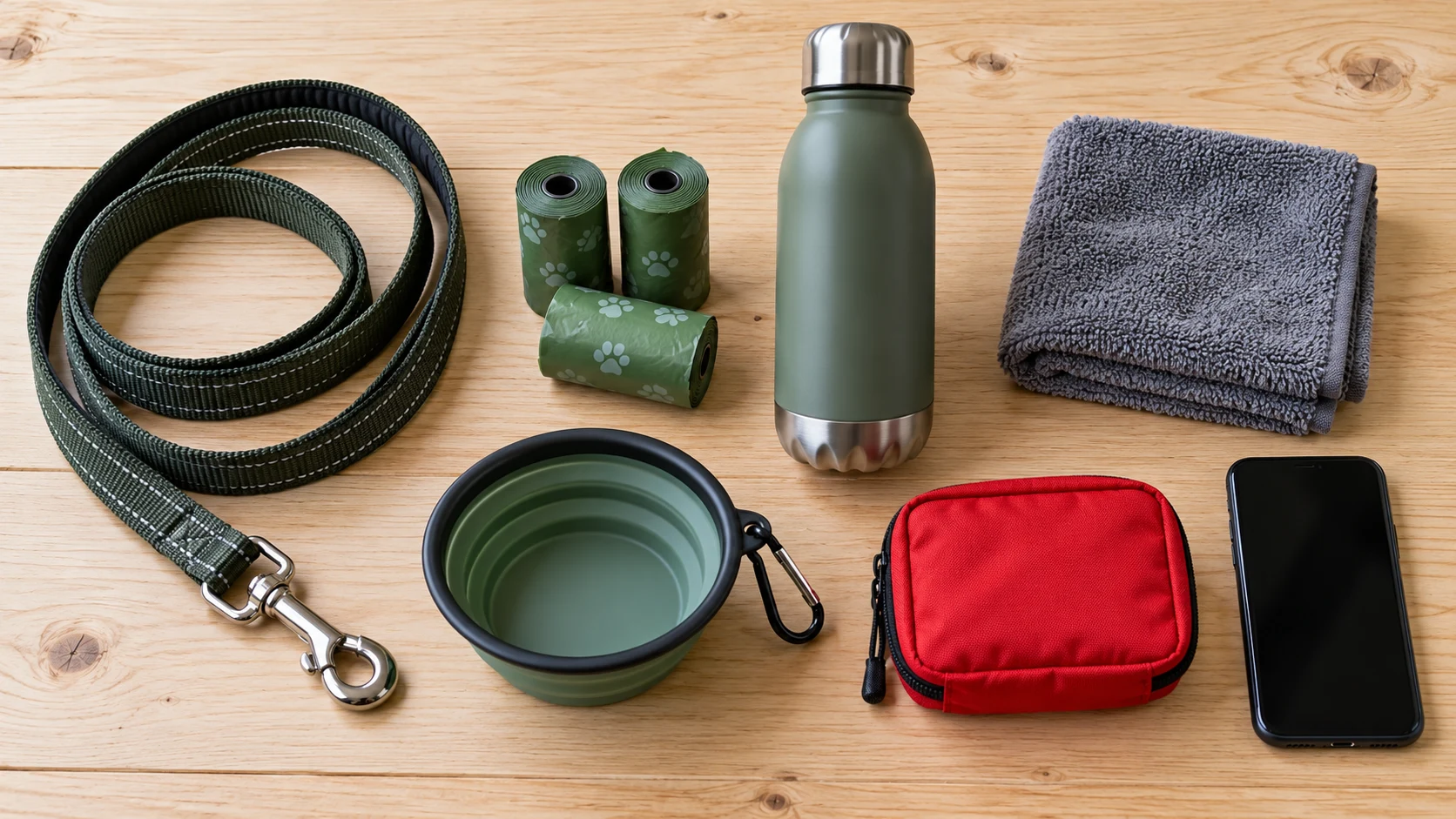
Buy for the work you actually do. Easy cleaning, secure fittings and a dependable grip matter more than whether an item is marketed as professional equipment.
For you
- Waterproof jacket and trousers that allow comfortable movement.
- Footwear with suitable grip for your routes.
- Reflective clothing and a charged torch for poor light.
- A charged phone in a waterproof pouch, with emergency contacts accessible.
- Spare socks and a dry layer for a long working day.
For the dog
- A secure, correctly fitted collar or harness and a sound lead.
- An owner-approved coat where appropriate.
- Reflective equipment for visibility.
- Fresh drinking water and a clean portable bowl.
- Plenty of waste bags and a spare suitable lead.
For returning home
- Clean absorbent towels, separated by dog or household.
- A washable mat or approved floor protection.
- A separate bag or container for damp, dirty items.
- Water for rinsing where needed and permission to use the chosen facilities.
- A first aid kit appropriate to your training.
A wipe-clean lead can be useful, but inspect clips, stitching and grip whatever the material. Rain does not remove the need to carry drinking water. Keep clean supplies separate from used towels, and wash and dry equipment before reuse.
6. Agree the muddy-dog handover
At the meet-and-greet, ask the owner to show you where the dog should enter and where drying should happen. Locate the dog’s towels rather than guessing that a bathroom towel is available. Confirm whether you may rinse paws and how the dog tolerates this.
Allow time to remove the wet coat, clean and dry paws as appropriate, towel the dog and leave them comfortably settled. The RSPCA recommends drying wet dogs before they sleep. If the dog needs more drying or attention than the visit allows, contact the owner and arrange appropriate care rather than leaving the problem unresolved.
Be honest about the service boundary. Routine towel drying is not a full groom, but “not a grooming service” is no excuse to leave a dog cold or uncomfortable. Never force handling that creates a bite risk; stop, keep everyone safe and discuss a workable plan.
Respect the property too. Keep muddy footwear off carpets, secure gates and doors, and leave used towels in the agreed place. A brief update can confirm the route change, actual outdoor time, drying completed and any concerns.
7. Build the extra time into your working day
Wet-weather care takes time even when you charge the same booking price. Suppose four visits each need eight additional minutes for drying and cleaning equipment. That adds 32 minutes before extra travel delays. This is an illustrative planning calculation, not an industry average.
Include these tasks when setting capacity and prices. Our guide to how much to charge for dog walking helps you consider the whole booking. If you are starting with one client, use those first visits to measure realistic timings.
The Dog Walking Business Startup Kit on Payhip includes a Service Menu and Capacity Planner and a Pricing and Profit Worksheet to help organise those decisions.
Your five-minute check before leaving
- Read the local forecast and warning details.
- Choose the main route and a safe alternative.
- Review each dog’s needs and agreed service options.
- Check leads, fittings, visibility equipment and phone charge.
- Pack clean towels, water, bags and dry clothing.
- Confirm access instructions and emergency contacts.
- Leave enough time for drying and the customer update.
A dependable rainy-day service starts with shared expectations. Agree the options, carry the essentials and adapt to the dog and conditions in front of you. Customers should understand what will happen before they see your message on a stormy morning.
Frequently asked questions
Should I cancel every time it rains?
No. Ordinary rain may be manageable. Assess the individual dog, route, travel and changing conditions rather than applying one rule to every booking.
Does every dog need a waterproof coat?
No. Discuss the dog’s needs with the owner and follow relevant veterinary advice. Fit, comfort and the conditions matter more than having matching kit for every dog.
Can I replace a walk with indoor play?
Agree this in advance, including duration, price and suitable activities. Check the service fits your insurance and the dog’s needs. Do not assume a customer has authorised access or a different service.
Can I charge a last-minute cancellation fee?
A clearly explained, fair customer-cancellation term may protect genuine losses. It is not a licence to charge an arbitrary penalty. Have your terms checked and distinguish customer cancellation from your own inability to provide the service.
Sources checked 29 October 2026. General business planning information; confirm legal, insurance and animal-care requirements for your circumstances.
Explore the blueprint collection for guides, planners and practical worksheets.