
Ad · Mobile Car Valeting
Microfibre Cloths for Mobile Car Valeting: What to Buy and How to Keep Them Clean
Choose cloths for paintwork, glass and interiors, plan a colour-coded starter kit and build a reliable washing routine. Includes an Amazon affiliate link.
Ad · Contains Amazon affiliate links. As an Amazon Associate I earn from qualifying purchases. This is a practical buying guide, not a hands-on test of the linked HOMEXCEL cloths.
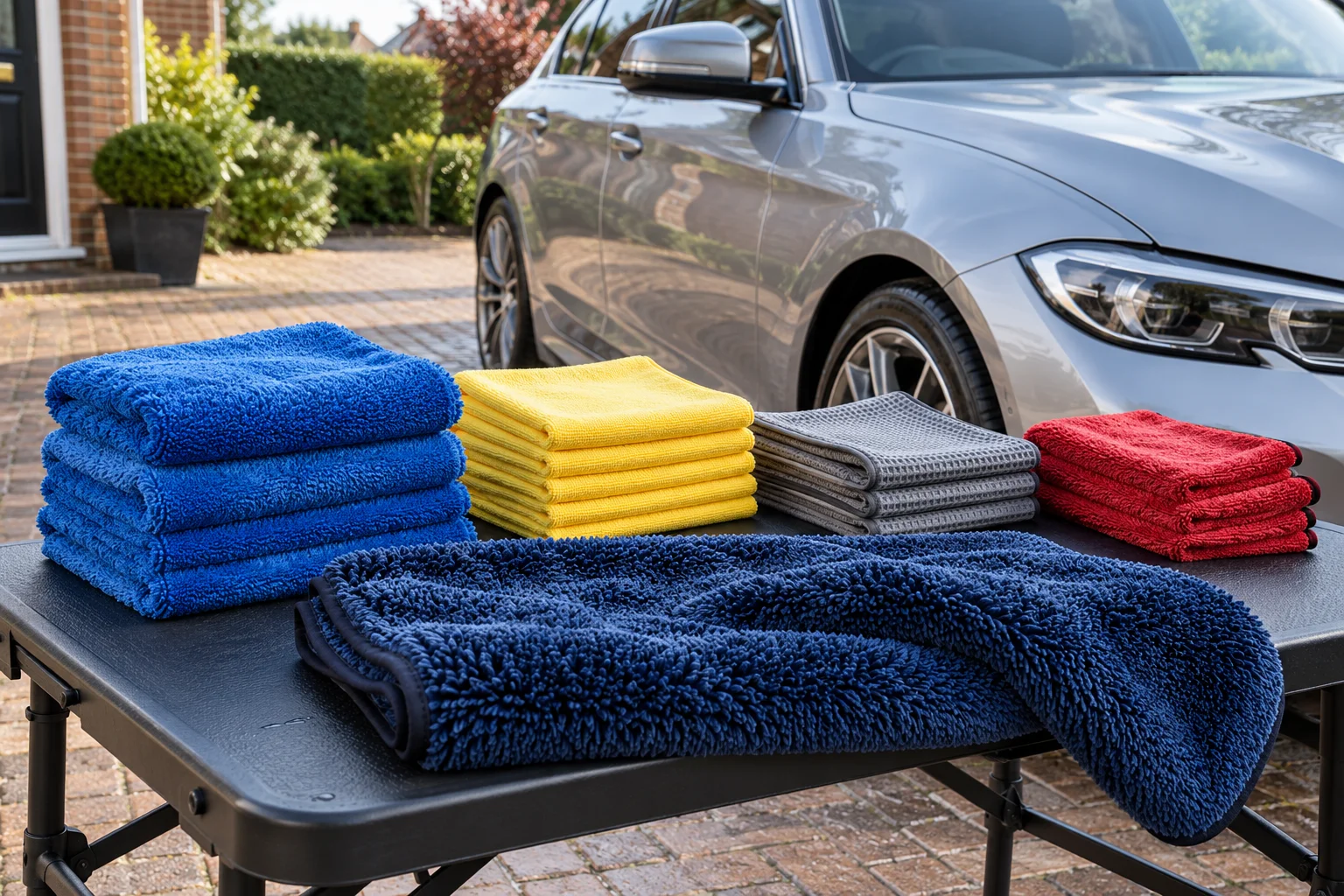
Microfibre cloths look like a small purchase when you are starting a mobile car valeting business. Yet they touch the surfaces your customer notices most: paintwork, windows, dashboards and glossy trim. The wrong cloth, or a good cloth carrying yesterday’s grit, can turn a straightforward finish into extra work.
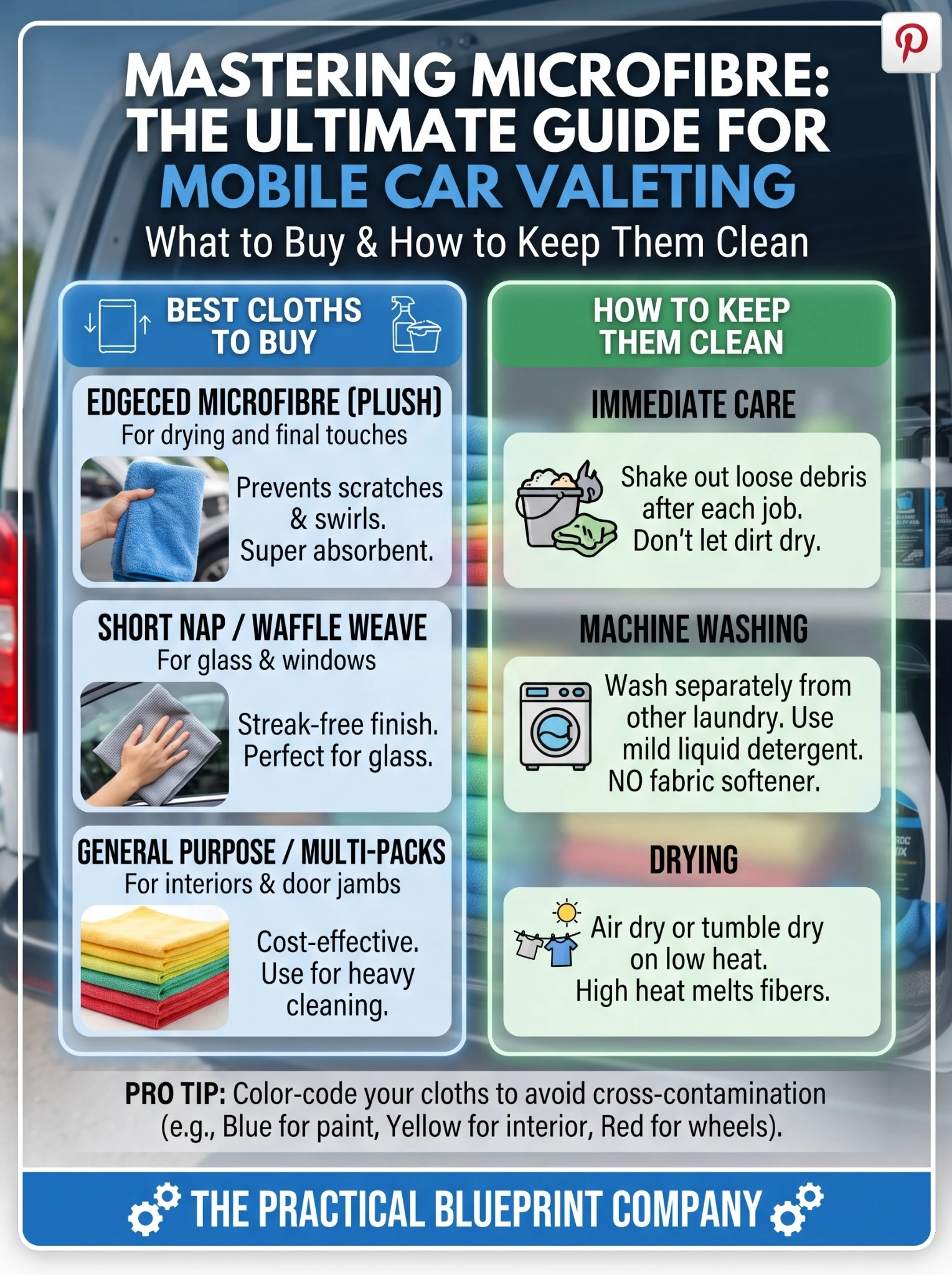
You do not need a cupboard full of expensive towels. You need suitable cloths for different jobs, enough clean spares and a repeatable care routine. This guide builds on our Pinterest pin’s three practical themes: what to buy, how to separate it and how to keep it ready for the next booking.
Start with our Mobile Car Valeting Equipment: A Beginner’s Checklist, then explore the Mobile Car Valeting Blueprint to connect equipment decisions with your service and launch plans.
Choose cloths by task, not just pack size
A cheap multipack can be useful, but it should not automatically become your paintwork, glass, wheel and interior kit. Look at the weave, softness, edge construction, dimensions and intended use. Run clean fingers gently across a new cloth and inspect seams and labels before it goes anywhere near a delicate finish.
GSM means grams per square metre: a measure of fabric weight, not a universal quality score. A heavy plush towel is not necessarily the easiest tool for glass or removing a particular polish. Match the towel to the product instructions and surface instead of assuming the highest number wins.
| Task | What to look for | What to avoid |
|---|---|---|
| Drying washed paintwork | A dedicated automotive drying towel, such as an appropriate twisted-loop or plush design | Using a small saturated cloth across the entire car |
| Buffing suitable products | Soft automotive towels with a pile suited to the product | Assuming every polish or coating needs the same towel |
| Glass | Dedicated low-lint glass cloths, often short-pile or waffle-weave | Cloths carrying wax, dressing or oily residue |
| General interior surfaces | Manageable general-purpose cloths approved for the surface | Using an ordinary cloth on delicate screens without checking instructions |
| Wheels and dirty recesses | A separate, clearly identifiable supply | Returning wheel cloths to the paintwork pile |
Plush and edgeless do not mean scratch-proof
Our pin highlights soft plush cloths for finishing work. That is a useful starting point, but its wording about preventing scratches needs context. No towel guarantees a scratch-free result. A soft cloth can still carry grit, and an edgeless design can still be used with too much pressure or on a dirty surface.
Wash and rinse the vehicle appropriately before drying it. Inspect the towel, work gently and change to a clean one when needed. If a cloth drops onto the driveway, remove it from service immediately. Shaking it does not prove that embedded particles have gone.
Glossy interior trim, instrument displays and touchscreens need particular care. Follow the vehicle manufacturer’s cleaning instructions; do not assume that a cloth suitable for a dashboard is suitable for every display or coated surface.
Where the HOMEXCEL cloths fit into your shopping list
The HOMEXCEL microfibre cleaning cloths you can view on Amazon are an option to compare when planning a general-purpose cloth supply. Think about where an everyday cleaning cloth would fit in your routine before buying a large quantity.
Check the selected variant’s current pack count, dimensions, material information, care label and intended surfaces. We have not independently confirmed those specifications or tested this pack, so we are not presenting it as a proven paintwork-safe detailing towel or a replacement for a dedicated drying towel.
If you try a pack, wash it according to its instructions, inspect the edges and test it on an appropriate inconspicuous area. Check for lint, colour transfer and how it performs after laundering. Expand your supply only when it works for the tasks you intend to assign it.
How many cloths should a beginner carry?
There is no fixed number for every valet. Vehicle size, dirt, the service offered and how often you can wash your kit all change the answer. As an illustrative starting allocation for one maintenance valet, you could plan:
- Two dedicated drying towels, including a spare.
- Four clean paintwork finishing cloths.
- Four dedicated glass cloths.
- Six general interior cloths.
- Four separate cloths for wheels and dirty recesses.
That makes 20 items, not a guaranteed minimum or an industry standard. Try your routine on your own vehicle first and record actual use. Add clean reserves for dropped cloths or unexpectedly dirty areas. Two bookings require enough supplies for both unless you have time for proper washing and drying between them.
If your budget is tight, our guide to starting a mobile valeting business with £500 helps you consider purchases alongside the rest of the business.
Make colour coding simple and consistent
You can follow the pin’s suggested system: blue for paintwork, yellow for interiors and red for wheels, with a fourth colour for glass. These are your working choices, not mandatory industry colours. What matters is that you can identify a cloth’s role immediately.
If your preferred towels only come in one colour, separate them by labelled storage compartments and towel type. Keep glass cloths away from dressing applicators. Give dirty door shuts their own cloths rather than borrowing the clean towel you will use on the seats.
This habit also helps if you offer other cleaning services. However, keep vehicle and household stocks separate. A cloth used for a domestic bathroom should not enter a customer’s car kit. Our domestic cleaning equipment guide covers planning that separate service.
Use each clean cloth deliberately
Fold a suitable cloth in half, then half again, giving several usable faces. Turn it to a clean face as it becomes soiled, and replace it before all the faces are dirty. Avoid scrubbing harder simply because the first pass did not work: check whether the surface, product or method needs a different approach.
For glass, keep a dedicated cleaning cloth and a separate dry finishing cloth where your glass-cleaner instructions call for that method. Inspect from different angles. A towel contaminated with interior dressing can leave smears even when the glass cleaner itself is suitable.
At the end of each area, put used cloths straight into the appropriate used-cloth container. Do not drape them over tyres, lay them on the ground or tuck them back among fresh supplies.
Wash according to the label, not a universal hot cycle
Care recommendations differ. The Rag Company UK recommends washing its towels before first use, separating towel types and colours, washing at 30°C or below, and avoiding softener and bleach. Paragon Microfibre specifies a cool wash up to 40°C for its guidance and advises against soaking. These are examples of why your own cloth’s instructions matter.
Build a short laundry checklist around the products you actually own:
- Sort used cloths by task and contamination, keeping wheel cloths apart from paintwork and glass supplies.
- Inspect for grit or hardened residue before loading.
- Keep microfibre separate from cotton towels and other lint-producing laundry.
- Use the recommended detergent and dose; avoid adding fabric conditioner.
- Choose the permitted cycle and allow enough time for complete drying.
The manufacturer’s microfibre FAQ also advises separate washing from lint-producing materials and low/no-heat drying. For chemical-contaminated cloths, consult the cleaning product’s handling instructions before laundering; ordinary household washing is not suitable for every contaminant.
Dry, inspect and store before the next booking
Use air drying or a low-heat tumble setting only where the label allows it. Avoid dryer sheets. The practical message behind the pin’s high-heat warning is to protect the fibres: there is no single temperature instruction that suits every towel.
Once dry, inspect each cloth in good light. Look for embedded debris, stiff patches, rough edges and persistent oily residue. Do not return a questionable cloth to paintwork duties simply because it has been through the wash. The Rag Company specifically treats towels used for installing ceramic coatings as disposable because cured residue makes them unsuitable for reuse.
Store completely dry, approved cloths in clean, labelled containers. Transport used damp cloths separately and deal with them promptly after work rather than leaving them sealed in the vehicle for days. A compact storage system is particularly helpful when starting without a van.

Include cloth care in your prices
Your cost is more than the purchase price. Allow for detergent, water, electricity, replacement towels and the time spent sorting, inspecting and repacking. For example, an extra 15 minutes after each of four bookings adds an hour to your working week. That is an illustration, not a measured industry average.
Track your actual time during practice jobs and use our guide to pricing mobile car valeting without undervaluing your time. A dependable routine protects the finish and helps you quote for the full job.
Start with a manageable selection, keep the roles clear and review what you use. The Mobile Car Valeting Blueprint can help you connect these everyday decisions with your wider business plan. View the complete package on Payhip when you are ready.
Frequently asked questions
Can one microfibre cloth clean the whole car?
It is a poor working system. Use separate clean cloths for paintwork, glass, interiors and dirty areas, replacing them as they become soiled.
Are expensive cloths always better?
No. Intended use, construction, condition and care matter more than price alone. Buy suitable towels for delicate work and assess general-purpose cloths separately.
Can I wash microfibre with ordinary towels?
Keep it separate from cotton and other lint-producing laundry. Also separate cloths by their job and contamination.
Should I throw away every stained cloth?
A stain alone does not establish suitability. Check for contamination, damage and altered texture. If you cannot confidently establish that it is suitable, keep it away from delicate surfaces.
Can I shake a dropped cloth and carry on?
No. Take it out of service, clean it appropriately and inspect it before reuse. Carrying spares makes that decision easy.
Get the Mobile Car Valeting Blueprint on Payhip
Explore the blueprint collection for guides, planners and practical worksheets.