Gardening Business Startup
Do You Need a Leaf Blower for a Gardening Business—or Will a Rake Do?
Compare rakes and leaf blowers for real gardening jobs, calculate possible time savings and understand the Bosch UniversalGardenTidy 3000’s domestic-use limitation.
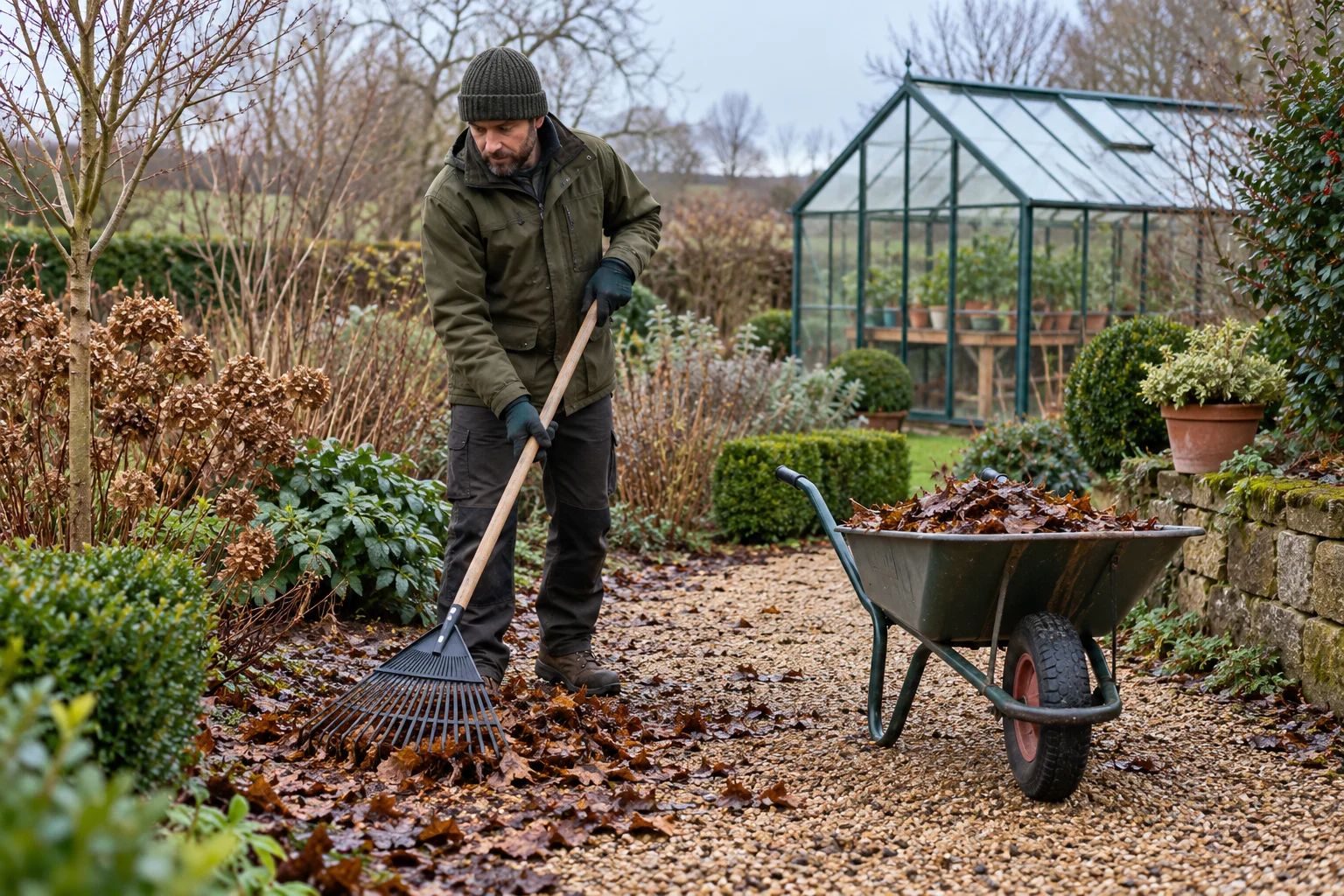
When you start a gardening business, a leaf blower can look like the obvious professional purchase. It promises quick clear-ups, tidy paths and less time chasing leaves. A rake looks simpler, quieter and considerably easier on your startup budget.
You can start many small gardening jobs with a suitable rake, broom and collection equipment. A blower becomes worth considering when the time it saves across your actual bookings outweighs its purchase, setup, maintenance and operating costs. Even then, keep the rake: it remains useful for detail work and places where blowing is unsuitable.
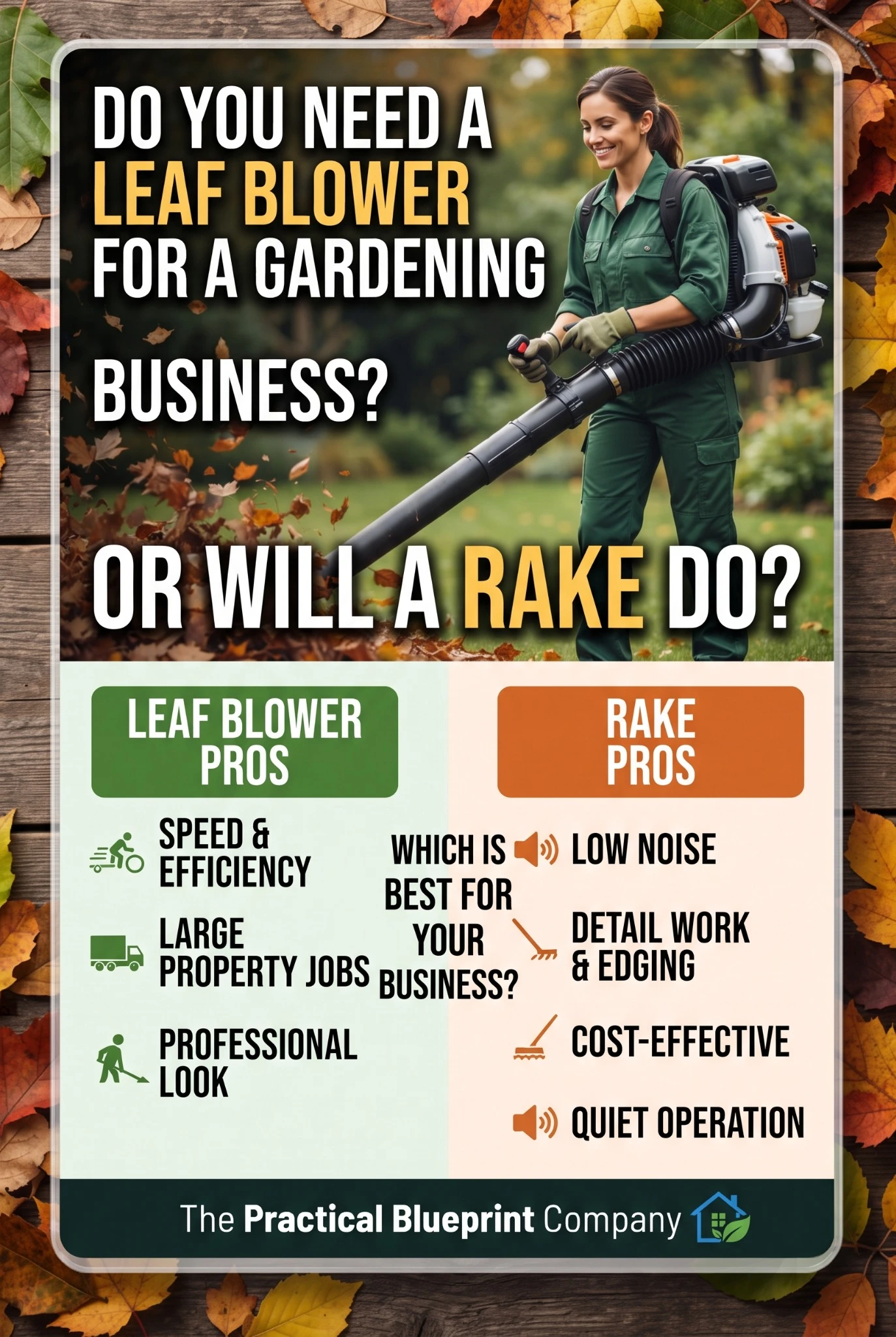
Our Pinterest pin compares speed and larger-property work with quiet operation, control and affordability. Those are useful starting points, but owning a machine does not create a professional service on its own. The finished result, care for the garden and respect for neighbours matter more.
This guide helps you decide what to buy first and considers the Bosch UniversalGardenTidy 3000, including an important distinction between domestic equipment and tools for business workloads.
Affiliate disclosure: As an Amazon Associate, we earn from qualifying purchases. Product comments are based on published information, not a hands-on test. Check the selected model, price, accessories and intended use before ordering.
Start with the work your customers need
A small enclosed lawn with a few fallen leaves is different from a long driveway surrounded by mature trees. Narrow borders, gravel, ponds, parked vehicles and nearby pedestrians all change your approach.
Before buying, ask how much leaf clearing you expect to offer, how often it will repeat and where the leaves will end up. Blowing leaves into a pile is only one stage. Collecting, carrying, composting or arranging removal may take longer than moving them across the ground.
Define the full service during your quote. Does it cover the lawn and paths, or also beds? Are leaves staying in an agreed composting area? Who supplies bags, and is removal included? Our guide to choosing gardening services that match your skills helps you shape an offer before spending.
When a rake is enough
A flexible leaf rake is often a sensible first purchase for small lawns, occasional clear-ups and gardens with awkward corners. Pair it with a broom for hard surfaces, leaf scoops or boards for lifting and a suitable container for collection.
It gives you close control around plants and lets you work without engine or motor noise. That can suit customers working from home, gardens close to neighbouring windows and bookings where a short, careful tidy is all that is needed.
Choose a rake appropriate for the surface. A light leaf rake and a rigid soil rake do different jobs; aggressive use can damage turf or disturb planting. Work in manageable sections and vary repetitive tasks rather than forcing an overloaded pile across the whole garden.
A rake costs little to keep ready and takes no charging or cable setup. For a new gardener with only a few small customers, those simple advantages can matter more than maximum clearing speed.
When a blower can earn its place
A suitable blower can help move loose, relatively dry leaves over open areas and clear some hard surfaces efficiently. Its value increases when you repeatedly encounter jobs that suit it, rather than just one unusually messy garden.
Think about long paths, larger lawns and regular seasonal rounds. If you already know where to collect the leaves and can control where they travel, powered movement may reduce one part of the work.
However, high airflow is not automatically useful everywhere. It can scatter piles again, disturb mulch or send debris towards people and property. Wind direction and obstacles matter. Use the minimum effective setting and finish carefully rather than treating the whole garden as an open runway.
Choose business equipment for its intended workload, service support and handling, not simply the largest advertised speed figure. A manufacturer’s airflow claim does not tell you how quickly you will finish a particular garden.
Leaf blower versus rake: a practical comparison
| Job or constraint | Useful starting approach | What to check |
|---|---|---|
| Small lawn and occasional leaves | Leaf rake and collection tools | Surface condition and lifting time |
| Larger open area with loose leaves | Consider a suitable blower | Total time saved, including setup |
| Delicate planting or loose mulch | Careful hand work and suitable rake | Avoid disturbing plants and habitat |
| Close neighbours or sensitive timing | Rake and broom | Agree working times and expectations |
| No convenient electricity supply | Manual tools or suitable independent power | Battery capacity, transport and workload |
| Heavy wet leaves | Assess conditions and collect in sections | Machine instructions and handling limits |
Why many gardeners need both
A blower and rake can work together. You might move suitable loose leaves into a collection area with a blower, then use a rake for edges and hand collection around plants. A broom can finish the path.
The aim is to reduce unnecessary work across the complete job. If changing equipment takes longer than raking a tiny patch, stay with the rake. If blowing creates a wider mess, adjust your method.
Professionalism means knowing which tool fits the task and leaving the agreed areas tidy. Your pin’s “professional look” point is best understood through that result, rather than through the size of the machine you carry.
Bosch UniversalGardenTidy 3000: an option to understand carefully
The Bosch UniversalGardenTidy 3000, order number 06008B1071, offers blowing, vacuum collection and leaf reduction in one corded garden tool. It may interest readers comparing equipment for their own garden alongside a possible gardening business.
Bosch lists a 50-litre collection bag and weights of 3.4 kg in blower mode and 4.7 kg in vacuum mode. Variable airflow allows adjustment to the task. The appeal is combining ways to move and collect suitable leaf material; it is not a replacement for a separate branch shredder.
The business-use limitation matters: Bosch’s operating manual describes the product as intended for domestic use. We therefore recommend investigating it as a domestic garden-clearing option, rather than assuming it is suitable for repeated paid rounds. Before buying for business work, obtain confirmation from Bosch about your intended use, workload and applicable guarantee. If that use is not supported, choose equipment intended for professional work.
Also consider cable access, carrying comfort and bag emptying. The pin shows a backpack-style machine; this Bosch is a corded handheld product. Bosch’s reduced-noise marketing does not mean silent operation: follow the manual’s hearing-protection guidance and consider neighbours.
Our assessment: useful features for a homeowner wanting flexible leaf clearing, with a clear need to verify suitability before considering it for paid gardening. We have not tested it and do not claim commercial durability or guaranteed time savings.
Read our focused Bosch UniversalGardenTidy 3000 review in Recommended Products for the key buying considerations.
Calculate whether a suitable blower will pay its way
Use your own job records to compare total working time. Include unloading, setting up, collecting leaves, emptying bags, cleaning equipment and packing away. A quick blowing demonstration is not a complete business calculation.
For illustration only, suppose suitable equipment and essential extras cost £240 and save 15 minutes on each of 12 genuinely comparable jobs. That is three hours saved. If you can use those hours for work contributing £20 per hour after variable costs, the potential contribution is £60. It would take four similar batches to match the original outlay, before additional operating or maintenance costs.
Those are invented planning figures, not the Bosch’s price or an earnings promise. If the saved time cannot become paid capacity, the benefit may instead be reduced effort or a more manageable day. Both can matter, but neither is automatically extra income.
Our gardening business startup costs guide helps place tools within the wider budget. Use the Gardening Business Startup Bundle to connect purchases with services, pricing and customers.
Plan for neighbours, weather and wildlife
Agree sensible working times with customers and avoid blowing towards people, vehicles, neighbouring gardens or roads. Inspect the area for stones, glass and other foreign objects before operating a machine. Wear the protection specified in its manual.
Check piles and sheltered areas for wildlife before disturbing them. Where the customer agrees, some leaves can remain in suitable beds or a designated leaf-mould area. A tidy access path does not require stripping every corner of the garden bare.
For corded equipment, follow the manufacturer’s instructions for outdoor power, suitable extension leads and RCD protection. The Bosch manual says not to use it in rain. Stop and disconnect the supply before clearing blockages, and wait for moving parts to stop.
Discuss where collected material will go before quoting, including any removal costs and applicable local requirements. For seasonal packages, read what work a gardening business can offer in winter.
Your first-purchase decision
If you are beginning with small maintenance gardens, start with a suitable rake, broom and collection kit. Record which jobs feel slow and why. A leaf blower is easier to justify when several real bookings demonstrate a recurring need.
When you upgrade, choose supported equipment that fits those bookings. Keep manual tools for finishing, quieter visits and awkward areas. You can explore the Gardening Business Startup Bundle on Payhip for help organising the next steps.
Frequently asked questions
Can I start a gardening business without a leaf blower?
Yes. Many small maintenance jobs can begin with suitable manual tools. Choose services you can deliver well with your equipment, then expand when actual demand supports it.
Is a leaf blower always faster than a rake?
No. Garden size, weather, leaf condition and collection arrangements affect the result. Compare the full job, including setup and finishing.
Can I use the Bosch UniversalGardenTidy 3000 commercially?
Its manual describes domestic intended use. Ask Bosch to confirm suitability and guarantee terms for your specific paid work before relying on it; choose professional equipment if that use is unsupported.
Does vacuum mode remove the need to collect leaves?
It can collect suitable material into a bag, but you still need to empty, move and manage that material. Follow the manual’s limits on what can be collected.
Will buying a blower make my business look professional?
Customers benefit most from reliable visits, careful work and a tidy agreed result. Equipment should support those standards and suit the garden.
Sources
Product features checked against Bosch’s UniversalGardenTidy 3000 information. Intended use and operating precautions are described in Bosch’s operating manual. Checked 21 October 2026. Consult the instructions supplied with your exact machine.
Ready to plan a gardening service around the right tools? Bring your equipment, services and startup decisions together in one practical plan.
Get the Gardening Business Startup Bundle on Payhip
Explore the blueprint collection for guides, planners and practical worksheets.