
Mobile Car Valeting
Mobile Car Valeting Equipment: A Beginner’s Checklist
Build a practical starter valeting kit, separate essentials from upgrades and plan water, power and storage, with an optional Autoglym collection to consider.
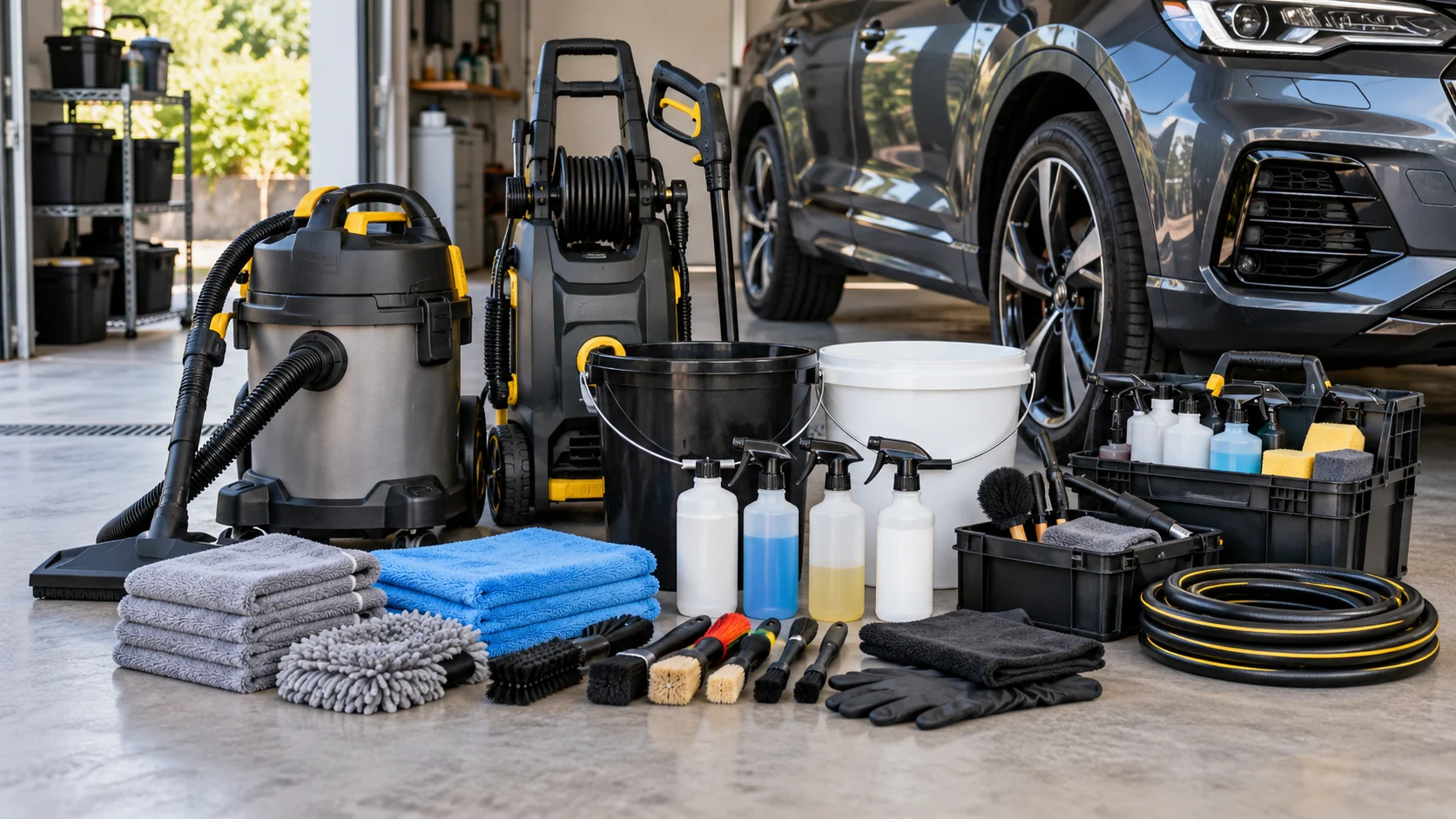
You do not need a van packed with every detailing gadget to start mobile car valeting. You need equipment that lets you deliver a clearly defined service, protect the customer’s vehicle and work consistently. The expensive mistake is buying for services you cannot yet provide, while overlooking ordinary essentials such as clean cloths, safe storage and wastewater arrangements.
This beginner’s checklist helps you build a manageable first setup. It focuses on maintenance washing and an interior refresh rather than specialist paint correction. For the wider business plan, start with our guide to starting a mobile car valeting business in the UK.
Our Mobile Car Valeting Blueprint combines an 81-page beginner’s ebook with 12 practical PDF tools for planning, pricing and marketing. Explore the complete package on Payhip.
Ad — affiliate disclosure: As an Amazon Associate I earn from qualifying purchases. This article contains an Amazon affiliate link; buying through it may earn us a commission at no extra cost to you. Product details were checked on 14 October 2026. We have not personally tested the linked kit.
Choosing your vacuum? Read our wet-and-dry vacuum buying guide and the Kärcher WD 2 Plus product guide for practical buying and business-use checks.
1. Decide what your starter service includes
Write down the actual tasks before creating your shopping list. A maintenance valet might include an exterior wash, wheel cleaning, drying, an interior vacuum, a suitable surface wipe-down and glass cleaning. State whether boot cleaning, pet hair, heavy mud or unusually large vehicles cost extra.
Do not quietly include upholstery extraction, engine-bay cleaning or paint correction because customers associate them with a “full valet”. Each adds equipment, training, time and risk. A narrower service you perform well is easier to price and repeat. Your checklist should support that service, not an imaginary future business.
2. Your beginner’s equipment checklist
Use this as a buying framework, then adjust quantities to your booking schedule and cleaning method. “Essential” means essential for the relevant task; an interior-only service does not need exterior-washing equipment.
| Area | Start with | What can usually wait |
|---|---|---|
| Exterior washing | Suitable shampoo, buckets, wash mitts, separate wheel tools and a planned rinse method | Multiple foam products and specialist decontamination chemicals |
| Drying and finishing | Clean drying towels, glass cloths and separate buffing cloths | Powered blowers and several competing protection products |
| Interior cleaning | Suitable vacuum, crevice tool, soft brushes and surface-compatible cleaners | Extractor or steamer until you offer the relevant service |
| Water and power | Confirmed supplies, compatible connections and a safe working arrangement | Tank, generator and permanent van installation |
| Site protection | Wastewater controls appropriate to the site, spill supplies and suitable PPE | Nothing needed for safe, compliant work should be postponed |
| Organisation | Labelled bottles, secure crates, separate dirty-cloth storage and a job checklist | Custom shelving and elaborate branding |
3. Exterior washing: separate the dirty jobs
Start with a vehicle shampoo suitable for the surfaces you clean, soft wash mitts and a system for keeping grit away from paintwork. A wash bucket and separate rinse bucket can support this, but equipment alone does not prevent scratches. Inspect your mitt regularly and replace or clean it when contaminated.
Keep wheel brushes, wheel cloths and bodywork tools separate. Brake dust and grit should not travel from wheels onto painted panels. Choose brushes that reach safely without forcing stiff bristles against delicate finishes, and check the wheel cleaner’s compatibility before use.
A hose with suitable connectors may be enough for your initial rinse method. If using a pressure washer, choose for controllability, water supply, reliability and realistic working time rather than the biggest advertised pressure. Follow the vehicle and washer instructions, particularly around damaged paint, seals, cameras and trim. A powerful jet is not a substitute for technique.
4. Buy enough cloths to finish cleanly
Cloths are easy to underestimate because they look inexpensive beside machines. In practice, a small supply can leave you trying to finish a second vehicle with damp or dirty towels.
Allocate separate cloths for paintwork, glass, interiors and wheels. Colour coding helps, provided you keep the system consistent. Carry spares and keep clean textiles covered. Anything dropped onto grit should go straight into the dirty-cloth container rather than back onto a customer’s car.
Use suitable drying towels without pressing hard, and follow textile-care instructions when laundering. Inspect washed cloths before putting them back into service. Build laundry time and replacement costs into your pricing: reusable does not mean cost-free.
5. Interior equipment: vacuum first, specialist machines later
A vacuum with a useful hose, crevice attachment and suitable upholstery tool is central to most interior services. Look beyond the headline wattage. Consider reach, filtration, noise, storage space, replacement bags or filters and whether the manufacturer permits your intended commercial use.
A wet-and-dry vacuum is not automatically an upholstery extractor. An extractor applies cleaning solution and recovers it; owning a vacuum does not mean you can advertise deep seat cleaning. Follow the machine instructions for dry or wet operation and any filter changes.
Add soft detailing brushes and cleaners compatible with the surfaces you will encounter. Test discreetly and avoid saturating seats, headlinings or electronic controls. Keep dressings off pedals, steering-wheel grips and other surfaces where slipperiness would be dangerous. Do not promise that every stain or odour will disappear.
6. Where the Autoglym starter collection fits
The linked Autoglym Supreme Car Care Collection 12-Piece Kit is one option for assembling several cleaning and finishing products together. The Amazon listing describes nine products and three accessories, including shampoo, glass cleaner, wheel cleaner, interior shampoo, polish, protection products, a wash mitt and finishing/drying cloths.
That makes it worth comparing if you are learning a consistent product range or practising a defined service. It is not a complete mobile-valeting business setup: you still need equipment such as buckets, a vacuum, additional clean textiles, storage and suitable water and power arrangements.
Compare the selected pack contents with the tasks you intend to sell. A mixed collection can include finishing products you will not use on every maintenance visit. Check surface compatibility and application directions individually, and calculate replenishment costs once you know which products you use most. Larger professional packs may become better value later, but only if you use them before they deteriorate.
Check the Autoglym collection on Amazon
Confirm current contents, sizes, price and availability before ordering. The equipment illustrations in this article do not show this specific kit.
7. Water, electricity and runoff are part of your kit
Ask before accepting a booking whether suitable water and electricity are available, whether you have permission to use them and where you can work. Carry compatible fittings and inspect hoses, plugs and cables. Keep electrical connections away from water and use equipment and protective arrangements appropriate to the environment. The HSE’s electrical-maintenance guidance explains why checks depend on the equipment and conditions.
A customer’s driveway is not automatically a suitable wash area. Check where runoff goes. In England, Environment Agency guidance says contaminated wash water should be contained for reuse, treatment or appropriate removal, or discharged to a foul/combined drain with the water company’s permission. Do not allow it into surface-water drains. Check the relevant regulator’s guidance elsewhere in the UK.
Your setup may therefore need a containment mat, recovery equipment and secure collection containers, depending on the site and method. Establish the disposal route before working. A “biodegradable” shampoo does not make dirty runoff harmless.
8. Storage, protective equipment and vehicle loading
Use clearly labelled containers and keep product instructions and safety information accessible. Choose gloves and eye protection according to the product and task; one glove type will not suit every chemical. Never mix cleaners. The HSE’s cleaning and COSHH guidance is a useful starting point for assessing chemical exposure.
Secure machines, bottles and containers for transport. Separate clean supplies from used cloths and leaking equipment. Include appropriate spill supplies and a first-aid kit. Keep walkways clear of hoses and cables, and use cones where they help identify the working area.
A water tank changes your vehicle requirements substantially: 100 litres of water weighs approximately 100kg before adding the tank and other equipment. Check payload, axle limits and secure installation before buying. A tank is an operational decision, not simply another accessory.

9. Buy in stages and measure the real cost
Group your purchases into “needed for the first service”, “replace or replenish regularly” and “buy when demand justifies it”. Get current quotes for the first group, then add delivery, spare consumables, maintenance and storage. Keep a reserve rather than spending the entire budget on machines.
Practise your complete process on a suitable vehicle with permission. Record setup time, cleaning time, product use, packing away and laundry. These figures tell you more about profitability than a cheap shopping basket. Our Mobile Car Valeting Blueprint and planning tools can help you organise the next decisions, or get the package directly through Payhip.
10. Your final check before the first booking
- Service scope, vehicle condition and customer expectations agreed.
- Water, power, working space and runoff arrangements confirmed.
- Machines checked; enough clean cloths and suitable products packed.
- Bottles labelled; protective equipment and spill supplies ready.
- Existing damage recorded with the customer’s permission.
- Travel, setup, cleanup and replenishment allowed for in the price.
The best beginner’s setup is one you understand and can use reliably. Start with the work you can confidently deliver, then upgrade when a specific limitation or paying demand makes the purchase worthwhile.
Frequently asked questions
Do I need a pressure washer immediately?
Not for every service. Interior-only work does not need one, and some exterior methods use different equipment. Choose a method suited to the vehicle’s condition, your training and the site’s water-management arrangements.
Is the Autoglym collection enough to start a business?
It provides a selection of products and accessories, not a complete setup. You still need the equipment, additional textiles, safe working arrangements and business preparation described above.
Should I buy a generator and water tank first?
Only when your planned bookings require them. Confirm customer supplies where appropriate, then compare the costs and practical limits of becoming self-contained. Neither purchase removes the need to manage wastewater.
When should I add an upholstery extractor?
When you have the skills, drying arrangements and demand to offer extraction responsibly. Include the extra job time and maintenance in your price rather than treating the machine as a shortcut.
How many cloths should I carry?
Enough clean cloths for each task and booked vehicle, plus spares for contamination or unexpected work. Establish your quantities during practice rather than relying on a universal number.
Build your first valeting service with a clearer plan
Bring equipment, pricing and customer preparation together with our beginner’s ebook and 12 practical PDF tools. See the full Mobile Car Valeting Blueprint details, then take your next step.
Explore the blueprint collection for guides, planners and practical worksheets.