
Mindset
Cleaning Motivation: A 15-Minute Reset for an Overwhelming Home
Try a gentle 15-minute cleaning reset for one small area, with clear steps, a realistic stopping point and shorter options for low-energy days.

When your home feels overwhelming, a long cleaning checklist can be the last thing you need. You can see dishes, clothes, paperwork and dusty surfaces, but deciding which problem to tackle first becomes a job of its own.
A 15-minute reset gives you a limited task and a clear stopping point. You choose one small area, remove a few obstacles, clean one useful surface and put your supplies away. The aim is to leave that space more usable than you found it.
This is not a promise that an entire home can be cleaned in a quarter of an hour. It is a practical routine for ordinary household clutter and light cleaning. You can shorten it, slow it down or stop whenever you need to. For more help choosing a starting point, read how to find cleaning motivation when you don't know where to start.
What counts as a successful reset?
Success might mean having space to prepare lunch, a clear chair to sit in or a bedside table with room for a glass of water. Those are useful results even if the rest of the room still needs attention.
Before beginning, decide on one outcome: “I want to use this table” is more helpful than “I need to get everything under control.” Choose an area small enough that you can make a difference without emptying cupboards or moving heavy furniture.
A reset does not replace deeper cleaning, repairs or specialist help where needed. Leave tasks outside your abilities or equipment for an appropriate plan. You are choosing a manageable job for today, not proving how much you can force into 15 minutes.
Your 15-minute reset at a glance
The timings below are a suggested structure. Let them keep the task small rather than turn it into a race. If a stage needs longer, reduce what you do next instead of rushing.
| Time | Focus | What to do |
|---|---|---|
| Minutes 0–2 | Choose and prepare | Pick one area and gather only the supplies it needs. |
| Minutes 2–5 | Remove obvious rubbish | Collect clearly unwanted packaging and ordinary waste. |
| Minutes 5–8 | Return loose items | Put a few belongings back in their known places. |
| Minutes 8–12 | Clean one useful surface | Clean the selected area using a suitable method. |
| Minutes 12–14 | Finish and put away | Return supplies and leave the space ready to use. |
| Minutes 14–15 | Notice and stop | Name the improvement and choose a small next step for another time. |
Keep this table open if it helps, or write the six stages on a scrap of paper. There is no need to buy a planner, download an app or prepare an elaborate checklist first.
Minutes 0–2: choose your area and gather supplies
Stand where you can see the area you want to improve. Pick a kitchen worktop, one end of the dining table, the bathroom basin or a small section of the sitting room. Avoid choosing several rooms because they all seem equally important.
Decide what finished will look like. For a coffee table, it might be returning mugs, putting books away and wiping the surface. For a kitchen counter, it might be clearing enough space to prepare a meal.
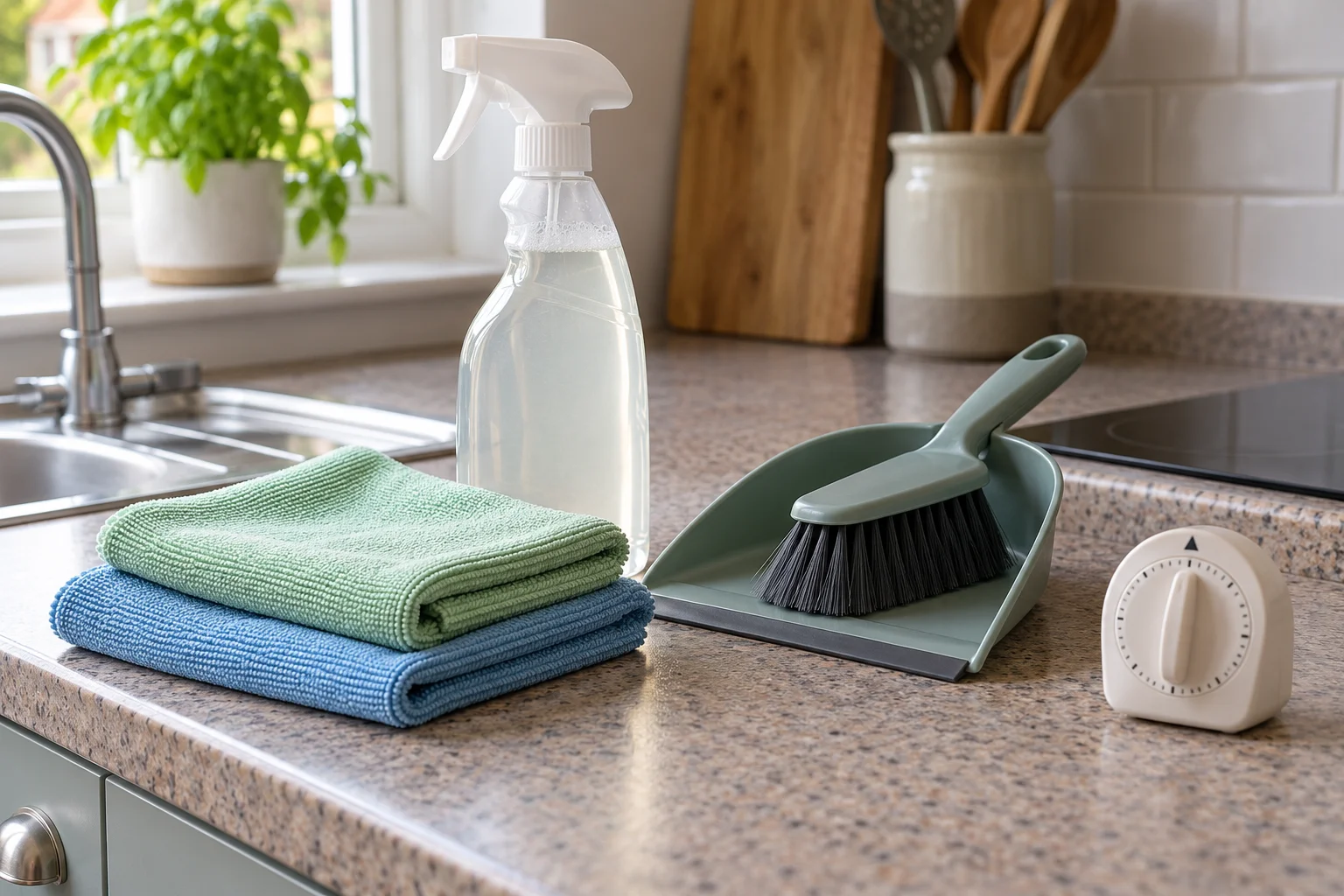
Gather a suitable cloth, any appropriate cleaning product and a small rubbish bag or bin. A basket can help move a few misplaced items. Keep the kit small; searching for every cleaning tool you own can use up the time before you start.
If the supplies are not ready, preparing them can be today's useful task. Adjust the routine rather than deciding you have failed before reaching the cleaning stage.
Minutes 2–5: remove obvious rubbish
Look only for things that clearly belong in the bin or recycling: empty packaging, used tissues or other ordinary waste you can identify confidently. Follow your household's normal sorting arrangements.
Do not use this stage to make difficult decisions about letters, receipts, sentimental items or another person's possessions. If you are unsure, leave the item for a separate sorting session. A quick reset should not create a missing-document problem later.
Stay within your chosen area. Walking a mug into the kitchen does not mean you now need to clean the oven. If the bin is full, dealing with it may be the most useful part of this stage; reduce the remaining tasks accordingly.
Minutes 5–8: put a few things back
Return items that have an obvious home. Put a book on its shelf, a coat on its hook or clean cutlery in its drawer. Small decisions are enough.
If an item belongs elsewhere, use the basket to carry it there when practical. Avoid turning the basket into a permanent collection of unresolved belongings. Keep the number of items modest and leave time to put them away.
Do not empty drawers or tip a whole laundry basket onto the bed. Those actions create a larger task that may be impossible to finish in the time available. This stage is about restoring a little space, not reorganising your entire home.
Minutes 8–12: clean one useful surface
Now work on the surface you selected. Use a method suited to the material and follow product instructions, including any required application time. The clock should never decide how a product is used.
For example, you might wipe a cleared table, clean a small worktop area or clean the basin. Use appropriate clean cloths and keep bathroom-cleaning supplies separate from those used in food-preparation areas.
If the task needs more preparation or care than expected, make it smaller. Cleaning half a counter properly is more useful than hurrying over several surfaces without doing them well. Avoid starting something that needs a long waiting period or extensive rinsing unless you have time to complete it appropriately.
There is no requirement to disinfect every surface during a reset. Choose the cleaning task you actually need, using the relevant product and surface instructions.
Minutes 12–14: close the task properly
Put cleaning products back in their safe storage place. Deal with used cloths as appropriate, return the basket and finish moving the rubbish you collected. Leave the area ready to use rather than covered in the equipment that helped you clean it.
If something must be completed safely before stopping, give it the time it needs. The 15-minute structure is a guide, not an instruction to leave a wet floor, an open product or an unfinished cleaning process.
This finishing stage matters because tomorrow's motivation can suffer when today's “quick clean” leaves another pile to deal with. Aim to close one small job rather than open three new ones.
Minutes 14–15: notice the result and stop
Look at the area you chose. Name the improvement specifically: “I can eat at the table now” or “The basin is ready to use.” Avoid immediately listing everything else that still needs cleaning.
Write down one possible next task if that helps you. Then stop. You do not have to earn a break by completing another room.
If you genuinely want to continue, take a pause and make a fresh choice about your available energy and time. Do not automatically restart the timer until a short reset has become an exhausting afternoon.

Adapt the reset to the room
In the kitchen: focus on a usable preparation space. A large pile of washing-up may need its own session, so avoid making “all dishes washed” a hidden requirement of this reset.
In the sitting room: clear one seat and the surface you use most. Return cups and loose belongings, then clean that surface as appropriate. Sorting every book or toy can wait.
In the bedroom: make a small area useful for tonight or tomorrow, such as your bedside table or the chair holding tomorrow's clothes. Avoid emptying the wardrobe.
In the bathroom: choose one fixture, such as the basin. A whole-bathroom deep clean is a different job, with different time and equipment requirements.
Make it smaller on low-energy days
If 15 minutes feels too much, try a five-minute version: one minute to choose a task, two minutes to do a small part of it and two minutes to finish and put things away. Or forget the timer and return three items to their places.
You can also do a suitable task while seated or ask someone to handle the lifting and carrying. Choose what fits your circumstances rather than copying another person's pace.
If you are tired after work or a night shift, rest may come first. A short routine should support everyday life, not create another demand that overrides it. Missing a reset does not create a debt of extra cleaning the next day.
Share the reset without becoming everyone's organiser
In a shared home, agree who will do which small task. One person might return dishes while another clears a seat. Keep responsibilities clear enough that you are not constantly stopping your own work to give directions.
Agree where belongings go and avoid moving someone else's important items without asking. If children join in, choose age-appropriate tidying tasks and keep cleaning products under appropriate adult control.
The point is shared responsibility, not a competition about who can move fastest. A household routine is easier to repeat when everyone understands the intended result.
How a small reset connects with a practical mindset
A reset gives you practice in choosing a limited goal, preparing what you need and finishing one useful action. Those habits can also support a new business, whether you are following a cleaning, gardening, dog-walking or another business blueprint.
You might use a short planning session to list three services, record one expense or draft a customer question. That will not build the whole business, just as a reset will not clean the whole house. It gives the larger project a manageable next step.
Explore our Mindset section for more practical encouragement. If you are specifically considering paid cleaning work, read which services to offer and how to start around your current job. Our Cleaning Business Startup Bundle provides business-planning resources; it is separate from this free household routine.
Frequently asked questions
Can I clean my whole home in 15 minutes?
This routine is for one small area. The result depends on the starting condition, task and your pace. It is not a whole-home cleaning promise.
What if I am interrupted?
Make the area and supplies safe, then pause. Continue later if useful, or count the completed part as today's progress.
Do I need to do this every day?
No. Try a frequency that suits your home and schedule. A few manageable sessions can be more practical than a daily promise you cannot maintain.
What if the area is still messy when the timer ends?
Finish safely and notice what improved. Next time, choose a smaller area or a simpler task rather than judging the whole session as unsuccessful.
Will this help me run a cleaning business?
It practises task planning, but professional cleaning also requires suitable skills, equipment, pricing and customer arrangements. A household reset is not a substitute for those preparations.
Considering cleaning as a business? Explore the planning tools and guidance in our Cleaning Business Startup Bundle on Payhip.
Explore the Cleaning Business Startup Bundle
Explore the blueprint collection for guides, planners and practical worksheets.