
Dog Walking Business Startup
How to Run a Dog-Walking Meet-and-Greet Before Accepting a Client
Prepare your questions, observe calmly, agree expectations and choose the right next step, with a free printable meet-and-greet checklist.
A new enquiry is exciting, especially when you are building a dog-walking business. Someone wants your help, the days fit your diary, and their dog sounds lovely. It is tempting to agree the first walk straight away.
Before you do, arrange a meet-and-greet. This gives the owner a chance to meet you, gives the dog time to become familiar with you, and helps you decide whether your service is suitable. It also catches practical details that a friendly message rarely covers: an awkward harness, a difficult front gate or a dog who struggles when their owner leaves.
A successful meeting ends with a clear next step, which might be a booking, a further introduction or a polite decline. You are looking for a workable match, not trying to make every enquiry fit.
1. Prepare before you arrive
Ask for a few essential details when arranging the appointment: the dog’s age, the service requested, preferred days, location, and any known health or behaviour needs. Ask directly whether there is a history of biting, snapping, escaping or difficulty with unfamiliar people. Explain that honest answers help you plan safely.
Choose the setting with the owner. A quiet outdoor space may suit some dogs; others need a different arrangement. Avoid assuming that a busy park, doorstep greeting or enclosed room will work for every dog. Where the disclosed history raises concerns beyond your experience, seek appropriate advice before arranging direct contact.
You might allow around 30–45 minutes, but treat this as a suggested diary allowance, not a required test duration. Tell the owner whether the meeting is free or paid and explain that acceptance is not automatic.
Bring your questions, service information and a way to take notes. Share your whereabouts with a trusted person as part of your lone-working routine. The Dogs Trust professional walking guidance recommends meeting the dog before walking them and planning care around their individual needs.
2. Let the introduction happen calmly
Ask the owner to manage the dog initially and keep the introduction unhurried. Speak calmly, avoid crowding the dog and give them room to choose whether to approach. There is no need to lean over them, hug them or reach towards their face.
Check with the owner before offering food, and ask about allergies and feeding preferences. Do not use a treat to lure a worried dog into contact they would otherwise avoid. A dog taking food is not, by itself, proof that they feel comfortable with handling.
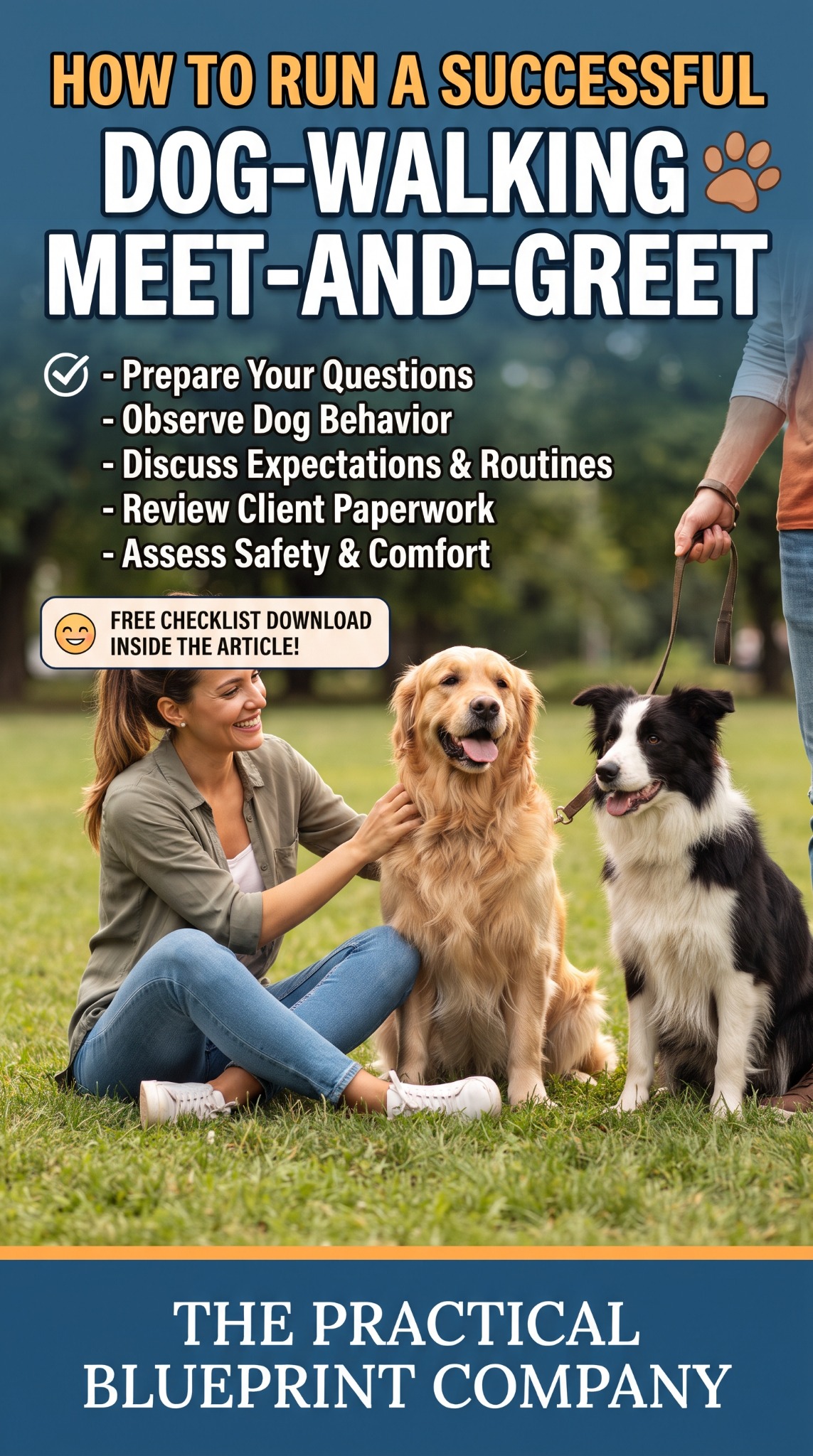
Although our pin shows a friendly meeting with two dogs, begin with the individual dog you are assessing. Bringing your existing walking group along would add unnecessary pressure. Group suitability needs its own carefully planned process.
Give yourself permission to pause. A quiet introduction, with little touching, can provide more useful information than an enthusiastic greeting that overwhelms the dog.
3. Ask for examples rather than labels
“Friendly”, “nervous” and “good on the lead” mean different things to different people. Ask the owner to describe what happens in ordinary situations.
- What does your dog do when another dog approaches on a narrow path?
- How do they respond to runners, bicycles, traffic, livestock or wildlife?
- Have they ever slipped their harness, bolted through a door or escaped a garden?
- Are there situations involving food, toys, resting places or handling that worry them?
- Have they ever bitten or snapped at a person or animal? What happened beforehand?
- How do they cope with a different person collecting them or entering the home?
- What helps them settle, and what tends to make a situation harder?
Keep your tone neutral. You need a useful history, not a confession. An owner who feels judged may leave out precisely the detail you need to plan a safe service.
Ask about exercise restrictions, current medication, allergies and veterinary instructions. Record what the owner tells you without diagnosing the dog or suggesting treatment. If relevant information is missing, make obtaining it a condition of any future booking.
4. Observe behaviour without provoking it
Notice how the dog responds to your presence, the surroundings and routine actions by the owner. Look at the whole dog and the situation rather than relying on a wagging tail or one isolated movement.
Dogs Trust describes possible signs of discomfort including turning away, lip-licking unrelated to food, body tension, freezing and avoiding contact. These signals need context. If the dog appears worried, increase space, reduce pressure or end the interaction.
Never take away food, corner the dog, force contact or engineer an encounter with another dog to “see what happens”. Do not punish a growl or push through a warning. Your role at this meeting is to gather information safely, not conduct a temperament test.
Write what happened
Instead of “bad with strangers”, record: “Moved behind owner when I approached; remained at a distance while we talked; no handling attempted.” Factual notes help you choose the next step without attaching a sweeping label.
A calm first meeting cannot guarantee future behaviour. The dog may behave differently without the owner, in a vehicle or alongside other dogs.
5. Consider a short lead walk if appropriate
If the introduction is comfortable and the known history supports it, a brief walk with the owner can reveal practical details. It is optional: do not proceed simply because you reserved time for it.
Have the owner show you how the usual collar or harness is fitted. Check its condition and fit, ask about escape attempts, and confirm any equipment requirements. Choose a quiet route and keep the dog on the lead.
Initially, observe the owner walking the dog. If appropriate, agree a controlled handover while the owner remains present. Notice whether you can manage the dog comfortably, negotiate gates and change direction without struggling. Do not test recall off lead during this introduction.
Discuss transport separately if your service involves driving. A dog walking comfortably beside you has not demonstrated that they can travel comfortably in your vehicle. Any familiarisation should be planned, secure and suited to your competence and equipment.
6. Explain exactly what your service includes
Now connect the dog’s needs with the service you actually offer. Is it a solo walk, a possible future group walk or a shorter visit? Explain collection arrangements, walk duration, travel time and return-home care.
Clarify whether “one hour” means an hour outdoors or a total visit. Discuss the usual time window, routes, lead policy, weather changes, drying, water checks and customer updates. Do not promise an exact arrival time if your route cannot reliably support it.
For wet or unsafe conditions, agree alternatives before they occur. Our article on wet-weather agreements and kit covers these conversations. Your price should allow for the full service, as explained in how much to charge for dog walking.
Give the owner time to ask questions. Battersea’s advice for choosing a dog walker highlights insurance, transport, contingencies and home security. Have clear answers and relevant evidence available.
7. Review paperwork and home access
A friendly conversation is useful, but agreed arrangements should be recorded. Before the first booking, collect the information needed for the service and make sure both parties understand the terms.
- Owner and backup emergency contact details.
- Veterinary practice details and an agreed emergency procedure.
- Health, handling and equipment instructions.
- Service, price, payment and cancellation arrangements.
- Any agreed transport, feeding or other specific permissions.
- Access instructions, key arrangements and return-home checks.
Agree how urgent veterinary decisions and costs will be handled if the owner cannot be reached, consistent with your insurer’s requirements. Avoid presenting a general consent form as permission to make every possible decision.
If you need home access, ask the owner to demonstrate locks, alarms and gates. Keep keys coded rather than labelled with a full address. Store client information securely and keep security codes separate from a checklist that could be misplaced. Permission to take or publish photographs should be a separate, optional discussion.
8. Choose a clear next step
There are three useful outcomes:
- Accept: the service fits, you can manage the dog safely, relevant checks are complete and terms are agreed.
- Arrange a trial or further introduction: there is a reasonable plan to explore suitability without unnecessary risk.
- Decline or refer: the needs exceed your experience, equipment, insurance cover or available service.
A solo trial can be a sensible first stage for a dog who has only met you with their owner. Explain its price, duration and review arrangements. Acceptance for solo walks does not automatically mean acceptance into a group.
For example, a dog may walk happily with you but become unsettled near unfamiliar dogs. You could offer solo walks if the risks are manageable, rather than promising a group place. If you cannot safely meet their needs, recommend that the owner seek advice from their vet and an appropriately qualified behaviour professional.
Declining can be kind and straightforward: “Thank you for meeting me. I don’t think my current service is the right fit for the support your dog needs, so I won’t confirm a booking.” You do not need to criticise the dog or owner.
9. Send a short written follow-up
Summarise the proposed service, any outstanding information and the agreed next action. Confirm a trial date only once the necessary checks and arrangements are in place. Ask the owner to tell you about changes in health, behaviour or routine before future walks.
After the trial, review how collection, walking and settling went. Keep factual records and adjust the plan with the owner where needed. If you are starting with one client, this careful approach gives you a manageable way to establish your routines.
A meet-and-greet is the beginning of an ongoing working relationship. A calm introduction, useful questions and honest boundaries make that relationship easier for everyone, including the dog.
Frequently asked questions
Should a meet-and-greet be free?
It can be free or paid. Choose an approach that fits your business and explain the charge, duration and purpose before the appointment. A meeting does not guarantee acceptance.
How long should it take?
Allow enough time for questions and a calm introduction. Around 30–45 minutes is a planning suggestion, but some dogs need shorter meetings or several visits. Do not prolong an uncomfortable interaction.
Should I bring other clients’ dogs?
Start individually. Any proposed group introductions should be planned separately, with suitable handling, space and consent. One friendly greeting does not establish that a group will work.
Can this checklist replace a contract?
No. It supports preparation and record-keeping. You still need appropriate service terms, insurance, local checks and the skills required for the work you offer.
Download your free two-page meet-and-greet checklist and use a fresh copy for each prospective client.
Sources checked 5 November 2026. General business and welfare information, not a professional behaviour assessment. Check requirements for your location and proposed service.
Explore the blueprint collection for guides, planners and practical worksheets.