Cleaning Business Startup
Essential Equipment for Starting a Domestic Cleaning Business
Build a practical cleaning starter kit with the right vacuum, mop, cloths, products and protective equipment, plus a checklist and realistic budgeting guidance.
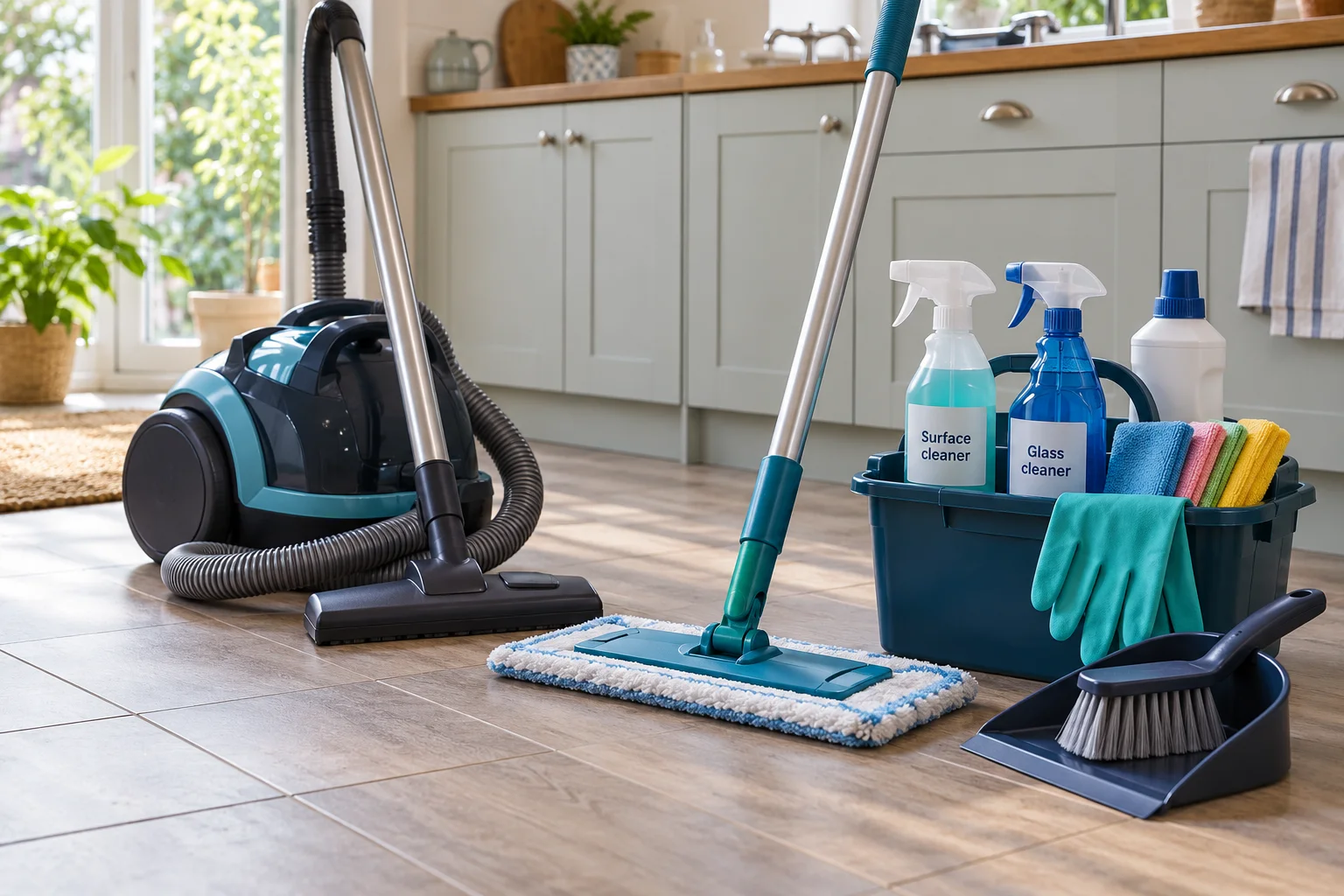
Starting a domestic cleaning business does not mean buying every machine in the cleaning aisle. It means having the right equipment for the work you have agreed to do, knowing how to use it and arriving with everything clean, safe and ready.
Your essential starter kit will usually include a suitable vacuum cleaner, a mop with spare washable heads, colour-coded cloths, a few surface-appropriate cleaning products, small brushes, protective gloves and organised storage. Add a simple checklist and a reliable way to separate clean equipment from used items.
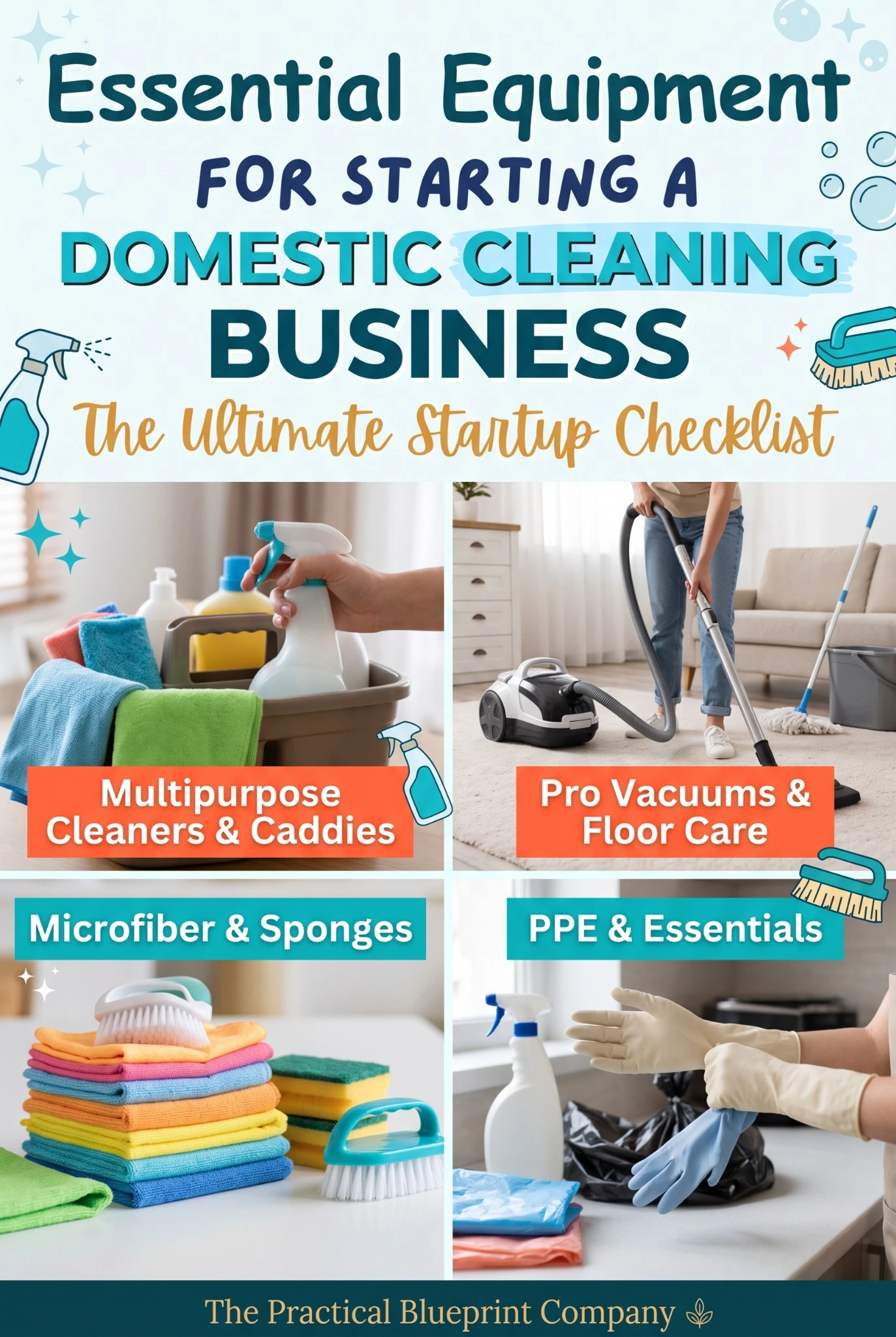
Inspired by our Pinterest startup checklist, this guide explains what deserves space in your kit, what can wait and how to budget without confusing equipment spending with the full cost of starting a business.
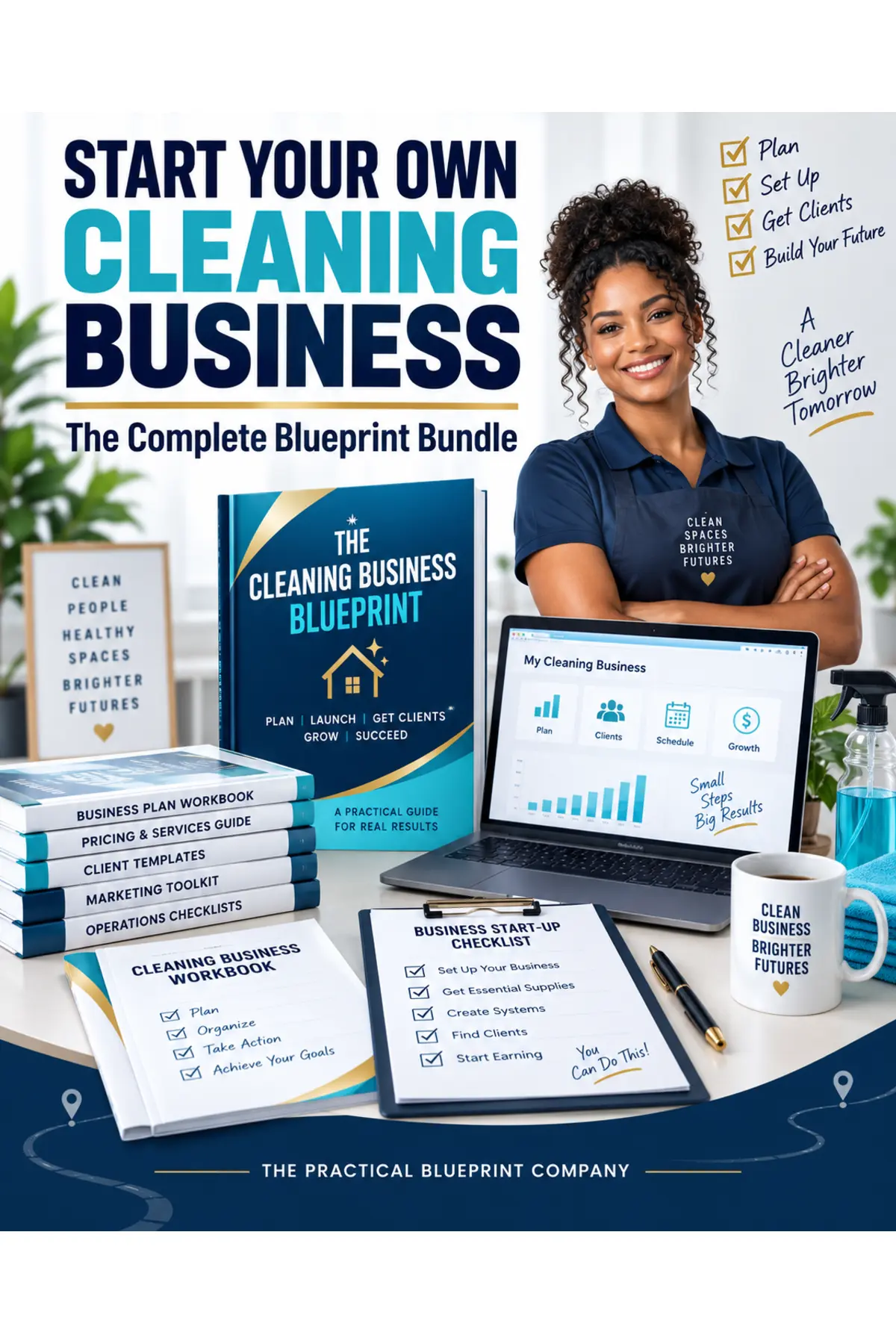
For the planning behind the purchases, explore our Cleaning Business Startup Bundle, which brings together the guide, practical toolkit and business-tracking resources.
Choose your services before buying equipment
A regular domestic clean might include dusting accessible surfaces, cleaning bathrooms and kitchens, vacuuming and mopping. Carpet extraction, specialist oven cleaning, external windows and hazardous waste removal require different skills, equipment and arrangements.
Write down what your first service includes and excludes. Then buy for those tasks. Our article on services a new domestic cleaning business should offer will help you define that boundary.
Also agree whether you or the customer supplies the vacuum, mop and products. Either arrangement can work, but it changes your costs and what you need to check before a visit. Never discover halfway through a booking that the customer's vacuum does not work.
Your domestic cleaning equipment checklist
| Equipment | Why you need it | What to check |
|---|---|---|
| Suitable vacuum and attachments | Carpets, edges and appropriate hard floors | Weight, filtration, spares and business-use terms |
| Mop, spare heads and suitable bucket | Controlled hard-floor cleaning | Floor compatibility and laundering instructions |
| Colour-coded microfibre cloths | Separate cleaning tasks and rooms | Enough fresh cloths for each booking |
| Small, surface-appropriate product range | Routine soil, grease and bathroom deposits | Labels, dilution, ventilation and material suitability |
| Brushes, dustpan and non-scratch pads | Corners, debris and detail work | Dedicated toilet tools and abrasion risks |
| Gloves and suitable workwear | Task-appropriate protection | Correct glove material, fit and condition |
| Caddy and separate used-item storage | Transport and organisation | Secure bottles and clean/dirty separation |
| Job checklist and maintenance log | Consistent work and equipment readiness | Customer preferences and service limits |
1. A vacuum that suits your working day
A vacuum is often the largest purchase in a basic kit. Choose it around the homes you expect to clean: stairs, mixed flooring, access, storage and the time spent carrying it all matter.
Look for suitable floor tools, a crevice attachment, manageable weight and readily available bags, filters and replacement parts. Consider how the machine contains dust when emptied. An impressive power figure alone does not tell you how well a vacuum fits your work.
A corded machine avoids charging interruptions, although its cable needs careful positioning. Cordless equipment can be convenient, but you must allow for real cleaning time, charging, battery replacement and the number of homes on your route.
Our Henry HVB160 Cordless Vacuum Cleaner guide offers one option to investigate. Compare it with your workload rather than assuming it is the right first purchase. Check the exact package and manufacturer's warranty terms, including business use, before ordering. The linked product guide contains affiliate links; purchases through those links may earn us a commission.
Inspect plugs, leads, hoses and attachments before use. Remove damaged equipment from service. HSE explains that electrical maintenance should be risk-based; a blanket annual PAT requirement is not a substitute for suitable checks and maintenance.
2. A mop system with enough clean heads
A flat mop with washable pads can be a practical starting point, but no mop suits every floor. Check the flooring manufacturer's care instructions and use the appropriate product and moisture level. Too much water can damage some wood and laminate floors.
Carry spare heads so you can change them when dirty and between homes. If your system needs a bucket or wringer, choose one that is manageable when filled and fits securely in your vehicle.
Work towards the exit, keep people and pets away from wet areas and explain which surfaces are still drying. A warning sign can help communicate a hazard, but it does not remove it. Clean equipment and dry it properly before storage.
3. Microfibre cloths and sensible colour coding
You need enough cloths to avoid carrying dirt from one surface to another. Allocate colours to tasks and follow the same system consistently. For example, reserve one colour for toilets, another for other bathroom surfaces and separate colours for kitchens and general dusting.
This is an example of your own working system, not a claim that every domestic cleaner must follow one universal colour code. Label storage if that makes the arrangement easier to remember.
Keep toilet cloths and tools separate from kitchen equipment. Change cloths as they become soiled, and bring fresh supplies for each home. Follow the fabric manufacturer's washing instructions; avoid fabric conditioner where it would impair the cloth's performance.
Budget for laundry as well as the purchase price. A cheap pack stops being economical if it leaves lint, scratches delicate surfaces or wears out after a few washes.
4. A small range of appropriate cleaning products
Start with the jobs you need to complete: routine surface cleaning, glass, bathrooms and the floors included in your service. You may need a suitable degreaser or descaler for particular tasks, but buying several overlapping products makes storage and training harder.
“Multipurpose” does not mean safe on every material. Check instructions before using a product on natural stone, unsealed wood, painted surfaces, specialist finishes or delicate metals. An acidic descaler, for example, is not a general solution for every bathroom surface.
Read labels, obtain relevant safety data sheets and assess the risks of how you actually use each product. A safety data sheet informs a COSHH assessment; it does not replace one. HSE's guidance for cleaners explains exposure controls, ventilation and protective equipment.
Never mix cleaning chemicals. Keep products in their original labelled containers where possible; if a product is intended for dilution, use compatible, clearly labelled containers and follow its instructions. Never use drinks bottles. Keep chemicals away from children, pets and food.
Cleaning and disinfecting are different tasks. Where disinfection is needed, use an appropriate product and follow the specified dilution and contact time rather than spraying and immediately wiping it away.
5. Small tools that earn their place
A soft dusting brush, dustpan and brush, suitable non-scratch pads and a small detailing brush can cover many ordinary tasks. Check the material first: even a pad described as gentle may damage a sensitive finish.
Keep toilet tools dedicated to that job. Using the customer's toilet brush, by agreement, can avoid transporting it between homes. If you provide one, plan separate, hygienic storage and cleaning.
A telescopic duster can help with accessible high surfaces. Do not stand on a customer's chair or worktop to reach further. Only offer tasks involving access equipment when you have suitable equipment, competence and safe working arrangements.
6. Gloves, footwear and protective essentials
Choose gloves according to the product instructions, safety information and task. One glove material does not protect against every chemical. Check their condition, keep the inside clean and replace damaged pairs.
Comfortable, secure footwear with suitable grip matters when moving between wet bathrooms, stairs and kitchens. Choose washable workwear and use an apron or eye protection where the task assessment requires it.
HSE highlights skin irritation from frequent wet work as well as risks from cleaning products. Good hand care and avoiding unnecessary exposure are part of the routine. More protective equipment cannot make an unsuitable product or method safe.
7. Storage that keeps the kit organised
Use a sturdy caddy for the products needed inside the home and secure larger supplies during transport. Keep bottles upright, lids closed and incompatible products separated according to their safety information.
Carry clean cloths in protected storage and used cloths in a separate suitable bag or container. Empty and process used items promptly; do not leave a damp pile in the car until the next booking.
A simple packing list prevents wasted journeys. Before leaving, check your vacuum supplies, fresh mop heads, cloths, gloves, products and job notes. Good organisation saves time without requiring a professional-looking van full of equipment.
How much should you budget?
The following is an illustrative £300 equipment allocation, not a current price survey or a complete startup budget. Replace each amount with a real quote for equipment suitable for your business.
- Vacuum and basic attachments: £150.
- Mop system and spare heads: £35.
- Cloths, brushes and pads: £35.
- Initial cleaning products: £30.
- Gloves and small protective supplies: £20.
- Caddy and separate storage: £30.
The total may be insufficient for your chosen vacuum or protective equipment. It excludes insurance, transport, suitable footwear, marketing, laundry, training, replacement stock and other business costs. The Henry cordless option mentioned above is not being quoted at the illustrative vacuum allowance.
If clients provide suitable equipment, your initial spending may be lower. Make that arrangement explicit and inspect what you are expected to use. Our guide to pricing a cleaning job helps connect consumables and unpaid preparation time with your charges.
What can wait until you have demand?
Carpet extractors, steam cleaners, floor-polishing machines, specialist oven equipment and large bulk chemical orders can usually wait when your offer is routine domestic cleaning. Each addition should support a service you understand, can deliver safely and can price sensibly.
After your first few jobs, record what you used, what ran short and what stayed untouched. Upgrade the part of your kit that causes a real problem. If you are starting part-time, read how to fit a cleaning business around your current job before buying for a workload you cannot yet accommodate.
Pair the equipment list with a customer checklist covering surfaces, pets, access, product preferences and exclusions. You can get the Cleaning Business Startup Bundle on Payhip for practical planning and operating resources.
Considering a pedal-wringer system? Our Masthome Spin Mop and Bucket Set guide explains five practical benefits and the floor-care and workload checks to make before buying.
Frequently asked questions
Do domestic cleaners bring their own products?
Some do; others use agreed customer supplies. Explain your policy before quoting and confirm suitability. Customer-provided products still need safe handling and appropriate use.
Do I need a commercial vacuum immediately?
You need equipment suitable for the intended workload. Check durability, instructions, servicing and business-use warranty terms rather than relying on a “professional” description or choosing solely by price.
Can I start without a car or van?
Possibly, with a small local service area and an agreed customer-equipment arrangement. Assess safe carrying limits and travel time. A complete vacuum-and-mop kit can be awkward on public transport.
How many cloths should I carry?
Enough fresh cloths for separate tasks in every booked home, plus spares. Base the quantity on your workflow and laundry turnaround, and increase it if you find yourself reusing soiled cloths.
What should I buy first?
Confirm your first service and equipment policy, then buy the core tools required to deliver it. Keep our pin as a checklist and find more ideas on the Practical Blueprint Pinterest board.
Build your cleaning business on a practical plan
Equipment is one part of getting ready. Use our Cleaning Business Startup Bundle to organise services, pricing, customer enquiries and day-to-day routines. See the complete bundle contents, then take your next step.
Get the Cleaning Business Startup Bundle on PayhipChoosing your main machine? Read How to Choose a Vacuum Cleaner for a New Cleaning Business for a five-factor buying checklist and a specification-based Numatic NRV240-11 assessment.
Explore the blueprint collection for guides, planners and practical worksheets.