Cleaning Business Startup
How to Choose a Vacuum Cleaner for a New Cleaning Business
Compare durability, cleaning performance, handling, filtration and attachments, with a specification-based Numatic NRV240-11 review and a practical buying checklist.
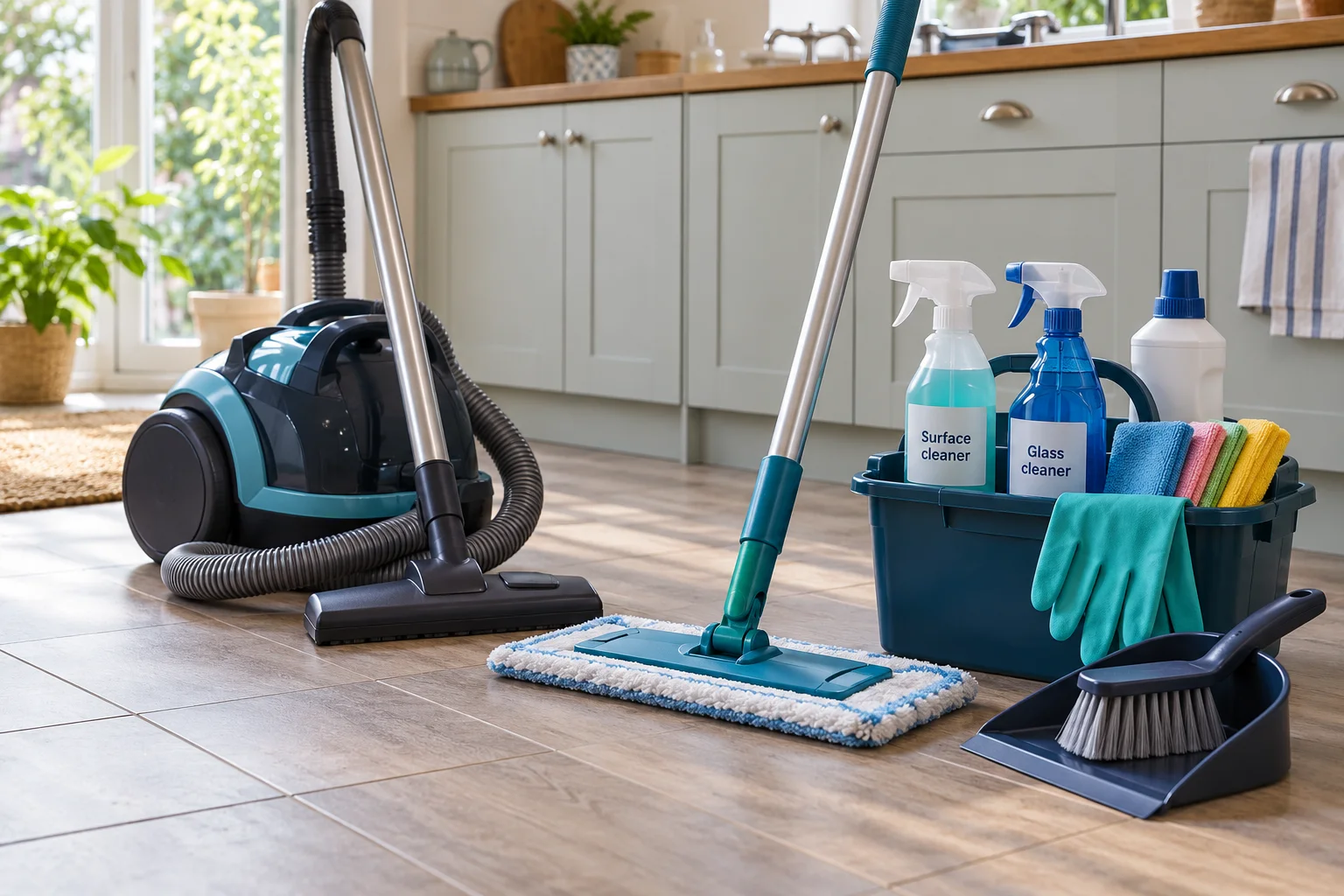
A vacuum cleaner is likely to be one of the hardest-working pieces of equipment in your new cleaning business. It needs to do more than look impressive on a product page: it must suit your customers’ floors, fit your transport and remain manageable at the end of a busy day.
For routine domestic cleaning, start by comparing durability, real cleaning performance, ease of carrying, filtration and useful attachments. Then check running costs and whether the manufacturer supports your intended business use. The best choice is the one that reliably handles your actual bookings within a sensible budget.
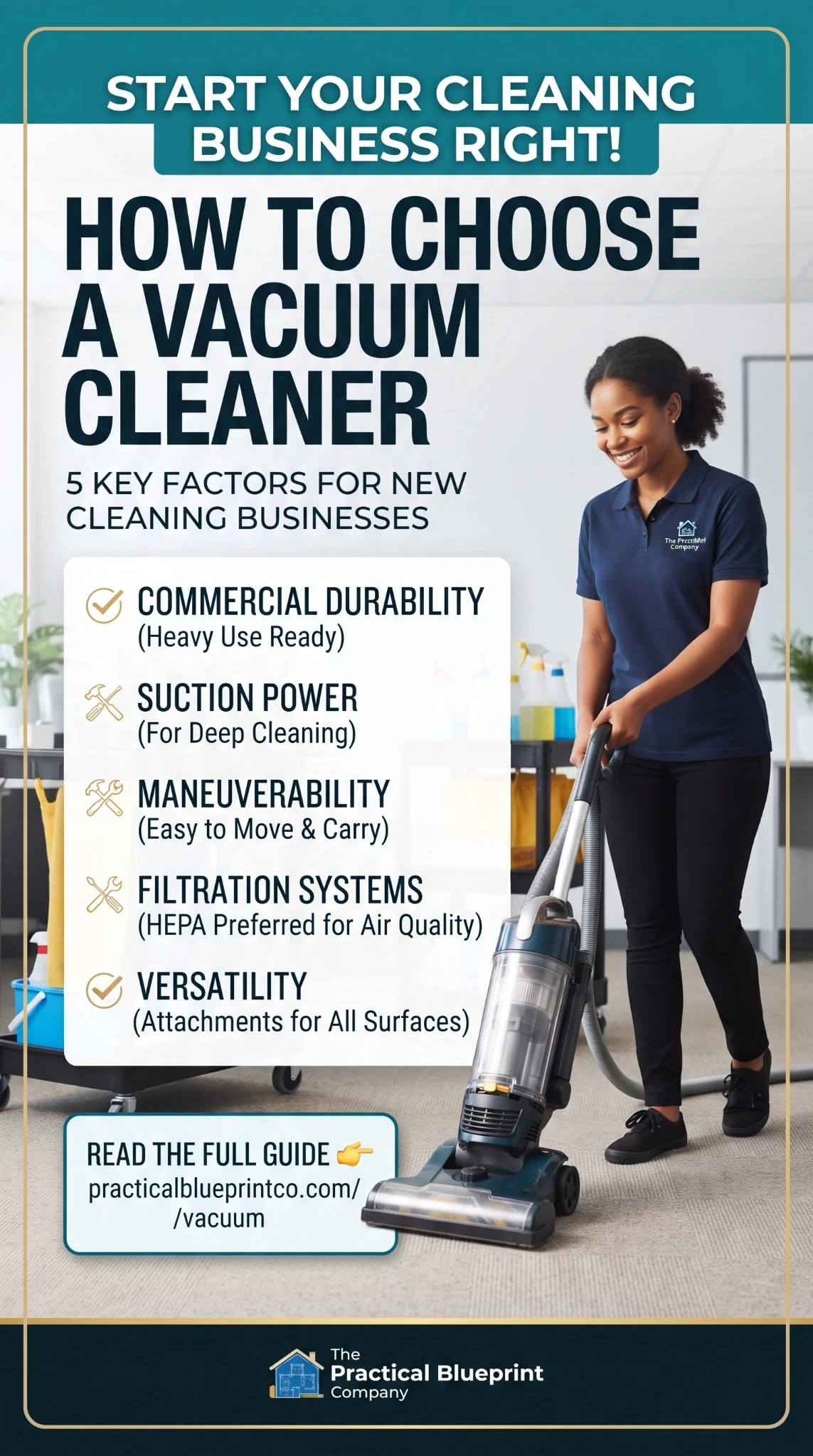
Our Pinterest pin highlights those five factors. Below, we turn them into practical buying questions and take a closer look at the Numatic NRV240-11 commercial vacuum cleaner as one option for a new business.
Affiliate disclosure: This article contains Amazon affiliate links. As an Amazon Associate, we earn from qualifying purchases. The product assessment is based on published specifications, not a hands-on test. Prices, seller bundles and availability can change.
Choose your cleaning jobs before choosing your vacuum
Picture your first few customers. Are they small flats with hard floors, family homes with carpets and stairs, or offices with larger open areas? Do they have pets? Will you carry your machine upstairs or across a car park? These details should drive the purchase.
A cleaner working in compact homes may value low weight and easy storage. Someone covering larger properties may prioritise capacity and cable reach. Homes with substantial pet hair may justify a suitable brush attachment, while delicate flooring requires a compatible floor tool and careful use.
Keep your service boundaries clear. Ordinary dry vacuuming, carpet washing, liquid pickup and collecting construction dust are different tasks. A routine dry vacuum is not automatically suitable for the others. Our guide to services a new domestic cleaning business can offer helps you decide what belongs on your initial menu.
1. Durability: look beyond the purchase price
A household vacuum might be satisfactory for occasional home use yet be a poor fit for repeated paid bookings. Look for a model intended for the workload you expect, and read the warranty conditions rather than assuming every guarantee covers commercial cleaning.
Check the hose connection, wheels, carrying handle, cable storage and availability of replacement parts. A machine that is awkward to repair can interrupt your bookings even when the original purchase seemed inexpensive.
Before ordering, find out where you can buy compatible bags, filters, hoses and floor tools. Ask who handles repairs and what the seller includes. A durable machine still needs routine care; using the correct bag and maintaining airflow are part of owning it.
2. Cleaning performance: watts are only part of the picture
A motor’s wattage describes electrical input, rather than providing a complete measure of how effectively the machine removes dirt from a floor. Useful performance also depends on airflow, the floor head, seals, filter condition and the surface being cleaned.
For mixed homes, look for a suitable combination floor tool or separate tools for carpets and hard floors. Check how the head moves across carpet and whether it can reach beneath furniture. If pet hair will be a regular challenge, investigate a compatible brush tool instead of assuming the standard head will make every job easy.
Where possible, try a demonstration on surfaces similar to your customers’. Assess pickup, handling and how many passes you need. Remember that dry vacuuming removes loose debris; it does not wash carpets or remove every stain.
3. Manoeuvrability: consider the whole working day
Weight matters most when you have to lift the machine repeatedly. Compare the ready-to-use weight, not just a bare motor unit, and think about the hose, tubes and accessories you will carry alongside it.
A cylinder vacuum can roll well across open floors but needs more thought on stairs. An upright can be convenient across larger carpeted rooms but awkward in a small car. A cordless model removes cable handling, although usable runtime, charging and replacement batteries become business considerations.
Plan safe cable routes and keep the machine stable when cleaning stairs. Avoid pulling it by its power cable. If you cannot comfortably lift and control a particular model, its other features will not make it the right everyday tool for you.
4. Filtration: check the complete system
Look beyond a filter name on the box. Ask which bags and filters are specified, how the machine seals and how dust is contained during emptying. A well-maintained bagged design may be convenient when you want to remove collected debris with less handling.
HEPA terminology needs care. A product containing a filter or bag with a particular marketing name is not automatically a certified whole-machine HEPA system. If a customer has a specific filtration requirement, verify the exact machine’s documentation before promising suitability.
For the Numatic discussed here, the manufacturer lists Tritex filtration and HepaFlo bags. Those details do not establish whole-machine HEPA certification. Do not advertise specialist dust control or allergy protection on that basis.
5. Versatility: buy attachments you will use
A useful starting selection is a compatible floor tool, crevice tool and dusting or upholstery tools. Think about skirting edges, stairs and accessible upholstery, and confirm each tool is appropriate for the surface before using it.
Check the actual seller’s contents list. Accessory bundles can differ, and an image showing several tools does not always mean they are all included. A turbo brush or extra hose may be an additional purchase.
Keep tools clean between properties and inspect them for trapped grit that could scratch a customer’s floor. Separate equipment used for dirtier tasks where appropriate. Our domestic cleaning equipment checklist puts the vacuum into the wider starter kit.
Short review: Numatic NRV240-11 commercial vacuum cleaner
The Numatic NRV240-11 deserves a place on a shortlist for routine dry cleaning. Numatic’s model-specific data sheet lists a 9-litre drum, a 12.5-metre cable, a 620 W motor and a ready-to-work weight of 9 kg. It is a corded cylinder machine with bagged dust collection.
What appeals: its capacity should reduce emptying interruptions compared with a much smaller machine, and the long cable offers flexibility within a room. Numatic also publishes parts documentation, which is useful when assessing ongoing maintenance. Those are practical business advantages rather than decorative features.
What to weigh up: 9 kg is a meaningful load if your work involves frequent stair carrying. You also need to manage the cable and budget for bags and replacement filters. It is a dry vacuum, so it will not replace a wet-and-dry machine or carpet extractor. Confirm the supplied floor tool suits the carpets and hard floors you expect to clean.
Our assessment: it is a sensible option to investigate if your early work centres on ordinary dry cleaning and you value capacity and mains-powered operation. A lighter machine may suit stair-heavy work better. We have not tested this particular Amazon seller’s package, so check accessories, seller, warranty terms and current price before buying.
For a focused overview, read our Numatic NRV240-11 review in Recommended Products.
Budget for ownership, not just checkout
Your vacuum budget should include its purchase price, consumables and any genuinely necessary tools. Keep some startup money available for the rest of your kit and operating costs instead of spending everything on one machine.
For a simple comparison, imagine one option costs £150 plus £60 in estimated first-year consumables, while another costs £200 plus £35. Their illustrative first-year totals are £210 and £235. These are invented planning figures, not prices for the Numatic. Add likely maintenance and assess whether any extra capability is worth the difference for your jobs.
Record actual expenses once you start. Equipment costs belong in your pricing alongside travel, supplies and unpaid administration. Our guide to pricing a cleaning job without undervaluing your time explains the broader calculation.
Your pre-purchase checklist
- List your likely floors, stairs, pet-hair needs and carrying distances.
- Confirm the machine supports your intended use and workload.
- Check ready-to-use weight, storage space and cable reach or battery runtime.
- Read the included accessories and filtration specifications.
- Price bags, filters and any additional floor tools.
- Check the seller, warranty, repair route and return terms.
- Keep a reserve for supplies and other startup expenses.
Once purchased, follow the manufacturer’s instructions, check the cable and tools before work, and maintain bags and filters as directed. Deal with damage before taking the machine to another booking. A reliable maintenance habit protects your schedule as well as your equipment.
Choose a vacuum that supports your first customers
You do not need a cupboard full of machines to begin. You need a suitable vacuum, clearly defined services and a realistic plan for using and maintaining your equipment. Buy for the work you can actually deliver, then expand when customer demand supports it.
Explore our Cleaning Business Startup Bundle for help organising the wider business, or view the bundle on Payhip. If you are beginning part-time, read how to start around your current job next.
Frequently asked questions
Do I need a commercial vacuum to start a cleaning business?
Choose a machine suitable for your expected workload and business use. A commercial model is worth considering for repeated bookings, but suitability depends on its specifications, handling and warranty terms.
Is the Numatic NRV240-11 suitable for wet cleaning?
No. It is a dry vacuum. Use equipment specifically designed for liquid pickup or carpet extraction when those tasks form part of your service.
Is a cordless vacuum better for a new cleaner?
It depends on your jobs. Cordless operation can improve convenience, while a mains machine avoids battery-runtime limits. Compare usable runtime, charging arrangements, capacity and carrying weight before deciding.
Does HepaFlo mean the Numatic is HEPA certified?
The HepaFlo bag name does not establish whole-machine HEPA certification. Check the exact filtration documentation against any specific customer requirement.
Should I use my customers’ vacuum cleaners instead?
You can agree that arrangement, but confirm condition, suitability and responsibility beforehand. Bringing your own suitable equipment gives you a more consistent starting point for planning jobs.
Sources and product information
Specifications checked against Numatic’s NRV240-11 technical data sheet and Numatic’s NRV240 product page. Accessory packages may differ by seller. Checked 21 October 2026.
Ready to organise your next step? Turn your equipment decisions into a practical startup plan with the Cleaning Business Startup Bundle.
Get the Cleaning Business Startup Bundle on Payhip
Explore the blueprint collection for guides, planners and practical worksheets.