Mobile Coffee Business
Coffee Cart Menu Ideas: How to Start Small Without Looking Limited
Build a focused coffee cart menu with familiar drinks, one optional special and a manageable food offer. Includes a starter menu, presentation tips and FAQs.
A good starter coffee cart menu gives customers a few clear reasons to buy while keeping preparation, stock and service manageable. You do not need every drink a large café offers. You need a selection you can make consistently, price properly and serve from the space you actually have.
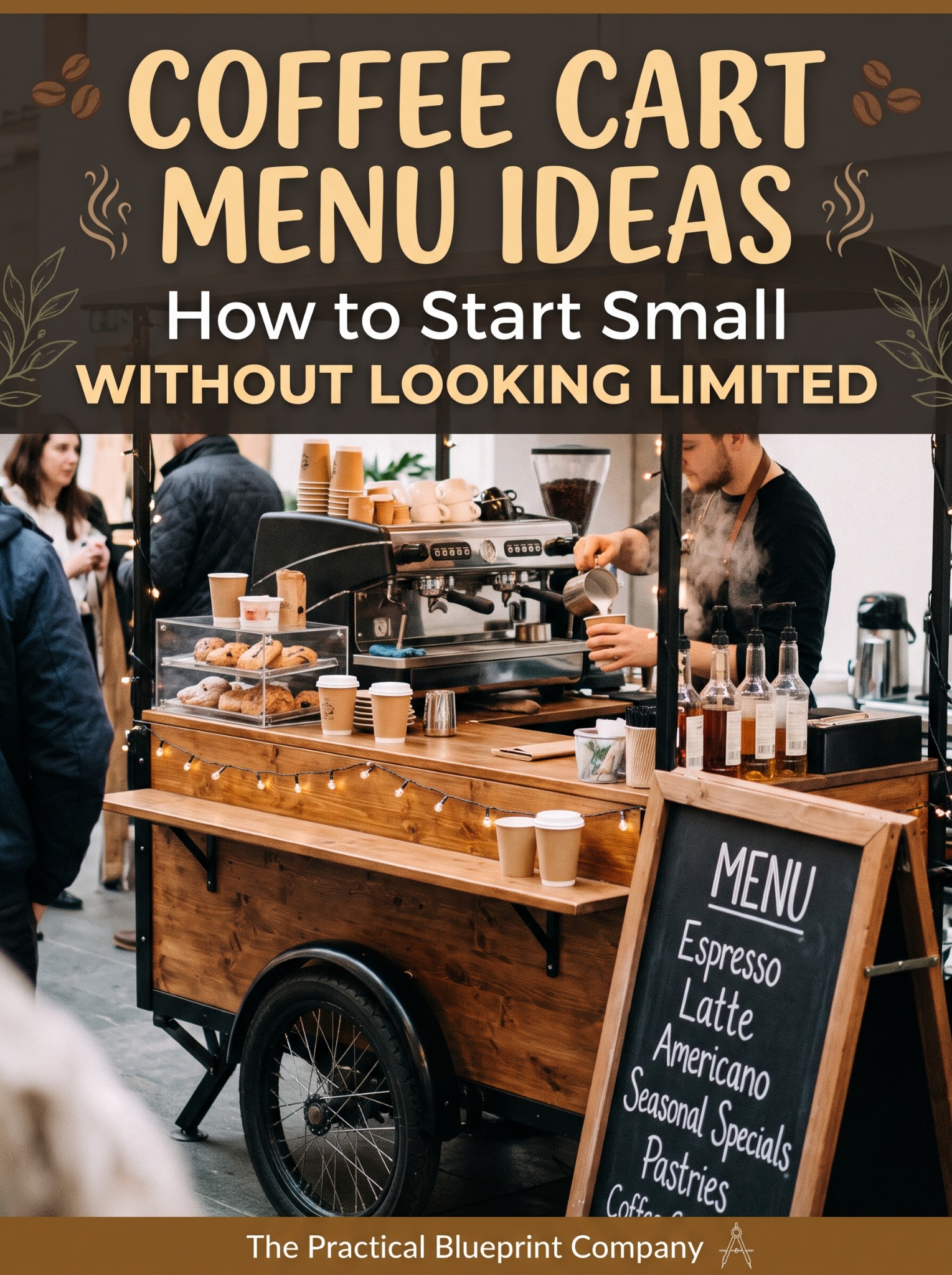
Our Pinterest pin shows familiar coffees alongside seasonal specials and pastries. That is a useful direction: dependable everyday choices, one point of interest and an optional small food offer. The important step is deciding which of those ideas your opening setup can deliver.
This guide develops an example espresso-based menu. Adapt it to your customers and equipment rather than treating it as a compulsory shopping list. A deliberately designed filter-coffee cart can use the same planning principles with different drinks.
1. Give each menu item a clear job
Start with customer needs rather than a long list of recipes. Some people want a straightforward black coffee, others a milk drink, and others something without coffee. A small selection can cover those needs without dozens of variations.
For every proposed item, finish this sentence: “This belongs on the menu because…” A strong answer might be that it serves a recurring customer request or uses ingredients already stocked. “Other cafés sell it” is a reason to investigate, not automatically to add it.
Make your pitch part of the decision. A workplace morning stop may reward quick, familiar orders. A leisurely community event might give customers more time to consider a special. Read our guide to finding your first coffee cart pitch before choosing a menu for an audience you have not yet observed.
2. Build an example opening menu around shared ingredients
The following is one possible starting point for a small espresso operation. Prices are deliberately omitted: calculate them from your recipes, costs and pitch rather than copying generic figures.
| Menu item | Customer need | Operational consideration |
|---|---|---|
| Espresso | A short, concentrated coffee | Define the dose, yield and serving cup |
| Americano | A longer black coffee | Plan hot-water capacity and a consistent recipe |
| Latte | A familiar milk-based coffee | Measure milk use and practise steaming |
| Cappuccino | A different milk texture and coffee balance | Make the difference clear in your recipe and service |
| Tea | A non-coffee choice | Start with one familiar tea; plan water and brewing time |
| Hot chocolate | A sweet non-coffee option | Cost the powder or sauce and check all ingredients |
These six drinks share much of the same equipment and stock, though each still needs a tested recipe. You could begin with fewer if your workload or customer research supports that. Flat white, mocha and other drinks can be considered later rather than included just to fill the board.
Offering cappuccino and latte should mean delivering distinct drinks, not two names for an identical product. If you cannot yet reproduce a drink confidently during a rush, practise first or leave it off the opening menu.
3. Limit sizes and customisations deliberately
Every size creates another recipe, cup requirement and pricing decision. A practical starting arrangement is one standard size for longer drinks, with an appropriate smaller serving for espresso. That does not mean forcing every drink into the same cup.
If you offer different sizes, specify coffee dose and milk quantity for each. Simply adding more milk can change the drink’s balance. Keep the recipes beside your cost sheet so the promise on the menu matches what you prepare.
Choose a manageable set of customisations. For example, you might offer one milk alternative and one syrup once storage and handling arrangements are ready. Record customer requests for other options instead of immediately buying a carton or bottle for every suggestion.
A polite response can be specific: “We currently offer dairy milk and this oat drink; we are recording requests as we develop the menu.” Keep ingredient and allergy questions separate from ordinary preferences, and answer them using verified information.
4. Add one special with a controlled recipe
A special can make a compact menu feel considered without requiring a separate production station. Choose something built from your existing ingredients, with at most one carefully assessed addition.
Possible ideas include a vanilla latte using a measured syrup portion, a mocha if your chocolate product works in a tested recipe, or a seasonal variation that you can describe simply. These are ideas to trial, not a recommendation to launch all three.
Write down the exact portion, cup, preparation steps, price and allergen information. Check storage instructions, shelf life after opening and the time needed to make it. A topping that looks attractive may introduce extra handling, cleaning or waste.
Make the special easy to remove. Run it for a defined trial and compare sales, contribution and workload with the core menu. If it sells occasionally but slows every queue, it may not earn its place.
5. Treat pastries as an optional separate decision
The pastries in the pin make the cart look inviting, but food adds responsibilities beyond setting out a display. Consider supplier information, transport, storage, protection from contamination, serving utensils, allergen records and unsold stock.
A small range from a suitable supplier may be easier to organise than preparing several products yourself. Choose quantities cautiously and follow the supplier’s storage and use instructions. Cream-filled products, for example, may create different storage demands from other baked goods.
Two complementary options can be enough for a trial. Record how many arrive, sell and remain, along with any wastage. Do not assume a coffee-and-pastry deal improves profit: calculate the combined cost and contribution before offering a discount.
Food is not essential to make a coffee cart legitimate. If it distracts from a reliable drinks service, launch without it and return to the idea once customers and operations justify it.
6. Make a small menu look complete
Use clear groups, readable lettering and enough space between choices. Customers should see what you sell and what it costs without searching through a crowded board. The menu can feel intentional through presentation, not sheer length.
A simple structure might be:
- Coffee: espresso, Americano, latte and cappuccino.
- Other hot drinks: tea and hot chocolate.
- This week’s special: one tested drink, when available.
- Something to eat: a small daily selection, if offered.
Add sizes and prices beside the relevant items. Show any supplement before the customer orders. Use short descriptions where they help someone choose, such as explaining that your special includes vanilla syrup.
Avoid apologetic wording such as “only a few drinks”. “A focused menu of coffee favourites, made to order” describes the offer positively without making an unsupported quality claim.
Keep the physical board and any online menu consistent. Mark a sold-out item promptly. A customer who can make an informed choice quickly is better served than one presented with an impressive list of unavailable options.
7. Make allergen information part of the menu system
A small menu still needs accurate ingredient and allergen information. The Food Standards Agency’s best-practice guidance covers drinks made to order and recommends written allergen information supported by a conversation. Customers must be able to access accurate information about the regulated allergens used as ingredients.
Keep current supplier labels and a written record for each recipe, including milk alternatives, powders, syrups and toppings. Update it when a supplier or recipe changes. If the information is separate from the main menu, make its location clear and ensure everyone serving knows how to find it.
Do not describe a drink as allergen-free merely because you used a plant-based ingredient. Shared equipment and preparation can introduce cross-contact risks. Official allergen-labelling guidance explains that vegan labelling does not guarantee freedom from allergens and that free-from claims require appropriate controls.
Food packaging also matters. Pastries sold loose and items packed before customers select them can fall under different rules. Check the guidance on prepacked-for-direct-sale food and confirm your arrangement with your local food-safety team.
UK guidance checked 24 October 2026. Confirm the requirements applicable to your location, products and preparation arrangements.
8. Check profitability and workload together
A drink deserves its place when customers want it and you can deliver it at a sustainable cost. Record ingredients, packaging, waste, payment charges and preparation demands. Then consider labour, pitch costs and overheads across the trading session.
Our guide to pricing mobile coffee drinks without guessing walks through recipe costing and contribution. Use it before deciding that a special or larger size is profitable just because its selling price is higher.
Capacity matters too. Practise a mixed sequence of orders rather than making each drink once in isolation. Include taking payment, answering a question, changing milk, cleaning and restocking. Time the whole service and note where work piles up.
Before adding iced or blended drinks, check the additional ice handling, storage, cleaning, power and equipment needs. Our equipment checklist and startup budget guide help you assess those additions.

9. Review the menu after your first sessions
Keep a short record of units sold by item, common requests, stock discarded and service problems. Compare similar trading sessions where possible; one rainy afternoon does not establish long-term demand.
Ask three questions: what do customers repeatedly choose, what produces worthwhile contribution, and what can we serve reliably? Keep strong performers. Improve or remove items that repeatedly cause waste or delays.
Add one new item at a time so you can see its effect. Set a review point in advance, and be prepared to return to the simpler menu. Expansion is useful when it solves an observed customer need, rather than simply making the board longer.
Frequently asked questions
How many drinks should a coffee cart offer?
There is no universal number. The six-drink example is a starting model, not an industry rule. Choose the smallest range that covers your likely customers and that you can serve consistently.
Do I need decaf from the start?
Assess likely demand and how you would prepare it consistently with your setup. Be clear about availability and avoid treating decaf as caffeine-free. Record requests to inform your decision.
Can a small menu include seasonal drinks?
Yes. One measured, costed special using shared ingredients can add interest. Check its preparation time, storage requirements and allergen information before launch.
Should I sell pastries immediately?
Only if the supply, food-safety arrangements, storage and likely demand make sense. A dependable drinks-only opening menu can be a deliberate business choice.
Build your opening menu with a practical plan
The Mobile Coffee Business Complete Blueprint Bundle combines the 82-page ebook with recipe cards, pricing workbooks, equipment planning and operating resources. Use the tools to connect your menu ideas with the costs and routines needed to deliver them.
Start with familiar drinks, give each one a reliable recipe and let real customer demand guide the next addition.
Get the Mobile Coffee Business Bundle on Payhip
Explore the blueprint collection for guides, planners and practical worksheets.