Gardening Business Startup
One Battery Platform or Mixed Brands: What Should a New Gardener Buy?
Compare shared batteries and mixed tool brands, check compatibility and runtime, and budget for a dependable gardening startup kit.
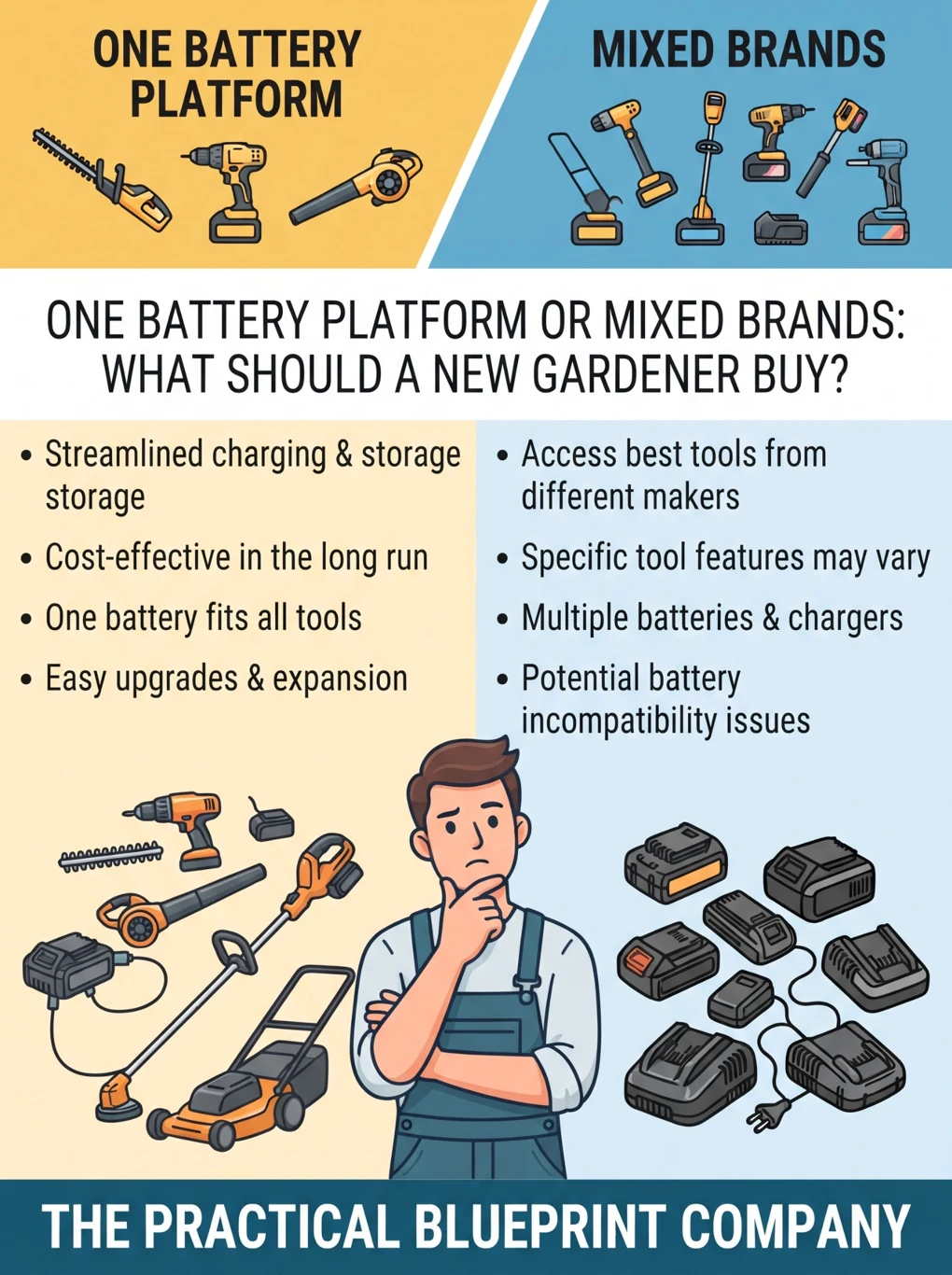
You have found a reasonably priced cordless hedge trimmer. Then you notice a mower from another brand on offer, followed by a grass trimmer that looks ideal for small gardens. Each purchase seems sensible on its own. Together, they could leave you juggling three chargers, incompatible spare batteries and a bigger startup bill than expected.
For many new gardening businesses, one main battery platform is a sensible starting point. It can simplify charging, storage and later purchases. However, the right tool for your paid work matters more than keeping every logo identical. A second system can be worthwhile when it solves a clear problem.
The aim is to buy a manageable working kit, not collect an entire range. Here is how to decide what belongs in your first setup and what can wait.
1. Start with the jobs, not the battery offer
List the work you expect to do during your first few months. Small-lawn mowing, light hedge maintenance, border care and occasional leaf clearing place different demands on equipment from long days cutting large lawns or tackling dense growth.
For each service, write down the likely property size, frequency, access restrictions and working conditions. Decide which powered tools you genuinely need. Hand tools may cover much of your early work, especially if your service focuses on weeding, planting and careful garden maintenance.
Our guide to matching gardening services to your skills can help narrow the offer. If a blower is on your shopping list, also consider whether a leaf blower or rake fits your jobs.
A discounted drill bundle is not necessarily the best starting point for a gardening business. Check that the same battery system offers the mower, trimmer or other core tool you actually need.
2. Understand what a platform means
A battery platform is a specified family of compatible tools, batteries and charging equipment. The brand name alone does not establish compatibility, and matching voltage numbers do not make unrelated batteries interchangeable.
Two manufacturer examples show why this matters:
- Makita distinguishes its LXT and XGT systems. An LXT battery should not be assumed to power an XGT tool simply because both are Makita.
- Bosch confirms that AMPShare and POWER FOR ALL 18V are different, incompatible systems, despite both using 18V branding.
There is also a useful middle ground between one brand and several battery systems. Approved alliances can allow compatible tools from different manufacturers to share batteries. The POWER FOR ALL compatibility guidance identifies exceptions and makes clear that older partner tools do not automatically become compatible.
Before buying, match the exact tool, battery and charger model numbers using current manufacturer documentation. Check any required capacity or battery-type restrictions. Do not rely on colour, a marketplace description or the fact that a pack appears to fit.
3. Where one main platform helps
The most obvious advantage is being able to move a suitable charged battery between compatible tools. A spare pack can support several jobs instead of serving one machine only. Charging routines and storage can also become easier to manage.
Once you have sufficient compatible batteries and charging capacity, a bare tool may cost less than another complete kit. “Bare” or “body only” usually means no battery or charger, but check the listing rather than assuming every accessory is included.
Shared batteries are especially useful for a solo gardener using tools in sequence. You might trim a hedge, switch to a grass trimmer and finish with a brief tidy. A team using several tools simultaneously needs enough packs for all of them; shared compatibility does not create extra energy.
One platform also has limits. A failed charger can affect the whole kit, and the range may not offer the best tool for every task. Include a realistic backup plan instead of relying on one pack and one charger for a full paid day.
4. When mixed systems make sense
A second platform can be justified when a particular machine offers a worthwhile improvement in output, handling, durability or service support. For example, your handheld tools may suit your existing system while your mowing workload requires a different machine.
Keeping reliable equipment you already own can also be cheaper than replacing everything for uniformity. Assess its condition, suitability and remaining usefulness. Money already spent should not force you into another poor purchase, but working equipment does not need replacing merely to match.
The extra system needs its own cost calculation: suitable batteries, charger, transport space, replacement parts and a way to keep the machine working if its only battery fails. A bargain bare mower can become expensive once you add two required packs and a charging solution.
Think of mixed systems as a deliberate exception. “This mower solves my daily mowing problem” is a stronger reason than “this third brand was reduced this weekend”.
5. Compare a working basket of equipment
Compare complete setups capable of doing the same work. The following invented figures illustrate the method; they are not current prices, product recommendations or claims that the tools perform equally.
| Purchase | One platform | Two systems |
|---|---|---|
| Main tool kit with suitable battery and charger | £300 | £300 |
| Second tool | £150 bare tool | £240 separate kit |
| Additional suitable battery | £100 shared spare | £100 spare for first system |
| Spare battery for second system | Not required separately | £90 |
| Total | £550 | £730 |
The £180 difference is the additional cost of this particular mixed setup. It does not prove that one platform is always cheaper. Promotions, existing equipment and different battery requirements can change the result.
Both baskets still need checking against runtime and simultaneous use. The shared setup assumes one suitable spare can cover either tool when used sequentially. It would be inadequate if a machine requires two batteries at once and you have no replacement pair.
Put your real totals into a gardening startup budget, leaving money for transport, protective equipment, maintenance and other business needs.
6. Read battery capacity without guessing runtime
Amp-hours, usually shown as Ah, describe electrical charge capacity. At the same nominal voltage, a larger Ah figure generally means more stored energy, but it does not tell you exactly how long a tool will run.
For a simple energy comparison, multiply nominal volts by amp-hours. An 18V 5Ah battery represents approximately 90Wh; an 18V 2Ah battery represents approximately 36Wh. Use comparable nominal ratings, not a mixture of nominal and maximum marketing voltages.
Those figures are not runtime promises. Motor demand, cutting load, operating mode, battery condition and temperature all matter. A mower working through difficult growth is not the same load as a hedge trimmer used intermittently.
Nor is the largest pack automatically best. Weight and balance matter on handheld tools. STIHL explains that its recommended battery considers handling as well as capacity. Try the tool with the battery you intend to use, not an empty display machine.
7. Plan the day’s charging before buying
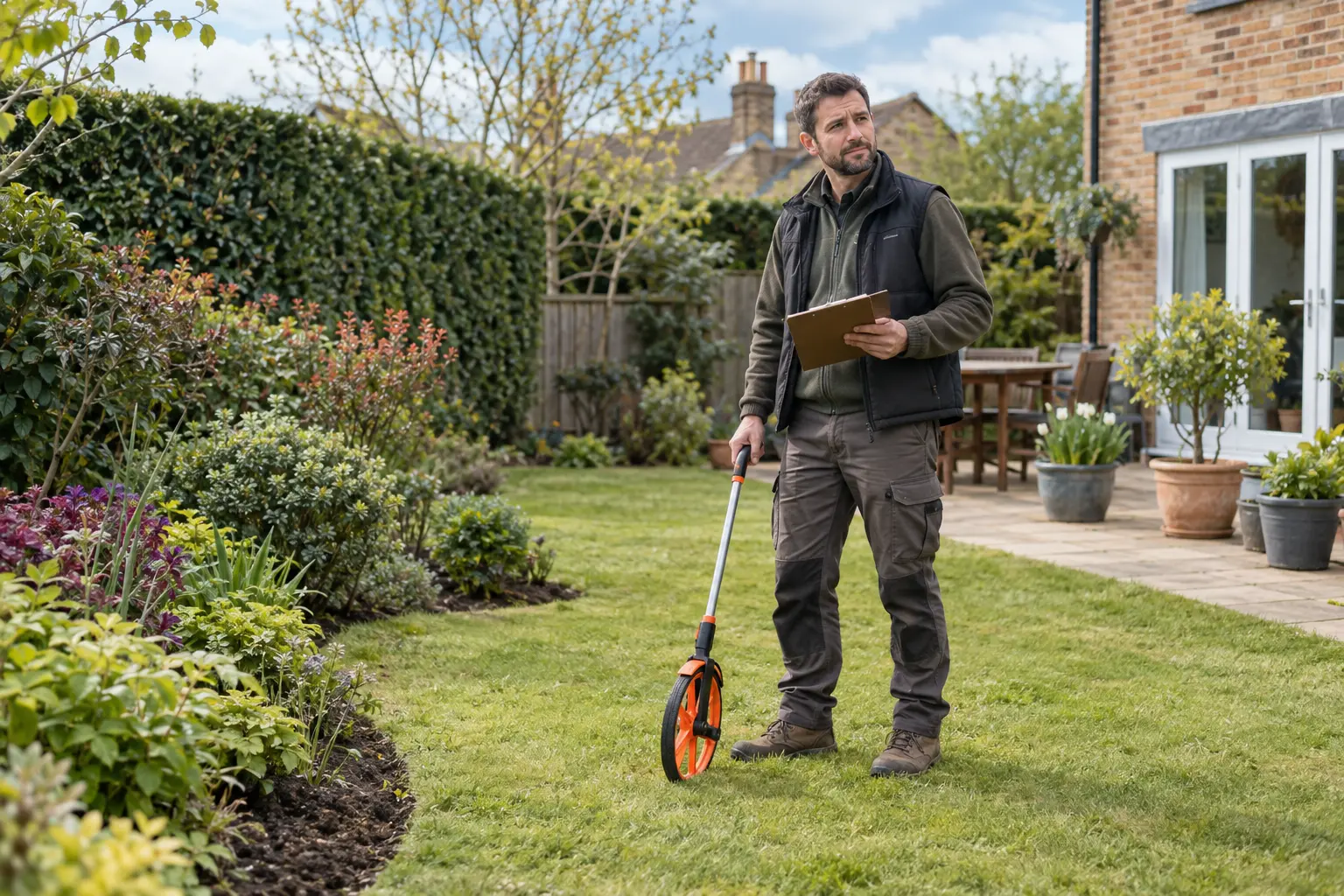
Write out a realistic day: jobs, travel, expected powered-tool time and opportunities to recharge. Ask a dealer for a demonstration under conditions close to your work. Manufacturer runtime figures are useful only when you understand the battery and test conditions behind them.
Check whether a multi-port charger charges batteries simultaneously or one after another. Confirm the charging time for your chosen pack, and allow for cooling delays after heavy use. One battery in use and one charging will not guarantee continuous work if discharge is faster than charging.
Do not assume customers will provide electricity. Obtain permission where needed and plan suitable charging arrangements. Vehicle charging needs approved equipment and an appropriate electrical supply, not an improvised connection.
Follow the specific battery and charger manuals for temperature, ventilation, storage and moisture precautions. STIHL’s charging guidance explains how battery temperature can delay charging; limits vary by model. Use manufacturer-approved combinations and avoid unapproved cross-platform adapters. A connector fitting mechanically does not establish safe operation.
8. Check support for paid work
Tell the seller that you intend to use the equipment commercially. Ask what warranty applies to that exact tool and its batteries, whether registration is required, and how repairs are handled. Do not assume domestic-use warranty advertising describes business-use cover.
Check local availability of blades, cutting line, replacement batteries and servicing. Ask how long a typical repair might leave you without your main tool and whether hire equipment is available. These answers can matter more than a small purchase-price difference.
Also review weight, controls, vibration information and the safety equipment required for each job. Battery power does not remove the need for training, risk assessment or maintenance. Choose tools within your competence and the work you can safely undertake.
9. Use a simple buying rule
Choose one main platform when it offers suitable core tools, enough working capacity and dependable support at an affordable total cost. Add another system when a particular job requirement justifies its complete additional cost.
Before paying, confirm:
- The services and properties the tool will support.
- Exact battery and charger compatibility.
- Required pack numbers and recommended capacities.
- Realistic runtime, handling and charging arrangements.
- Total kit cost, including suitable spares.
- Commercial-use warranty and repair arrangements.
- Why this purchase is needed now.
You can record those decisions using the equipment and planning resources in the Gardening Business Startup Bundle on Payhip. Start with the smallest dependable setup that delivers your promised service, then expand when actual bookings justify it.
Frequently asked questions
Can I use any 18V battery in an 18V tool?
No. Voltage alone does not establish compatibility. Check the exact platform and model combination in the manufacturer’s documentation.
Is one platform always cheaper?
No. Shared batteries can reduce duplication, but existing equipment, tool requirements and complete kit prices can change the result. Compare workable setups rather than bare-tool prices.
Should I replace tools I already own?
Not simply to match brands. Keep suitable, reliable equipment where it makes business sense, and assess each future purchase against the work it needs to do.
Is a bigger battery always better?
No. A suitable larger pack may extend runtime but add weight. Check compatibility, the manufacturer’s recommendation and how the tool handles with that pack fitted.
Manufacturer guidance checked 29 October 2026. Brand examples explain compatibility, not endorsements or hands-on product tests. Check current UK model documentation before buying.
Explore the blueprint collection for guides, planners and practical worksheets.