Mobile Car Valeting
Can You Start a Mobile Valeting Business With £500?
A realistic £500 UK starter budget for a small mobile valeting service, including equipment, insurance, pricing and the costs that may need extra funding.
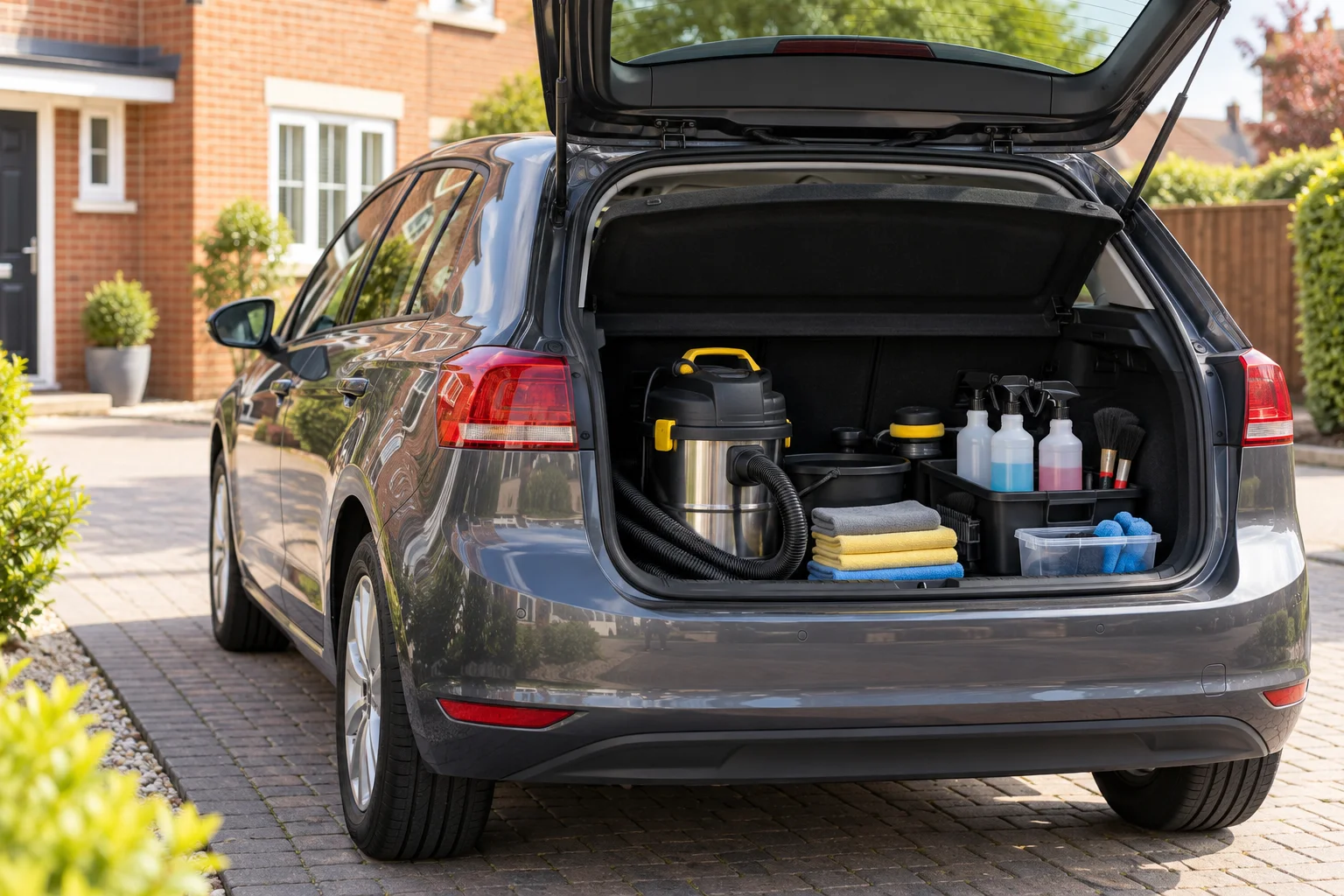
Yes, you may be able to start a mobile valeting business with £500—but only with a deliberately limited service, suitable transport already available and costs checked before you buy. It is not a realistic budget for purchasing a van, carrying your own water and power, and offering every kind of valet.
The practical starting point is usually a basic interior maintenance service: vacuuming, careful surface cleaning and interior glass. You can expand when paying customers justify it. This guide shows how to divide the money, what to postpone and when £500 simply will not cover your circumstances.
Planning guide: October 2026. Figures below are illustrative spending allowances, not live retail prices, insurance quotations or earnings forecasts.
What must you already have?
This budget assumes you have a roadworthy car with room for securely stored equipment, a phone, somewhere to keep supplies and the skills to clean ordinary interiors without damaging them. It also assumes customers can provide an agreed, suitable electricity supply. Buying transport, paying for repairs or funding substantial training would require extra money.
You need safe off-road working space and permission to use it. Check access before confirming a booking. A customer in a flat with only roadside parking may be unsuitable for this first service, even if they are keen to book.
Our guide to starting mobile valeting without a van explains the transport decisions. For the wider launch plan, explore the Mobile Car Valeting Business Blueprint before committing your equipment budget.
A £500 starter budget that leaves some breathing room
Think of these as maximum allocations to test against actual quotations. If one essential costs more, adjust the plan rather than quietly removing your reserve.
| Item | Allowance | Purpose |
|---|---|---|
| Suitable vacuum and essential attachments | £90 | Ordinary carpets, mats and accessible gaps |
| Microfibre cloths and gentle brushes | £40 | Separate tools for different surfaces |
| Interior and glass cleaning products | £35 | A small, compatible product selection |
| Safe power accessories | £35 | Suitable lead and protection for the location |
| Storage, protective equipment and small supplies | £30 | Secure containers and product-specified protection |
| Initial insurance/payment allowance | £150 | Replace with your actual upfront quotation |
| Initial travel, laundry and consumables | £45 | Working money for early bookings |
| Uncommitted reserve | £75 | Unexpected costs and replenishment |
| Total | £500 | No van, generator, tank or extractor included |
The £150 insurance line is not a claim that adequate annual cover costs £150. Your upfront payment could be higher; instalments create ongoing commitments and may increase the total payable. Include any vehicle-insurance adjustment. If suitable insurance and equipment exceed the allowances, the £500 plan does not fit yet.
Nor does this budget include personal living expenses, substantial repairs, paid advertising or a wastewater collection system. Keep household emergency money separate. Starting with £500 available for the business is different from having only £500 left altogether.
Choose one service you can deliver properly
Write down a simple offer: “Interior maintenance clean for normally soiled cars: vacuum seats, carpets, mats and boot; wipe suitable hard surfaces; clean interior glass.” Explain the exclusions before taking payment.
Exclude deep upholstery extraction, mould, bodily fluids, heavy pet hair, persistent odours, engine bays, polishing and paint correction. These need different time allowances, skills or equipment. Ask for photographs and describe how unusually dirty vehicles will be assessed. Do not advertise a comprehensive “full valet” when you are offering a narrower service.
A tidy result and a clear promise are valuable. You do not need to impress people with a long menu. If a customer's expectations exceed your equipment or competence, decline or refer the job rather than improvising.
Buy a useful kit, not a collection of gadgets
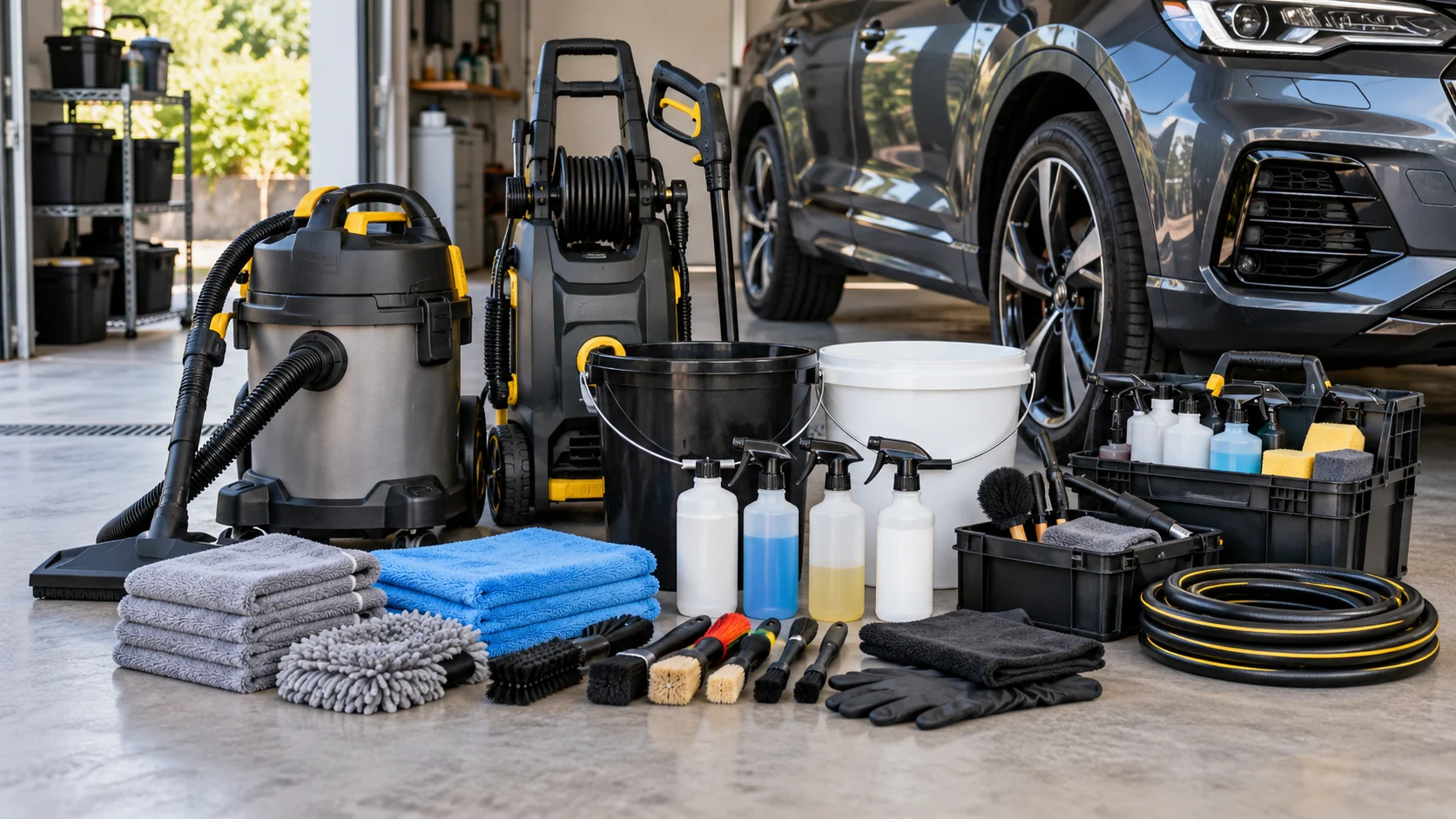
Your vacuum should have appropriate attachments, available filters and a manageable size. Check its intended use, condition and warranty. A cheap machine becomes expensive if it cannot handle your working pattern or replacement parts are difficult to obtain.
Our wet-and-dry vacuum buying guide discusses the Kärcher WD 2 Plus and explains the checks to make before choosing a Home & Garden machine for paid work. You can also visit its Recommended Products page. Do not assume a familiar brand automatically makes a domestic model suitable for commercial use.
A wet-and-dry vacuum is not a spray extractor. Buying one does not equip you to shampoo seats. For this starter offer, dependable dry vacuuming matters more than a headline list of functions.
Use separate clean cloths for glass and other surfaces, and keep dirty cloths apart. Buy products suited to the materials you will encounter; follow dilution and safety instructions. Avoid unnecessary fragrances and dressings. A glossy, slippery finish on pedals or controls is not an improvement.
The beginner's equipment checklist can help you compare essentials with later upgrades. Leave the pressure washer, generator, large water tank, machine polisher and expensive branding until a genuine business need appears.
Check insurance before spending on equipment
Describe your proposed work accurately to an insurer or specialist broker. Ask specifically about damage to a customer's vehicle while you are cleaning it, property in your care, treatment risks and your policy excess. A general liability policy may have exclusions that matter to valeting.
Tell your motor insurer how you will use your own car and carry equipment. If you intend to move customers' vehicles, ask about that separately; do not assume an ordinary driving policy covers it. An excess you cannot afford is also a financial vulnerability.
These checks belong at the beginning. If the quotation makes the project unaffordable, keep practising on your own vehicle and build your funds before accepting paid bookings. Saving a little longer is better than designing a business around a gap in cover.
Water, electricity and waste still need a plan
An interior-first offer reduces the need for exterior wash-water handling, but it does not remove your responsibility for waste and safe working. In England, Environment Agency guidance says contaminated business water must not cause pollution. Discharge to a foul or combined sewer requires water-company permission; surface-water drains are not an acceptable shortcut.
Before adding exterior washing, establish a suitable collection, reuse or authorised disposal arrangement and price it properly. Customer permission to use their driveway is not permission to discharge wash water. “Biodegradable” products do not remove that problem. Check the relevant regulator and sewerage provider in Scotland, Wales or Northern Ireland.
Agree electricity access in advance, inspect equipment, use suitable protection and keep connections dry. Follow equipment instructions, including extension-lead ratings and unwinding reels where required. Route cables to avoid trips and vehicle movements. If you cannot work safely at the location, rearrange the appointment.
Price the whole appointment
Do not copy the lowest local price without checking what it includes. Time a practice job from loading your car to cleaning and putting away your kit afterwards. Travel, messages, laundry and setup are part of the work, even when the customer only sees the cleaning.
For an illustration, imagine charging £45 for a defined interior service, with £8 in direct travel, product and laundry costs. That leaves £37 before fixed overheads, equipment replacement, tax and payment for your time. If the whole appointment consumes two hours, that is £18.50 per hour before those remaining deductions—not take-home pay.
At that same assumed £37 contribution, around 14 jobs would generate £518 before fixed overheads and your labour. This is only arithmetic, not a forecast or a promise that 14 bookings repay the business investment. Your actual prices, costs and time will decide that.

For a fuller worked calculation covering travel, setup, overheads and your own pay, read how to price mobile car valeting services without undervaluing your time.
Find the first customers without paying for adverts
Start close to home. Tell people what you offer, which area you cover and what access you require. Post in local groups where business posts are allowed. Use clear photographs of your own practice work, with the owner's permission, and avoid showing number plates or personal belongings unnecessarily.
Offer a small number of clearly priced introductory appointments, with the normal intended price explained. Ask for honest feedback, not guaranteed positive reviews. You are testing whether customers value the service and whether the timing works.
Keep records of enquiries, bookings, receipts and expenses from the beginning. Use the official working-for-yourself guidance to check your registration and record-keeping responsibilities. You do not need complicated software to start recording things accurately.
A manageable first month
Week one: define the service, check insurance and transport, and get actual equipment prices. Speak to potential customers before ordering anything substantial.
Week two: buy the essential kit and practise. Record your timings, inspect results in good light and refine a simple checklist. Learn which materials require a different product or method.
Week three: accept a few suitable local bookings with clear scope and access arrangements. Leave generous time between jobs.
Week four: review earnings after costs, customer feedback and recurring problems. Reinvest only where a purchase solves an observed issue. Keep funds for bills and consumables before expanding your menu.
So, is £500 enough?
It can be enough to test a small, carefully scoped mobile interior-cleaning service when transport and suitable access are already available. It is not enough in every case, and it should never become a reason to skip essential cover or buy unsuitable equipment.
Build the offer around what you can deliver reliably today. For a structured next step, explore our Mobile Car Valeting Business Blueprint or view the package on Payhip.
Frequently asked questions
Do I need a van to start with £500?
Not necessarily. A suitable existing car can carry a compact kit securely. Buying a vehicle is outside this budget, and your insurance must suit the business use.
Can I offer exterior washes straight away?
Only with suitable equipment, skills and a lawful wastewater arrangement. The example budget is for an interior-first service and does not fund an exterior wash-water recovery setup.
Should I buy second-hand equipment?
It can reduce costs, provided condition, safety, permitted use and spares are satisfactory. Allow for missing attachments and repairs; an untested bargain may cost more overall.
What if my insurance quote uses most of the £500?
Rework the budget before starting. Use suitable equipment you already own or save more. Do not accept paid jobs on the assumption that insurance can be sorted out later.
Get the Mobile Car Valeting Blueprint on Payhip
Explore the blueprint collection for guides, planners and practical worksheets.