
Dog Walking Business Startup
How Much Should You Charge for Dog Walking?
Calculate a dog walking rate that covers travel, time and business costs. Includes UK, US and Canadian market examples, service pricing, group walks and a practical price-floor formula.
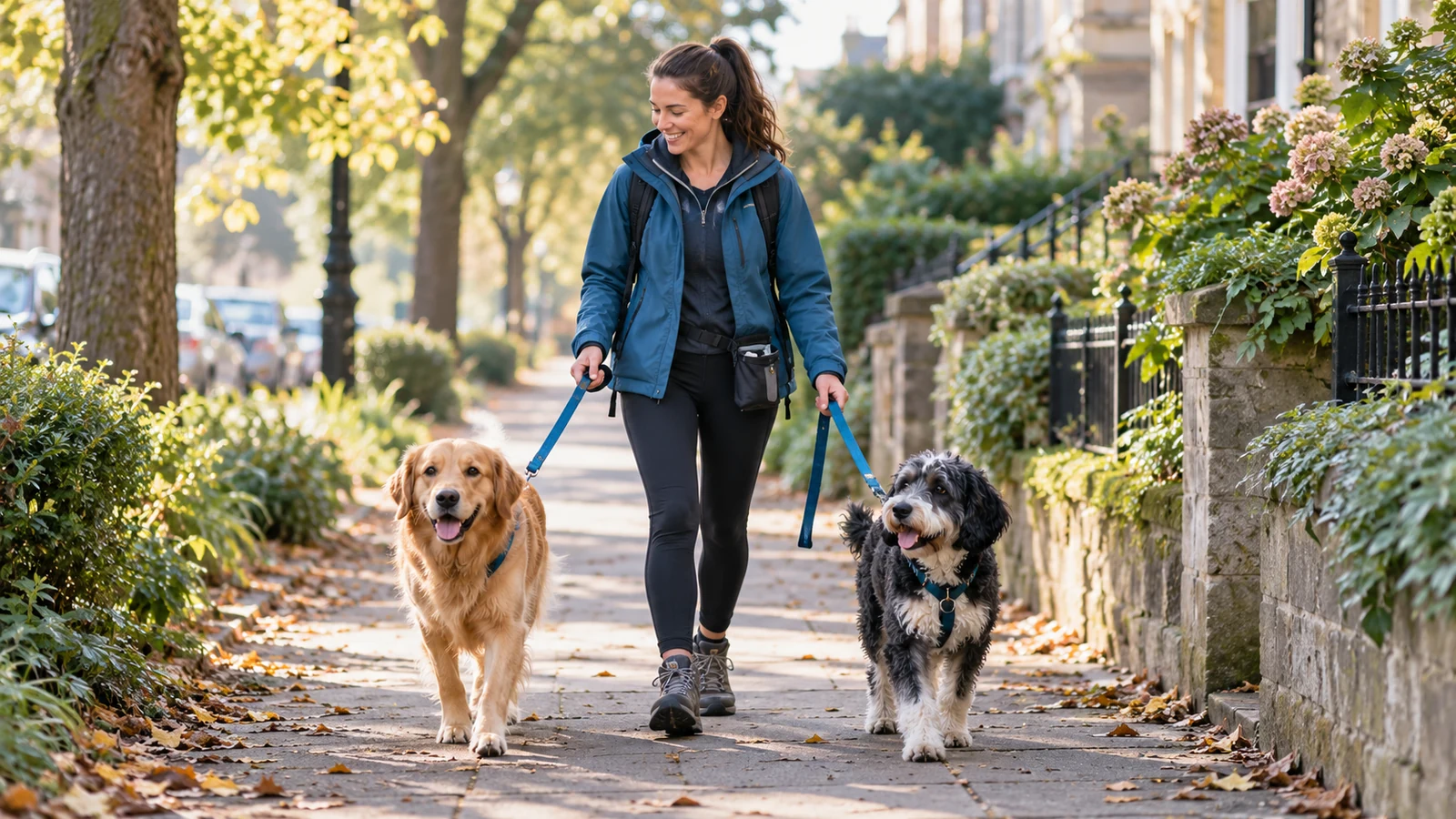
“What do other dog walkers charge?” is a sensible starting question. It is a poor final pricing method. A price that works for someone walking several dogs on a compact route may leave a new solo walker travelling between distant houses for very little income. Your rate has to pay for the whole booking, not just the minutes your shoes are moving.
This guide shows you how to work backwards from the money your business needs, check that number against local prices, and turn it into a clear menu for clients. The examples use pounds, but the same calculation works in US or Canadian dollars. If you would rather put your own figures straight onto a page, the Dog Walking Business Startup Kit on Payhip includes a Pricing and Profit Worksheet.
The short answer: price the whole job
Start with the income you need, add business costs and a reserve, then divide by a realistic number of paid walks. Check that result against comparable local services. Charge extra for work that takes extra time, travel or responsibility. Review your numbers after a few weeks of actual bookings.
A 30-minute booking may occupy 50 minutes once you include travel, collecting the dog, settling it back at home, updating the owner and moving to the next address. If you set your price as though you can sell two 30-minute walks every hour, your diary may look busy while your income falls short.
What are other walkers charging?
Published prices can give you a reference point, provided you understand what they measure. Rover reported a US average of $21.45 for a 30-minute walk in its 2026 marketplace data. Its local examples include around £12 for 30 minutes in Birmingham and C$20.73 for 30 minutes in Toronto. These are platform examples, not a prescribed rate for your town or a promise of what a walker takes home.
Search for five to ten services that actually work in your area. Record the duration, whether the dog is walked alone or in a group, pickup arrangements, second-dog charges and any minimum booking. A quoted hour may mean 60 minutes out of the house or 60 minutes on the walk itself; ask before comparing. Local travel patterns, parking and density of customers often matter as much as the headline price.
Do not try to win every enquiry by being cheapest. A trustworthy walker who arrives when promised, screens dogs carefully, communicates clearly and has suitable cover offers something clients can evaluate beyond price.
Step 1: count the time a booking really uses
Take a typical job and write down each part: travel to the home, entry and greeting, the agreed walking time, return and settling, a client update, and travel to the next booking. If the owner expects the dog to be out for a full hour, make that explicit in your service description. Keep admin time for invoicing, messages and route planning in your weekly capacity calculation too.
Imagine a local 30-minute walk that uses ten minutes for pickup and return and ten minutes for travel between customers. That booking consumes roughly 50 minutes. Three such bookings fill about two and a half hours even though the advertised walking time totals only 90 minutes. Once you have a compact route, travel time may fall. Until then, price for the route you can deliver now.
Step 2: find your minimum sustainable rate
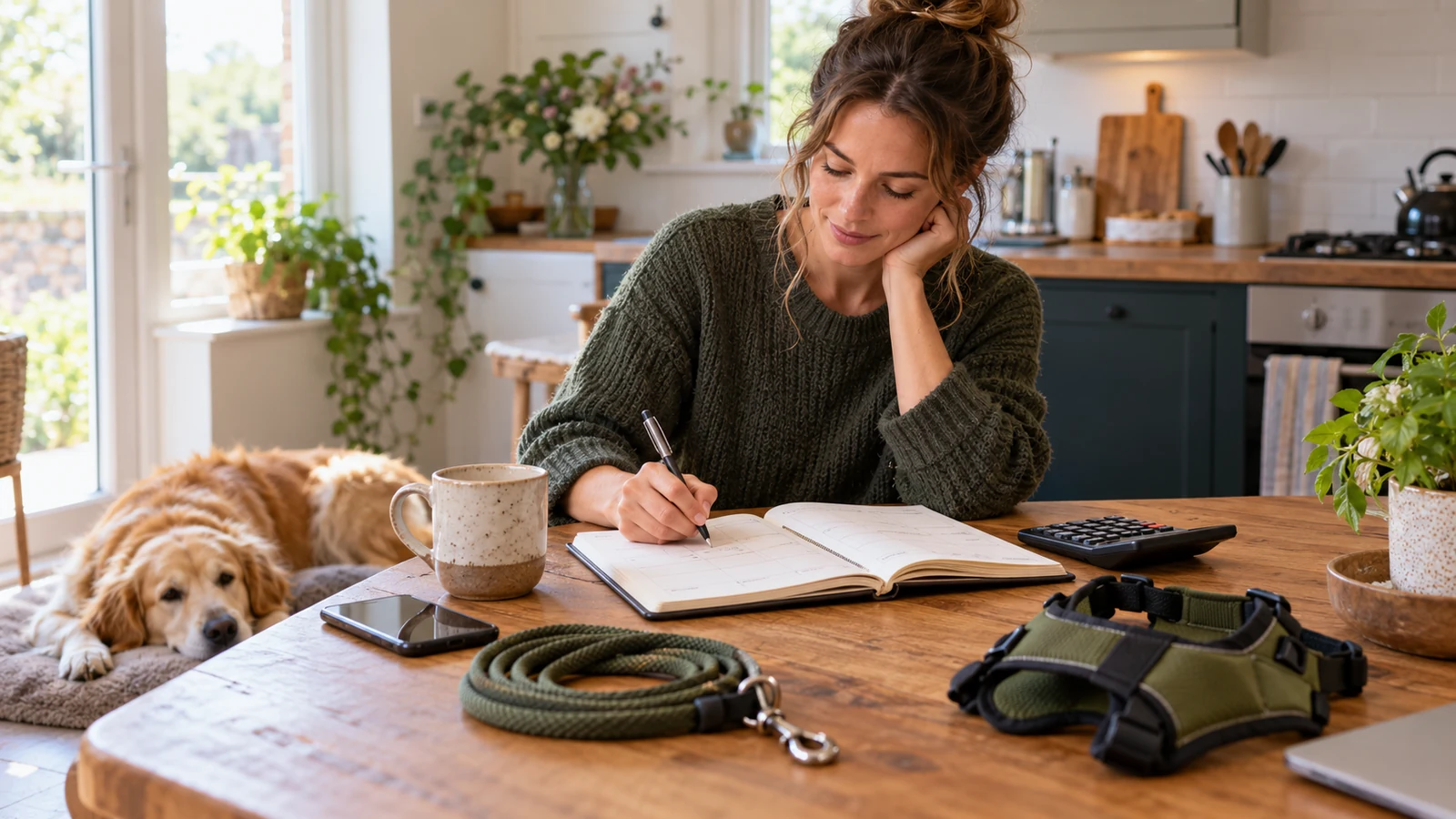
Write down the monthly amount you want the business to generate for your own pay before personal taxes. Add insurance, transport, supplies, phone or software, marketing, payment fees and a reserve for replacing equipment or quieter weeks. Then estimate how many walks you can actually sell in an ordinary month. Paid walks are the denominator; hours you hope to work are not.
(Target owner pay before personal taxes + monthly business costs + reserve) ÷ expected paid bookings = minimum average revenue per booking, before any percentage-based platform or payment fees.
Here is an illustrative example, not a suggested market price. You want £1,800 a month before your personal taxes. Your monthly business costs are £300 and you set aside £200. The total needed is £2,300. If you can reliably sell 120 walks, that is £19.17 per paid walk. If your original 120-booking plan proves optimistic and you sell 108 instead, the figure rises to about £21.30. Round deliberately and check whether the final rate is viable locally.
If a platform or payment provider takes a percentage, account for that separately. With an illustrative 15% deduction on every sale, £2,300 divided by 108 bookings and then by 0.85 comes to about £25.05 per booking. Actual fees and which bookings they apply to vary. Keep a separate allowance for taxes and statutory contributions according to your circumstances; the example above does not calculate them.
Our dog walking startup bundle pairs the Pricing and Profit Worksheet with a Service Menu and Capacity Planner, so your rate and your weekly diary are based on the same assumptions.
Step 3: set distinct prices for distinct services
A menu makes comparisons easier and protects you from accidentally promising more than you priced. Decide what each price includes before you print flyers or accept recurring bookings:
- Short solo walk or visit: useful for puppies or dogs that need individual handling. A short visit still has travel and access time, so it need not cost half as much as an hour.
- Standard solo walk: a clear duration, collection area and owner update.
- Group walk: a per-dog price, subject to compatibility checks, safe handling and local limits.
- Second dog from one household: often less travel, but still more handling and responsibility. Price it as an additional service rather than assuming it is free.
- Extended travel or special requests: state your usual service radius and quote separately when a booking falls outside it.
For example, a 30-minute solo walk priced at £20 might use 50 minutes door to door. A 60-minute walk at £32 might use 80 minutes. Both work out at roughly £24 in revenue per hour of occupied time before expenses. If you simply doubled the 30-minute price for a longer visit, it could be unnecessarily expensive; if you priced the hour at only £24, it might fail to cover your day. These are maths examples, not recommended rates.
Should you charge less for a group walk?
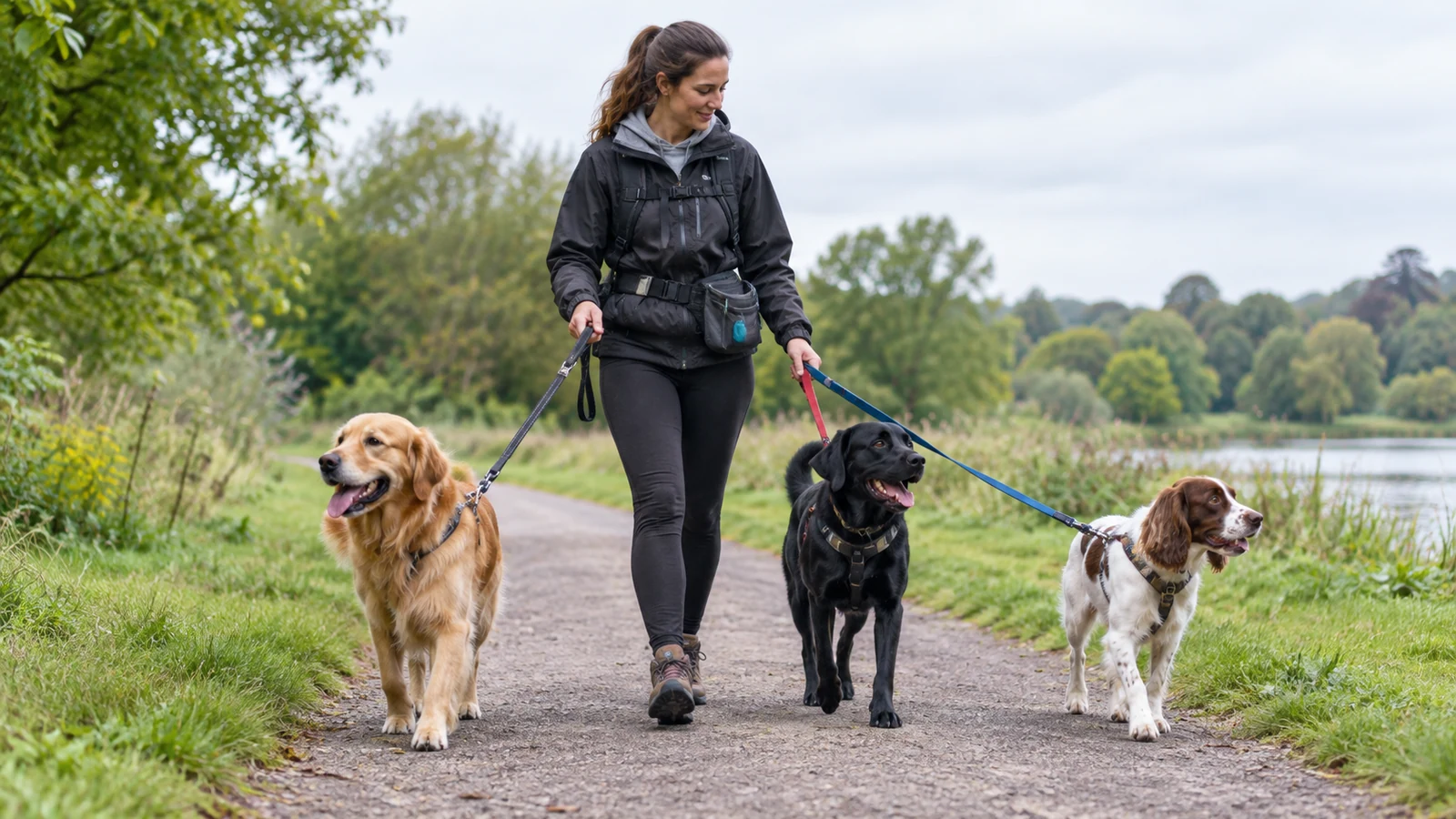
Group walks can make a lower per-dog price viable, but only when the dogs are compatible, the route works and the combined booking is safe. Three dogs at £16 each bring in £48 for that outing before travel, equipment and other costs. That does not mean three dogs always triple your profit: collection and return can take much longer, and group handling requires more preparation.
Do a meet-and-greet and an appropriate assessment before combining dogs. Check the places you use for rules on dog numbers, permits, lead requirements and commercial access. In the UK, local Public Spaces Protection Orders can set dog-control rules, including number limits. Toronto has a commercial dog walker permit for certain four-to-six-dog walks. Rules differ across the UK, US and Canada, so check your actual route before selling places.
Protect the gaps in your diary
A regular midday slot is valuable because another client may want exactly that time. Set out when payment is due, what happens if the owner cancels, and whether a prepaid package expires. Explain any notice period before the first booking and put it in your written terms. A clear, fair policy is easier to apply than an improvised exception every week.
You may offer a modest recurring-booking benefit when it genuinely reduces marketing and scheduling work. Run the numbers before discounting: five weekly walks at a lower price still need to cover their share of travel, costs and your income target. Likewise, do not add a holiday, weekend or short-notice charge without explaining it in advance. Transparency helps owners budget and reduces awkward conversations.
Test your price against a real week
Make a sample timetable with actual neighbourhoods, pickup windows and walking durations. Include a realistic lunch break, buffer for late handovers and time for messages. Then multiply the expected paid bookings by your price, subtract direct expenses and compare the remainder with your target. Repeat the exercise for a quieter week, not just a fully booked one.
After four to eight weeks of work, compare estimated times with actual times. Which routes run late? Which bookings are easy to repeat? Are you spending too much time travelling for a particular service area? Adjust the service boundary, the schedule or the price based on those observations. If a rate increase is needed for existing clients, give clear notice under your agreement and explain the new price without apologising for running a sustainable service.
The same principle appears in our guides to pricing a cleaning job and setting a gardener’s hourly rate: billable work has to support the time and costs around it. For the dog walking specific forms, use the Dog Walking Business Startup Kit overview.
Your first price list: a quick check
- List every service with a clear duration and what is included.
- Write down the travel area and any out-of-area charge.
- Price the second dog, group place and special requests separately.
- Check the price floor against an ordinary week of achievable bookings.
- Compare similar local services, then revise only where the comparison is fair.
- Put booking, payment and cancellation terms in writing.
Frequently asked questions
How much should I charge for a 30-minute dog walk?
There is no universal figure. Calculate the full time a booking occupies, your costs and likely paid capacity, then compare equivalent services nearby. Published marketplace figures are reference points; your service area and business model determine your rate.
Should a 60-minute walk cost twice as much as 30 minutes?
Usually you should calculate it separately. Collection, travel and communication happen on both bookings, so doubling the walking time does not necessarily double your total job time. Use your own timings rather than a blanket multiplier.
Should I offer discounts for regular clients?
Only if the reliable booking lowers your costs or fills an otherwise unused slot and still meets your price floor. Put the frequency, cancellation rules and payment terms in writing.
Can I charge more for a reactive dog?
You can quote an individual service based on the time, handling demands and route, provided the booking is within your skills and suitable insurance. Some dogs need a solo walk or a specialist referral; a higher price is never a substitute for safe handling.
When should I review my dog walking prices?
Check them after the first month or two of real bookings, whenever costs materially change, and on a regular schedule thereafter. Measure travel, paid bookings and profit rather than changing prices solely because a competitor has.
Rate examples and linked source pages checked September 2026. Published marketplace averages and the worked calculations above are illustrations, not guaranteed earnings. Check current local rules, insurance terms and tax obligations for the services you offer.
Explore the blueprint collection for guides, planners and practical worksheets.