Family Emergency Binder
UK Emergency Grab Bag Checklist
A practical UK checklist for building a portable emergency grab bag around your household, medication, children, additional needs and pets.
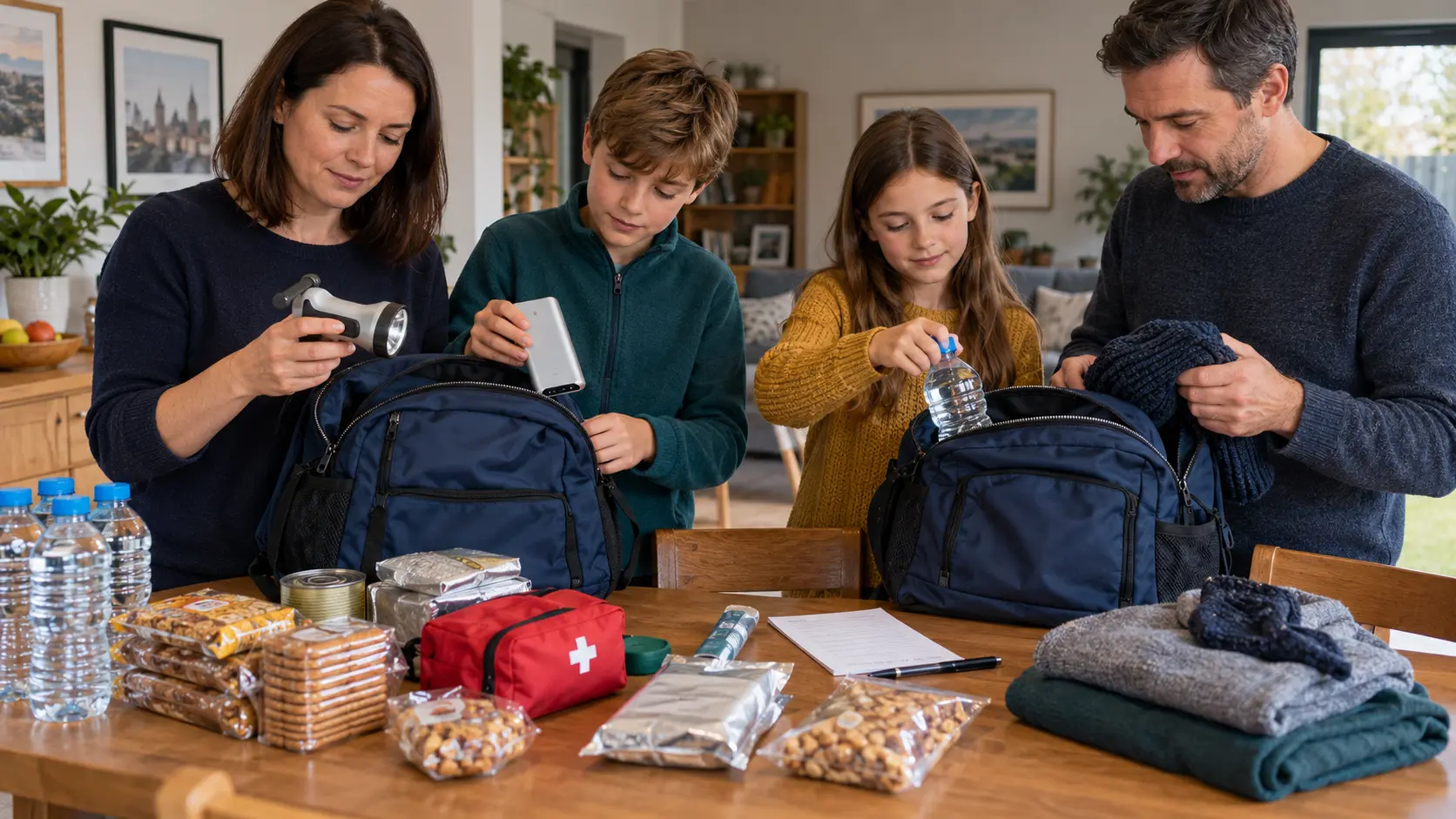
An emergency grab bag is a collection of essential items that can leave the house with you if the authorities advise you to evacuate. It will not solve every problem, and it should never be so heavy or complicated that it slows you down. Its job is to provide useful information, communication, warmth, basic supplies and personal essentials during an unexpected disruption.
The best grab bag is built around the people in your household. A generic checklist is a useful starting point, but medication, mobility, communication, children, pets and local risks will determine what belongs in yours.
Call 999 if someone is in immediate danger. If you are escaping a fire, leave immediately and do not delay to collect belongings. Follow instructions from the emergency services and official alerts even when they differ from your household plan.
Want the complete household preparedness system? The Family Emergency Binder bundle combines a 64-page guide, five focused workbooks and a complete 66-page printable toolkit covering grab bags, family records, emergency plans, quick-action sheets and recovery.
Get the Family Emergency Binder bundle on Payhip (opens in a new tab)What is an emergency grab bag?
The UK Government’s Prepare guidance distinguishes between supplies kept at home and items placed in a spare bag in case you are asked to leave quickly. That distinction matters. Your home kit can contain bulkier food, water and household supplies; your grab bag must remain portable.
Use a comfortable, robust backpack or holdall that the intended person can carry safely. A backpack keeps both hands free and is often easier on stairs or public transport. Consider reflective details or a luggage label, but do not display sensitive personal information on the outside.
Store the bag somewhere accessible and known to the household. It should not block an exit or sit in a damp garage where batteries, paperwork and food can deteriorate. Everyone old enough to understand should know where it is and when it may be taken.
- Choose a bag that is strong, comfortable and manageable.
- Keep frequently needed items in clearly separated pouches.
- Use waterproof bags for documents, electronics and clothing.
- Attach a simple household identifier without exposing private details.
- Test whether the intended person can carry it for a reasonable distance.
Core UK emergency grab-bag checklist
Light, power and information
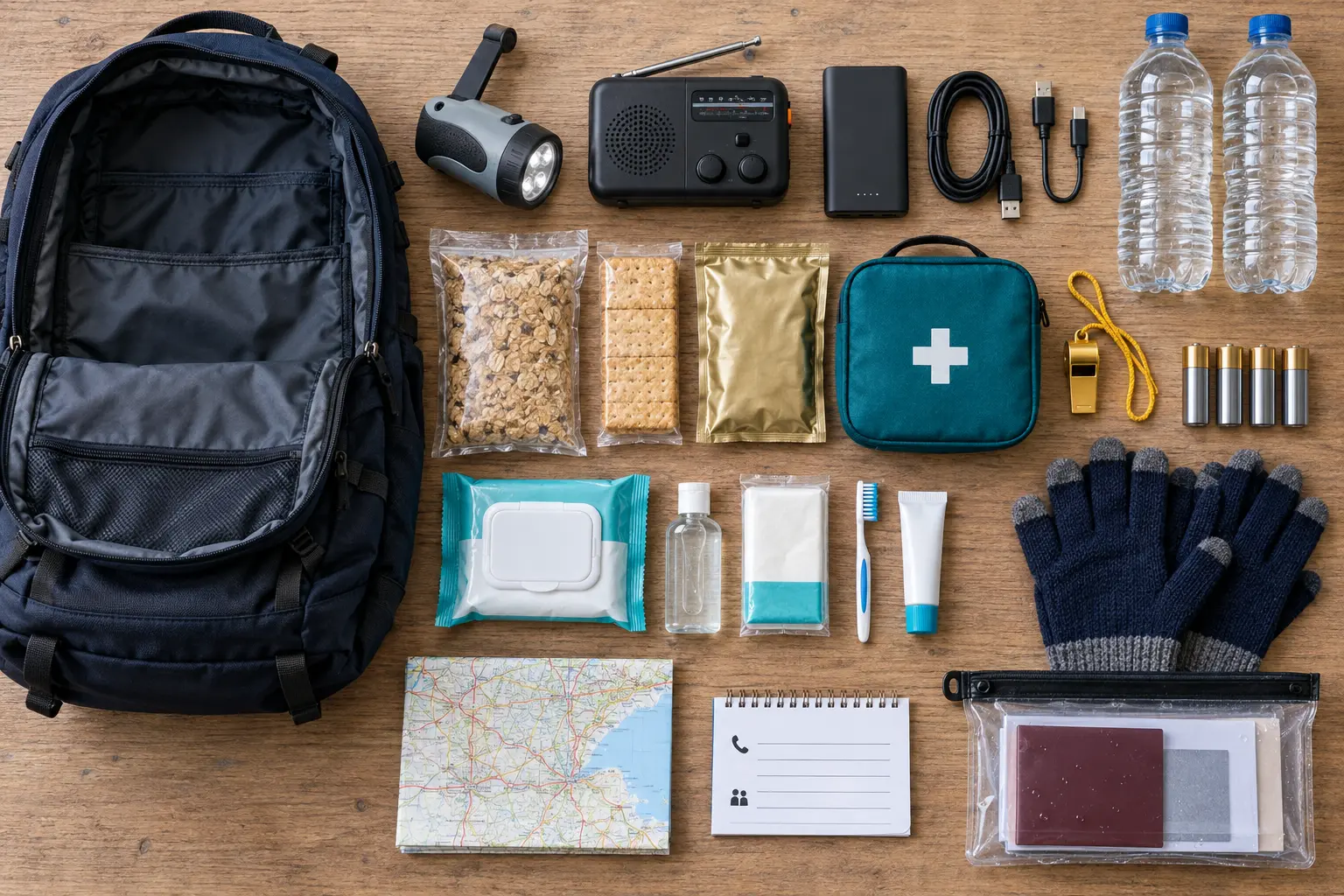
Pack a battery or wind-up torch rather than relying on candles. Include spare batteries stored correctly, a charged power bank and the cables needed for your household’s phones or essential devices. A compact battery or wind-up radio can provide updates when mobile networks or electricity are disrupted.
UK Emergency Alerts can warn compatible phones about life-threatening incidents such as severe flooding, storms or wildfires. Alerts provide instructions based on your current location, but they do not replace local radio and other official information. Keep your phone charged and review the official Emergency Alerts guidance.
Water and ready-to-eat food
Carry a practical amount of sealed drinking water rather than making one bag impossibly heavy. The Government’s home-kit guidance refers to a minimum of 2.5–3 litres of drinking water per person per day for survival and more for cooking and hygiene. Those are home supply planning figures, not a requirement to carry several days of water on your back.
Add compact food that is familiar, ready to eat and suitable for the people carrying it. Check allergies and dietary needs. Avoid food that needs cooking or large quantities of water. Rotate items before their use-by dates and include a manual tin opener only if your chosen food requires one.
First aid and hygiene
Include a compact first-aid kit appropriate to your household, along with any instructions you need to use it safely. Useful basics may include plasters, sterile dressings, bandages, disposable gloves, antiseptic products and medical tape. A first-aid course is more valuable than carrying equipment you do not understand.
Add hand sanitiser, wet wipes, tissues, period products, a small amount of toilet paper and spare face coverings if appropriate. Keep liquids sealed so that one leak does not ruin the rest of the bag.
Warmth and practical clothing
Pack a warm layer, lightweight waterproof, hat and gloves according to the season. Include spare socks and sturdy footwear if household members may evacuate wearing slippers or unsuitable shoes. A foil blanket is compact, but ordinary warm, dry clothing remains important.
A whistle, notepad and pencil, basic local map, spare house keys and a modest amount of cash in small denominations can also be useful. Keep cash and keys discreet and update them whenever locks or household arrangements change.
Documents, contacts and household information
A grab bag should not become an unlocked archive of your entire life. Carry only the information that could help during an evacuation: household names, emergency contacts, important medical details, insurance contact numbers, accommodation information and copies of essential identity or residence documents where appropriate.
Do not write down passwords, PINs or full card details. Protect paper copies in a waterproof pouch and consider secure, encrypted digital copies as a backup. Tell your emergency contacts that you have named them, and give trusted household members access to the information they genuinely need.
Write key numbers on paper in case a phone is flat, lost or locked. In Great Britain, 105 is the number for reporting or getting information about a power cut; Northern Ireland uses different arrangements. Your paper list should also include household contacts, insurers, medical contacts and relevant local services.
If all your planning information currently lives in several notebooks and phones, the article on making your PDF planner work for you will help you establish one current record without creating conflicting copies.
Medication, medical devices and additional needs
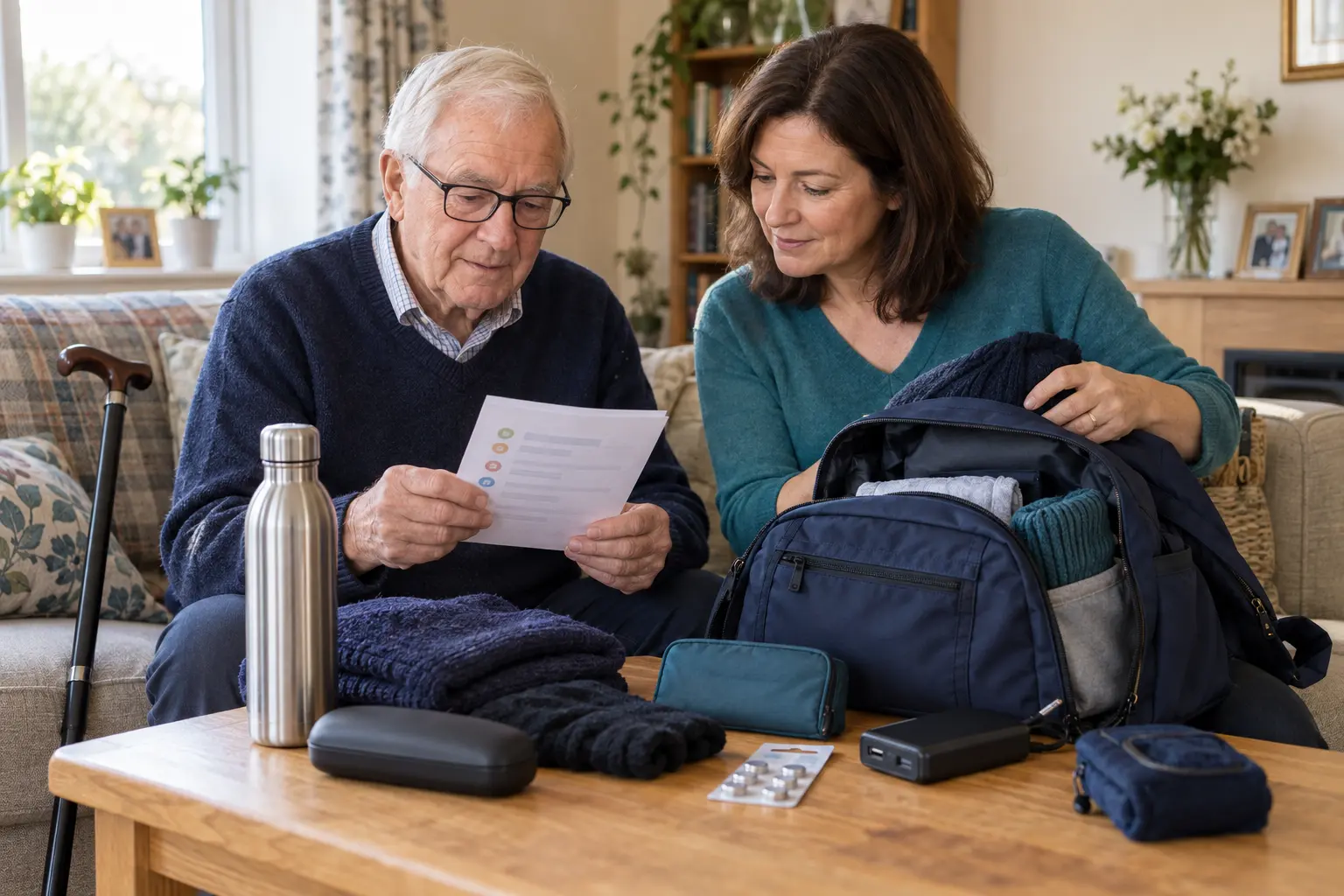
The Government recommends having enough essential medication for several days. Discuss repeat prescriptions and emergency arrangements with your pharmacist or prescriber rather than ordering extra medication without advice. Keep medicines in their original packaging with the dispensing label, observe storage instructions and regularly check expiry dates.
Add a current medication list stating names, doses, timings, allergies and important health conditions. Include spare glasses, hearing-aid batteries, medical-device instructions and correctly charged backup batteries where relevant. If an item requires refrigeration, ask a healthcare professional how it should be transported during an evacuation.
Personalise the plan for mobility, sensory, communication or cognitive needs. Think about how a person will receive a warning, leave the building, travel, communicate and continue essential care. If someone may need help carrying equipment, agree who is responsible and have a backup person.
People who may need additional help during a gas, electricity or water interruption should check eligibility for their supplier’s Priority Services Register. Registration is not a replacement for a household plan, but it allows suppliers to understand that additional support may be required.
Babies, children and pets
For a baby, consider nappies, wipes, changing supplies, suitable clothing, feeding equipment and ready-to-feed formula when required. The UK guidance favours ready-made formula for an emergency kit because boiling water and sterilising equipment may not be possible. Follow current NHS feeding and storage advice for your child.
For older children, include weather-appropriate clothing, familiar snacks, contact information and one small comfort item. Teach children their home address, how and when to call 999, and the names of the adults authorised to collect them. Keep school and childcare emergency contacts up to date.
Pets need their own portable plan. Pack a lead or secure carrier, collapsible bowl, sealed food, water allowance, waste bags, any medication and copies of identification, microchip, vaccination and insurance information where useful. Add a recent photograph and the contact details for your vet and an alternative carer.
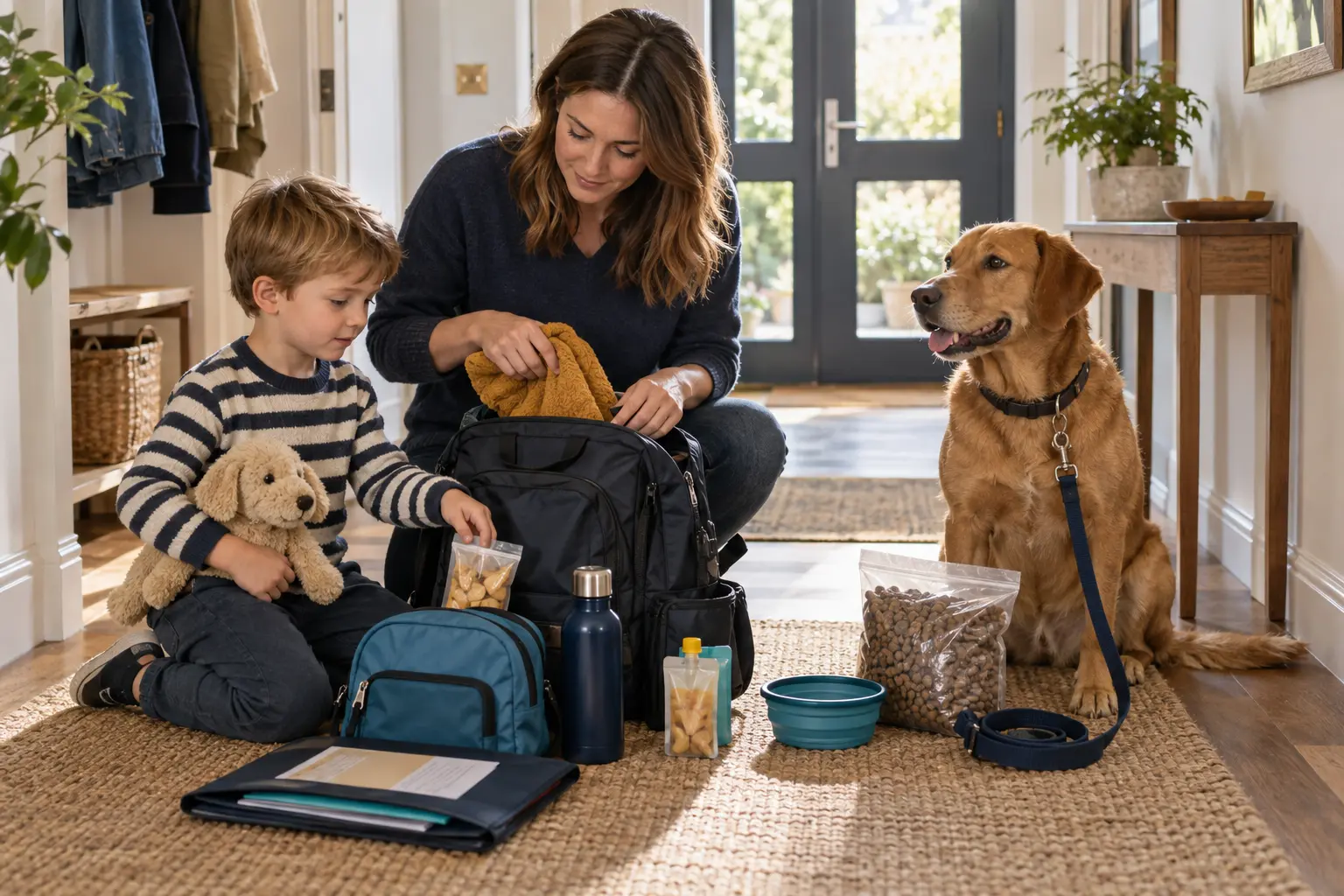
Build a plan around your actual household. The Emergency Supplies and Grab-Bag Planner is included inside the complete Family Emergency Binder bundle, together with medical records, pet-care pages, contact sheets and quick-action checklists.
Download the complete emergency binder package from Payhip (opens in a new tab)Review the bag instead of forgetting it
A grab bag is not finished when the zip closes. Review it at least every six months and after any important household change. Replace expired food, medication and batteries; recharge power banks; change seasonal clothing; update documents and check that children have not outgrown essential items.
Turn the review into two or three short jobs rather than one intimidating project. The guide to turning a big project into a weekly plan can help your household complete the bag, contact sheet and home supplies in manageable stages.
Practise how you would leave without creating panic. Agree on a meeting point, decide who supports children or dependants, and know who collects pets, medication and the bag—only when it is safe to do so. Keep escape routes clear and learn how to turn off water, gas or electricity if the relevant authority advises it and you can do so safely.
Quick UK emergency grab-bag checklist
- Strong, comfortable and manageable backpack or holdall
- Battery or wind-up torch and spare batteries
- Charged power bank and the correct charging cables
- Battery or wind-up radio
- Portable drinking water and ready-to-eat food
- Compact first-aid kit and necessary instructions
- Essential medication in original packaging and a medication list
- Warm layer, waterproof, hat, gloves and spare socks
- Basic hygiene and period products
- Whistle, notepad, pencil and local map
- Paper emergency contacts and insurance numbers
- Protected copies of essential documents
- Spare keys and a modest amount of cash
- Items for babies, children and individual support needs
- Pet lead or carrier, bowl, food, medication and records
- A dated six-monthly review reminder
Frequently asked questions
What is the difference between a grab bag and a home emergency kit?
A grab bag is portable and intended to leave with you if you are advised to evacuate. A home kit supports the household during disruption at home and can contain larger quantities of water, food and other supplies.
How heavy should an emergency grab bag be?
There is no single correct weight. The person responsible for it must be able to carry it safely. Test the packed bag and remove low-priority items if it is uncomfortable or restricts movement.
How much water should I put in a grab bag?
Carry a manageable amount and consider how you would obtain more. The larger daily water figures in UK preparedness guidance are intended for household emergency supplies; several days of water quickly becomes too heavy for one portable bag.
Should every household member have a separate bag?
That depends on age, mobility and household size. Separate bags can share the load, but young children or anyone needing support should not be given responsibility for essential household items.
Where should I keep my grab bag?
Keep it somewhere dry, accessible and known to the household, without blocking an escape route. Avoid locations that may be inaccessible during the emergency most likely to affect your home.
How often should I check it?
Review it at least every six months and whenever medication, contact details, household members, pets or support needs change. Recharge power banks and replace expired items during every review.
Prepare the whole household
Go beyond a single grab-bag checklist
The Family Emergency Binder — If Something Happens Tomorrow includes the 64-page guide, a 66-page complete toolkit and five standalone workbooks for contacts, medical details, supplies, quick actions, insurance evidence and recovery.
Buy the Family Emergency Binder on Payhip (opens in a new tab)Guidance checked September 2026. This article provides general household-preparedness information and does not replace instructions from emergency services or professional medical advice. Call 999 if someone is in immediate danger.
Explore the blueprint collection for guides, planners and practical worksheets.